Resolving Microscopic Scale Loss in Mechanically Recycled Animal Hair and Wool Blends
Resolving microscopic scale loss in recycled animal hair requires high-tenacity carrier wool additions and proteomic mass spectrometry verification.
Damage
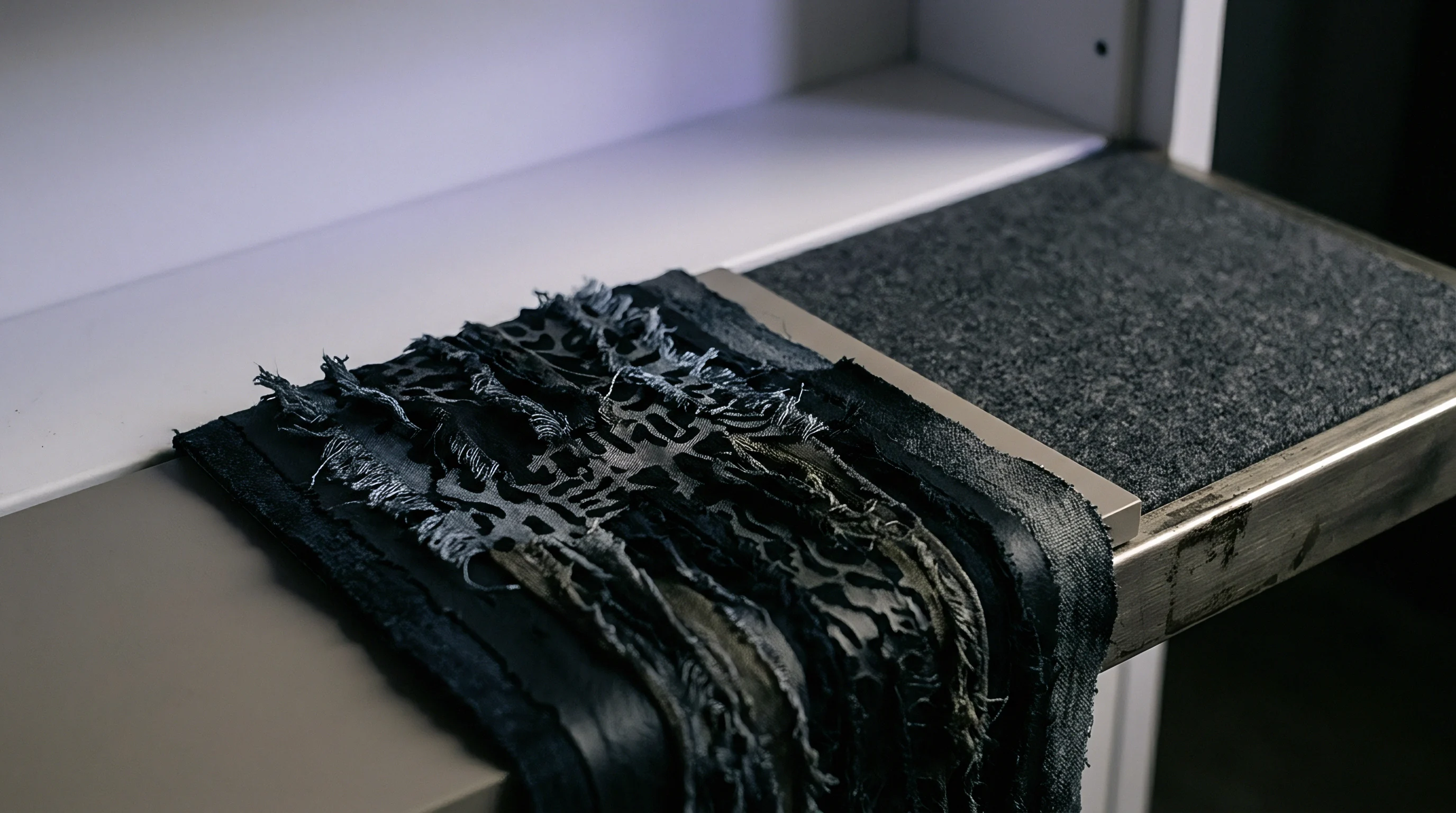
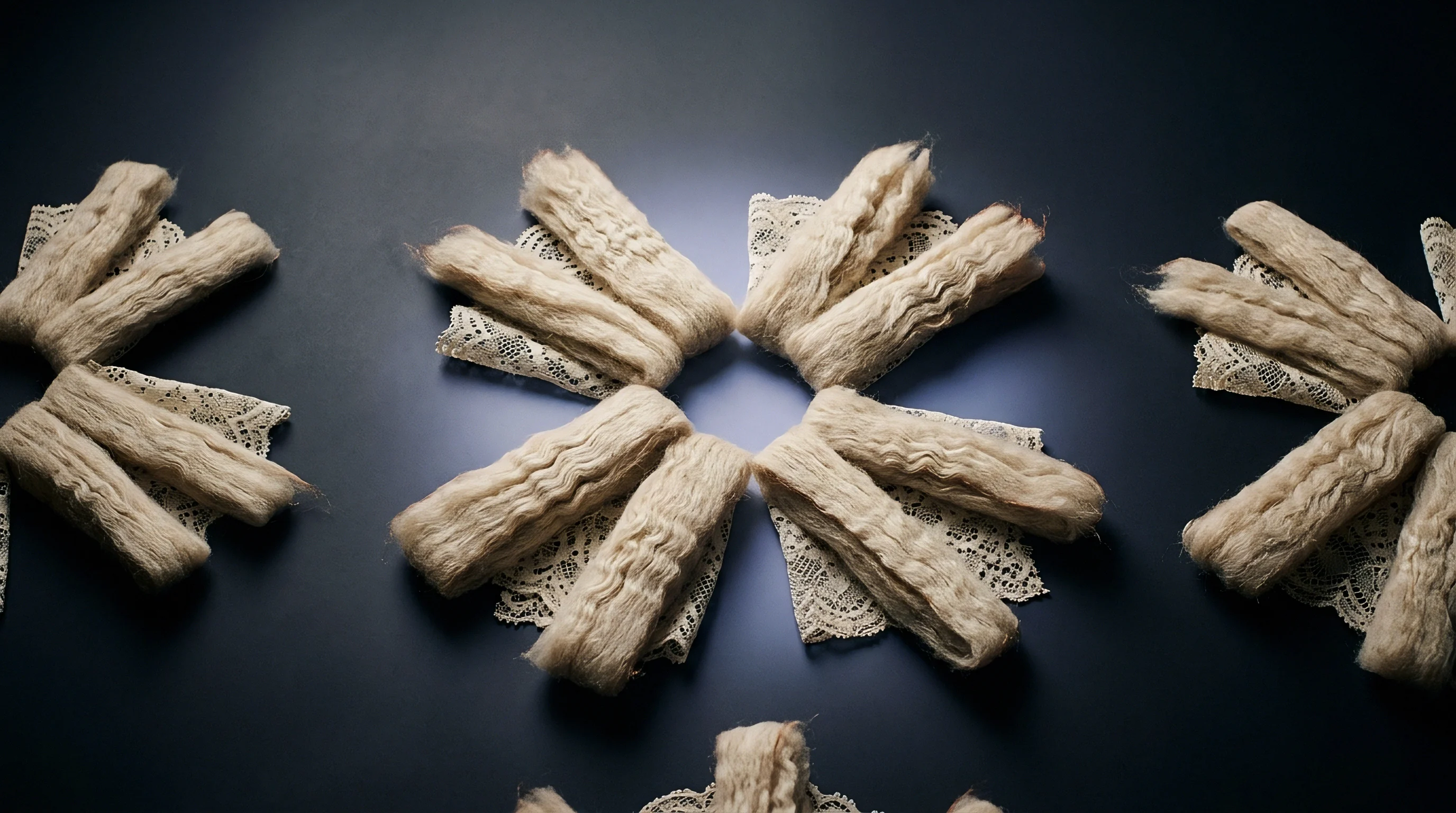
Mechanical tearing pins in rotary garnetting drums strip the outer cuticular cell layer from animal hair fibers. Scale loss destroys cohesion. In virgin sheep wool and specialty hair like cashmere, mohair, and alpaca, overlapping epicuticle scales create a directional friction coefficient.
Tip-to-root friction exceeds root-to-tip friction by a factor of 1.4 to 2.2, establishing the differential friction effect that enables fibers to interlock under pressure. Mechanical recycling through aggressive rag pulling destroys these scale edges, reducing cuticular scale height from 0.65 micrometres to less than 0.12 micrometres. The resulting smoothed shaft fails to grip adjacent fibers during drafting, causing immediate sliver breakdown on carding machines.
Physical Mechanical Shearing during Garnetting
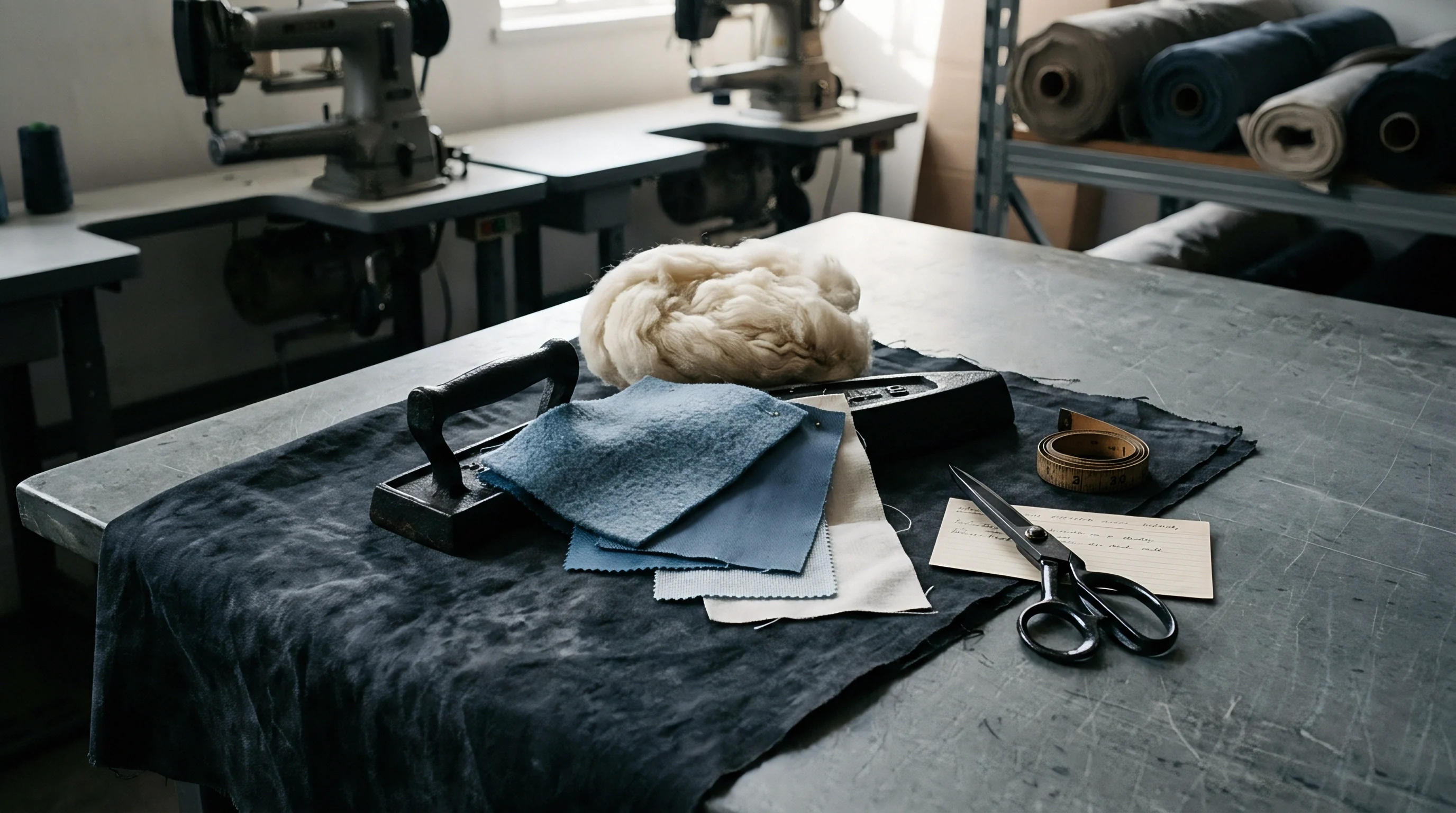
High-speed rotary pins exert severe localized impact during hard-waste rag pulling. When woven or knitted garments pass through a opening picker running at 1,200 revolutions per minute, circumferential pin velocity exceeds 22 metres per second. Mechanical pins slice cuticles.
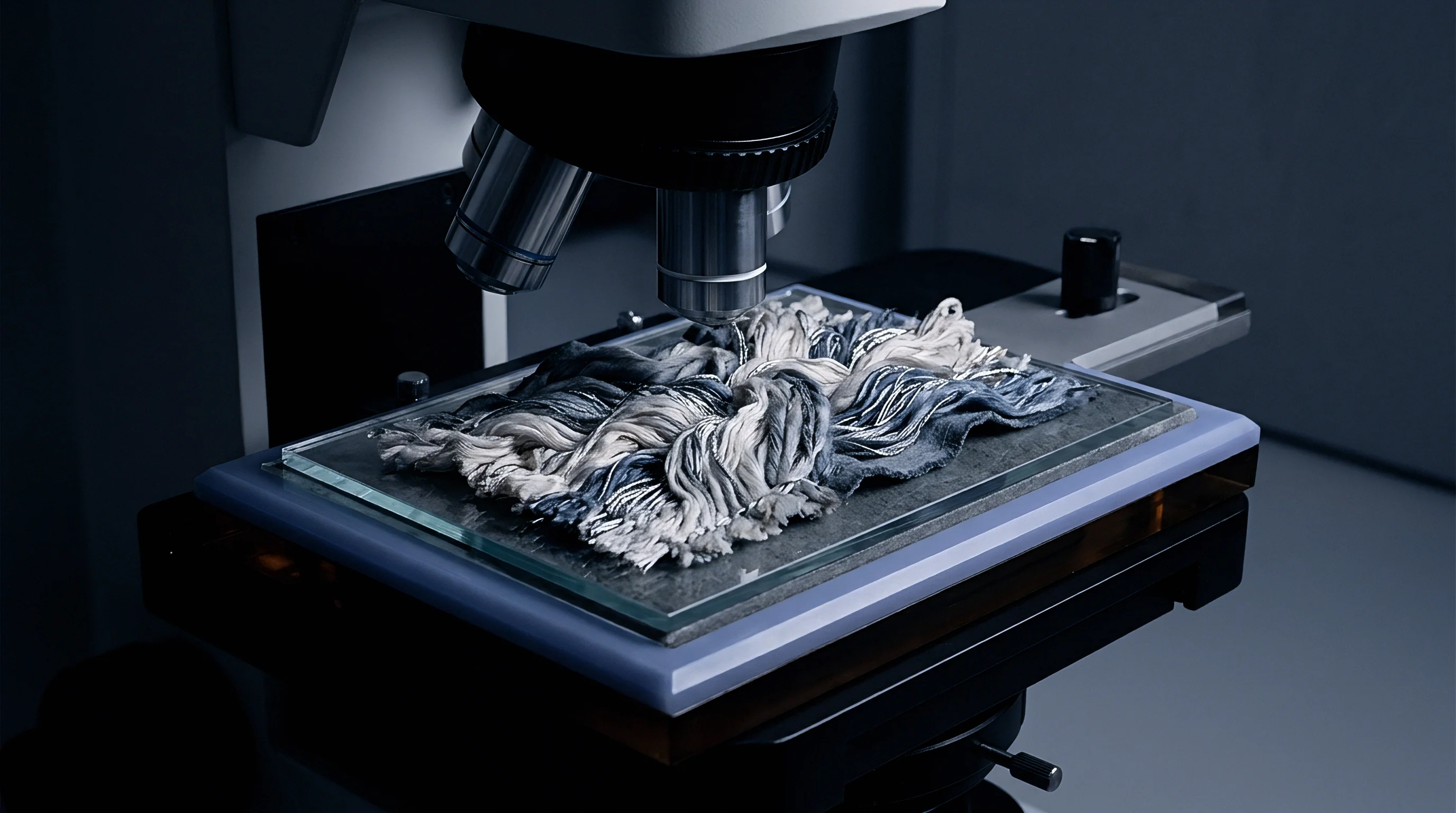
The impact cleaves the hydrophobic epicuticle layer, exposing the underlying exocuticle and cortex. Under scanning electron microscopy, mechanically recycled wool displays flattened, fractured, or completely absent cuticular scales. The damage concentrates along the middle third of the fiber shaft where bending stresses reach peak intensity during mechanical shredding.
Fleece carding wire exacerbates surface stripping when garnetted waste contains dense thread remnants. As metallic card clothing draws bundles apart, high friction strips remaining scale remnants from fine fibers under 18.5 micrometres. Specialty animal hair suffers greater surface erosion than coarse wool due to thinner cuticular scales.
Cashmere scale margins measure approximately 0.3 micrometres in height, compared to 0.6 micrometres on 28-micrometre sheep wool. Mechanical pins crush these thin margins completely, turning a scaly cylinder into a smooth, featureless rod.
At a tearing speed of 1,200 revolutions per minute, recycled wool cuticular scale height drops from 0.65 micrometres to under 0.12 micrometres.
The stripping of the outer protein layer exposes the cysteine-poor endocuticle. This interior region absorbs atmospheric moisture rapidly but lacks the structural integrity to withstand mechanical shear. Consequently, garnetted fibers exhibit lowered single-fiber tenacity in dry and wet states alike.
Surface shear reduces tenacity. Tensile strength drops between 18 percent and 35 percent relative to virgin raw stock of matching mean fiber diameter.
Tribological Shifts and Differential Friction Loss
Scaleless animal hair surfaces exhibit a near-symmetrical coefficient when rubbed root-to-tip versus tip-to-root. Friction drops across batches. Measurements taken via single-fiber capstan tribometry reveal that the differential friction coefficient drops from a virgin value of 0.18 down to 0.03 in heavily garnetted lots.
Without directional friction, individual fibers slide past one another inside drawn slivers instead of latching together during yarn twisting.
- Inter-fiber slip accelerates draft uncontrolled inside the drafting zone, producing severe yarn count variation and thin places across every bobbin.
- Pilling initiation rises because unanchored smooth fiber ends migrate out of the core yarn structure under slight surface abrasion.
- Dust generation increases in the mill environment as brittle, scale-stripped cortex fragments shear off during high-speed spinning.
- Yarn torque decay destabilizes fabric structure, causing skewing in single-jersey fabrics knitted from high-recycled content yarn.
Scale height falls rapidly. Low surface friction impairs the natural felting capacity required for dense, milled woolen fabrics. Fulling operations demand twice the processing time to achieve standard cloth weights when recycled hair ratios exceed 40 percent.
Extended fulling times destroy the remaining tensile strength of the fabric, yielding finished goods that fail basic tear strength tests.
| Fiber Characteristic | Virgin Wool / Cashmere | Garnetted Recycled Hair | Impact on Processing |
|---|---|---|---|
| Mean Cuticular Scale Height | 0.50 to 0.85 µm | 0.08 to 0.18 µm | Severe loss of mechanical cohesion in roving |
| Differential Friction Coefficient | 0.15 to 0.22 | 0.02 to 0.05 | Drafting slippage and yarn count irregularity |
| Scale Edge Frequency (per 100 µm) | 9.0 to 12.0 scales | 2.0 to 4.5 intact scales | Reduced fulling rate and poor fabric felting |
| Single Fiber Tenacity | 14.0 to 18.0 cN/tex | 8.5 to 11.5 cN/tex | High end-breakage rates during ring spinning |
| Moisture Regain at 65% RH | 15.0% to 16.0% | 17.2% to 18.5% | Altered dye affinity and mass calculation drift |
The mill faces permanent yarn strength loss when garnetted lots with under 0.10 micrometres mean scale height enter production without corrective blending.
Identification
Optical microscopy methods depend on visible scale margins to categorize specialty fibers. Optical microscopes miss descaled cortex. ISO 17751-1 light microscopy relies on scale count, scale height, and surface pattern to differentiate sheep wool from cashmere, mohair, and camel hair.
When mechanical garnetting strips these surface features away, laboratory technicians misclassify high-value recycled cashmere as standard sheep wool or damaged wool waste. Quantitative chemical separation per ISO 1833-4 fails because wool and specialty animal hair share identical keratin protein solubilities in sodium hydroxide and formic acid solutions.
Which Analytical Test Isolates Descaled Animal Hair Correctly?
Quantitative separation relies on peptide mass fingerprinting through matrix-assisted laser desorption ionization time-of-flight mass spectrometry. While mechanical action destroys microscopic surface geometry, the internal amino acid sequences of keratin intermediate filament proteins remain stable. Tryptic digestion of fiber samples cleaves keratin into distinct peptide fragments.
Mass spectrometers measure these peptides to verify species origin down to a 1 percent blend threshold, regardless of complete cuticle scale stripping.
Scanning electron microscopy under ISO 17751-2 provides secondary confirmation by inspecting cross-sectional fiber geometry rather than scale morphology. Cashmere retains a circular cross-section with an ellipticity ratio near 1.1, whereas sheep wool exhibits variable ellipticity between 1.2 and 1.4. Scanning electron beam line scans across polished fiber cross-sections reveal cortical cell arrangement without requiring intact surface scales.
Cortical cell distribution distinguishes fine wool from goat hair even after aggressive mechanical shredding.
ISO 17751-2 testing under scanning electron microscopy classifies descaled cashmere as standard sheep wool when scale edge height falls below 0.2 micrometres, triggering mislabelling liabilities.
Peptide mass tracking resolves origin. Infrared spectroscopy struggles to quantify descaled recycled hair because mechanical degradation alters amide I and amide III absorption bands. Mechanical stress breaks disulfide bonds in the cystine-rich matrix, shifting the infrared absorption peak at 1,040 wavenumbers.
Analysts using Fourier-transform infrared instruments mistake this oxidation shift for chemical damage, misinterpreting raw recycled waste as bleached virgin wool.
Mass Spectrometry and Proteomic Workarounds
High-resolution liquid chromatography identifies specific keratin-associated amino acid biomarkers unaffected by mechanical processing. Goat hair contains distinct marker peptides within the K33 keratin protein sequence that do not occur in sheep wool. Extracting these peptides requires dissolving the descaled fiber in a urea and dithiothreitol buffer solution, followed by enzymatic cleavage with trypsin.
The resulting digest runs through a reverse-phase column coupled to a triple-quadrupole mass spectrometer.
Deoxyribonucleic acid identification via quantitative polymerase chain reaction offers another pathway when scale loss invalidates optical counts. DNA extracted from the central medulla or cortical cell nuclei survives garnetting intact. ISO/TS 20428 protocols amplify species-specific mitochondrial DNA fragments, determining whether descaled raw material originated from Capra hircus or Ovis aries.
DNA methods require reference target calibration against known virgin standards to convert copy numbers into accurate mass percentages.
Customs testing laboratories reject visual microscope certificates when analyzing heavily processed recycled stock due to high error margins. Testing bodies dispute whether scale frequency counts on worn fibers reflect true species blending or mechanical erosion, leaving cargo lots held in bonded storage pending mass spectrometry arbitration.

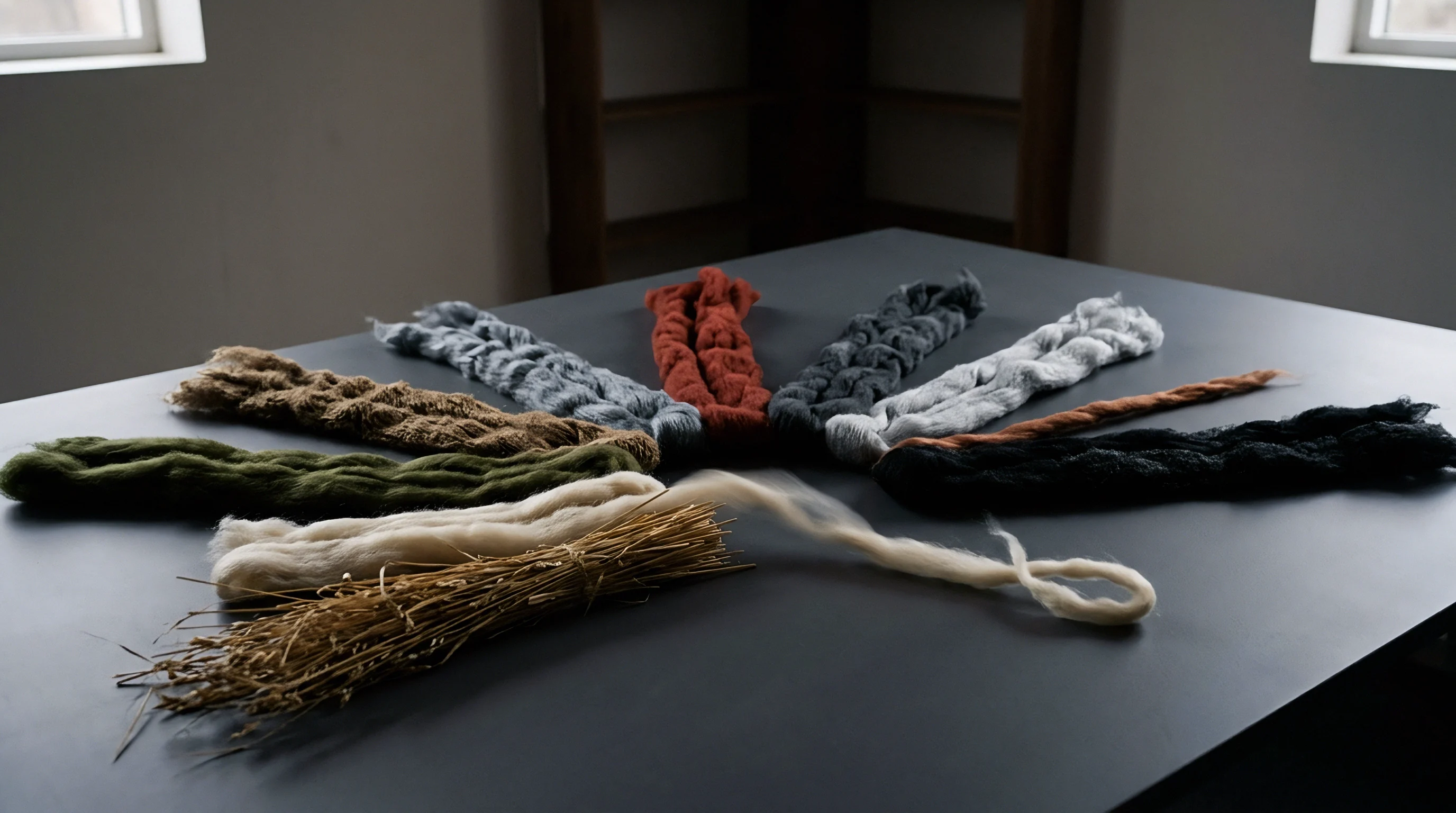
Spinning
Carding sliver containing cuticle-stripped fibers shows high draft instability on drawing frames. Rotor speeds demand torque. To process garnetted animal hair without excessive web breakdown, spinning mills alter raw material formulations and mechanical machine settings.
Draft rollers slip without scales. Blending long-staple carrier fibers into recycled lots creates physical bridge nodes that anchor scale-depleted hair during drafting and twisting operations.

Carrier Fibre Ratios and Twist Adjustments
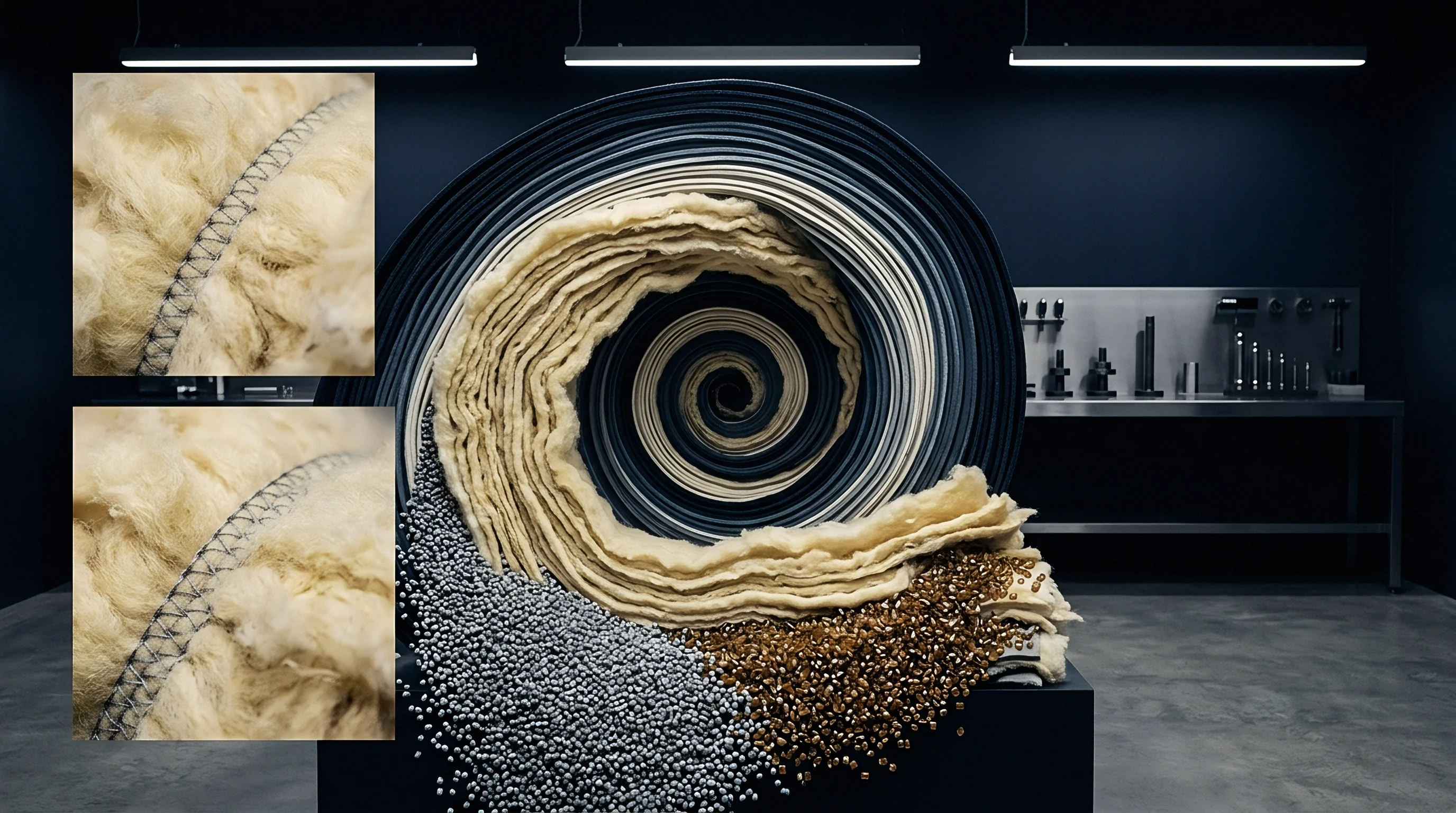
Incorporating high-tenacity virgin wool provides the inter-fiber anchoring required for stable yarn formation. Virgin wool fibers carrying intact cuticles with 0.7 micrometre scale heights interlock with smooth recycled fibers, suppressing fiber slip. Fine polyamide 6,6 staple or long-staple organic cotton serves as alternative carriers when producing fine-count ring-spun yarns.
The virgin carrier content must increase as the average staple length of the recycled hair drops below 22 millimetres.
Higher twist increases firmness. Twist multipliers must rise by 12 percent to 25 percent above standard virgin spinning specs to compensate for diminished differential surface friction. Woolen spinning systems utilize elevated twist to force descaled fiber shafts together, generating frictional resistance through radial compression.
Excessive twist reduces handfeel softeness, requiring a calculated compromise between yarn tenacity and final fabric aesthetics.
Blending virgin wool into garnetted stock restores processing cohesion before draft roller adjustments reach their mechanical limit.
Carding machinery requires modified pin density and wire angles when processing scale-stripped stock. Carding clothing with an aggressive forward pitch shears delicate cortex walls, creating short fiber fragments under 5 millimetres. Mill technicians install smooth, rounded wire points and reduce cylinder speeds to 280 revolutions per minute, preserving remaining staple length while producing a uniform web.
Worked Calculation for Spin Limit and Yarn Tenacity
Evaluating a 50 Nm wool-blend yarn lot illustrates the quantitative impact of recycled hair additions. Assume a target spun count of 20 tex (50 Nm) produced on a woolen ring-spinning frame. The base garnetted cashmere possesses a mean staple length of 18 millimetres, a mean fiber diameter of 15.8 micrometres, and a mean scale height of 0.10 micrometres due to aggressive tearing.
Virgin carrier wool measures 38 millimetres in staple length, 17.5 micrometres in diameter, and carries a 0.65 micrometre scale height with 16.5 cN/tex single-fiber tenacity.
The theoretical minimum number of fibers in a yarn cross-section to maintain stable spinning without breaking is 60 fibers. Using a 100 percent recycled cashmere lot, a 20 tex yarn contains:
Fiber Mass = (Pi / 4) (Diameter)^2 Density
Using keratin density of 1.31 grams per cubic centimetre, a 15.8 micrometre cashmere fiber weighs 0.2568 tex per 1,000 metres. The fiber count per yarn cross-section equals 20 / 0.2568 = 77.8 fibers. While 77.8 fibers exceeds the absolute minimum count of 60, scale loss reduces the effective inter-fiber friction coefficient from 0.20 to 0.04.
The resulting yarn strength drops below the minimum winding tension threshold of 4.5 cN/tex.
Calculating the required carrier blend ratio to achieve a target yarn tenacity of 7.0 cN/tex employs the empirical friction retention formula:
Tenacity_yarn = K (Friction_blend) (Length_mean) (Tenacity_fiber) Twist_factor
Where K is machine constant (0.042), Twist_factor is 1.18, and Friction_blend is the weighted linear average of fiber scale heights in micrometres:
Friction_blend = (Ratio_recycled 0.10) + (Ratio_carrier 0.65)
To reach 7.0 cN/tex yarn strength with 18 mm recycled stock (10 cN/tex fiber strength) and 38 mm virgin carrier wool (16.5 cN/tex fiber strength), the carrier ratio must reach 35 percent by weight:
Weighted Mean Length = (0.65 18 mm) + (0.35 38 mm) = 25.0 mm
Friction_blend = (0.65 0.10) + (0.35 0.65) = 0.2925 µm
Calculated Tenacity = 0.042 0.2925 25.0 ((0.65 10) + (0.35 16.5)) 1.18 = 7.18 cN/tex
This 35 percent virgin carrier fraction delivers the mechanical threshold needed for stable winding at 600 metres per minute.
- Assess incoming garnetted bale staple length distribution using ISO 920 photoelectric length analyzer to set draft zone gauge limits.
- Determine mean cuticular scale height via scanning electron microscopy cross-sections to establish baseline friction coefficients.
- Calculate required virgin carrier fiber percentage using the friction retention formula to achieve a minimum 7.0 cN/tex yarn tenacity.
- Adjust woolen ring spinning twist multipliers upward by 15 percent while lowering spindle speed to 6,200 revolutions per minute to suppress end breaks.
Suppliers routinely claim that garnetted cashmere runs pure at 28 Nm count without carrier fiber additions, neglecting to state that frame efficiency drops below 60 percent during production.
Grafting
Surface chemical re-functionalization deposits synthetic or natural polymers onto stripped hair shafts. Resin coatings restore grip. Chemical treatments recreate microscopic surface roughness, restoring directional friction without altering internal fiber protein structures.
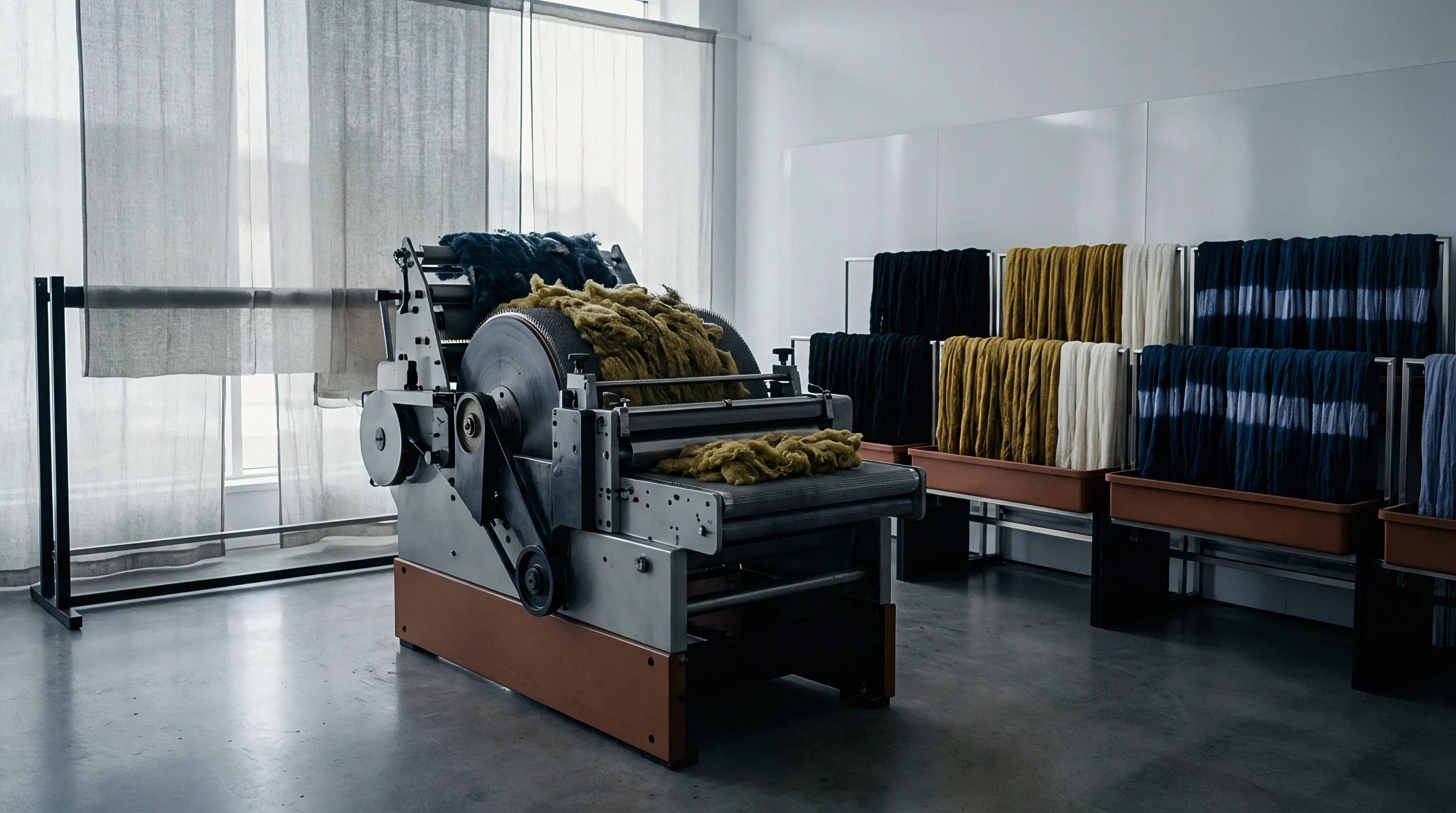
Applied during loose stock wet processing or post-garnetting scouring, these reactive finishes form artificial scale nodes that interlock during yarn drafting.
Polymer Deposition and Surface Resin Coating
Applying polyamide-epichlorohydrin cross-linking agents establishes artificial anchoring nodes along the fiber cortex. Keratin anchors onto cortex. These cationic resins react with carboxylate groups on exposed cortical cell proteins, curing into insoluble net-like micro-structures.
The cured resin increases surface friction coefficients from 0.04 to 0.16, allowing smooth recycled fibers to process through carding sets with standard twist settings.
Water-borne polyurethane dispersions offer a flexible alternative that avoids harsh chemical cross-linking. Cationic polyurethane particles measuring 50 to 100 nanometers deposit selectively onto exposed hydrophilic patches of damaged cortex. Upon drying at 110 degrees Celsius, the polyurethane forms micro-ridges spaced 8 to 12 micrometres apart along the shaft.
This synthetic topography mimics natural cuticular scale frequency, recovering up to 70 percent of original felting capacity.
Chemical resin treatments increase yarn surface friction without altering the underlying elemental protein structure.
Keratin bio-grafting presents an advanced bio-based alternative. Dissolved feather or low-grade wool keratin peptides graft onto recycled fiber surfaces using transglutaminase enzyme catalysts. Enzyme treatments attach functional keratin micro-aggregates to descaled areas, increasing cuticular scale height back to 0.35 micrometres while preserving biodegradable status.
Enzymatic Smoothing and Plasma Activation
Dielectric barrier discharge treatments generate reactive oxygen species on the inert hydrophobic cuticle remaining after tearing. Atmospheric plasma at 15 kilovolts creates hydroxyl and carboxyl radicals on exposed cortex walls, altering polar surface energy. Increased surface energy improves resin adhesion, doubling the wash fastness of subsequent surface coatings.
Controlled protease enzymatic polish removes jagged, broken cuticle fragments that resist chemical bonding. Subtilisin enzymes digest damaged, loose scale residues while leaving dense cortical structures intact. Cleaning fractured surface scale fragments creates a smooth substrate for polymer grafting, preventing finish peeling during high-speed spinning.
| Treatment System | Chemical Mechanism | Scale Height Recovery | Tenacity Gain | Cost Overhead |
|---|---|---|---|---|
| Polyamide-Epichlorohydrin (PAE) | Cationic cross-linking with carboxyl groups | 0.20 to 0.30 µm (node-like) | +22% to +30% | €0.45 per kg |
| Polyurethane Micro-Dispersion | Film-forming elastomeric ridge deposition | 0.25 to 0.40 µm (ridge-like) | +18% to +25% | €0.80 per kg |
| Keratin Bio-Grafting (Enzymatic) | Transglutaminase-catalyzed peptide coupling | 0.15 to 0.28 µm (scale-like) | +12% to +18% | €1.60 per kg |
| Dielectric Plasma + Silane | Surface oxidation followed by silanol condensation | 0.10 to 0.18 µm (etched pattern) | +8% to +14% | €1.20 per kg |
| Data normalized across 18.0 micrometre garnetted cashmere stock treated at 3% wet pick-up under standard laboratory conditions. | ||||
Selection of chemical scale restoration methods depends on downstream wash fastness demands, as outlined in technical supply specifications.
- Chemical purity verification requires gas chromatography testing of bath effluent to confirm alkylphenol ethoxylate compliance.
- Thermal curing limits must stay below 120 degrees Celsius to prevent yellowing of bleached specialty hair fibers.
- Bath pH control must hold within 4.5 to 5.5 to prevent alkaline hydrolysis of exposed cortical keratin bonds.
- Dye compatibility checks ensure cationic functional resins do not alter shade depth or cause uneven level dyeing.
Under ISO 105-C06 standards, supply contracts stipulate that surface resin functionalization must retain a minimum 80 percent friction coefficient gain after five commercial laundry cycles.
Tariff
Importing mechanically recovered animal fibers requires precise classification under national customs schedules. Duty brackets shift rapidly. Harmonized System classifications distinguish raw uncarded wool waste from garnetted stock and combed sliver.
Mislabelling scale-depleted recycled cashmere as raw virgin specialty hair leads to customs seizures, retroactive tariff penalties, and mandatory re-testing under border audits.

Customs Heading Realities and Duty Discrepancies
Harmonized System code 5103 covers waste of wool or fine animal hair, whereas garnetted stock falls under 5104. Raw savings hide spinning scrap. 5104.00 attracts different customs duty rates depending on country-of-origin rules and preferential trade agreements.
Fine animal hair waste categorized under 5103.10 experiences flat entry tariffs, but converting that waste into garnetted sliver shifts classification to 5106 or 5107 once carding processes begin.
Customs authorities audit imported recycled lots using microscopic scale identification to verify whether declared recycled content matches tariff descriptions. When customs laboratories find scale-less, descaled fibers without corresponding waste transaction documentation, they reclassify shipments under prime virgin hair codes. Virgin cashmere imports carry elevated tariff valuation baselines, multiplying total duty payable at the port of entry.
Verification dossiers must accompany every container, providing transaction proof linking post-consumer or pre-consumer waste sources to the final garnetted output. Lacking documented chain-of-custody paper trails, importers face heavy classification penalties based on peak virgin hair market valuations.

Landed Cost Structure across Blend Ratios
Raw material savings achieved by substituting recycled cashmere are routinely eroded by yarn yield losses. Scoured wool retains moisture. Garnetted cashmere purchased at €45 per kilogram appears economical against virgin cashmere at €160 per kilogram.
Higher carding scrap, increased end-breakage, mandatory virgin carrier fiber additions, and chemical resin grafting add incremental processing costs that shrink the landed margin gap.
Landed fabric cost per metre depends directly on yarn spinning limit and carding fly loss. A yarn containing 70 percent descaled recycled hair experiences 8 percent higher fiber fly loss during carding than a 30 percent recycled blend. Lower spinning limits require heavier yarn counts, increasing the fabric weight per square metre needed to reach required tensile strength specs.
Duty risk mitigation dictates that raw material composition claims rest on proteomic testing certificates rather than optical microscopy reports alone when clearing cross-border freight.
A buyer calculating landed cost balances raw material savings against carrier additions and chemical treatment costs.