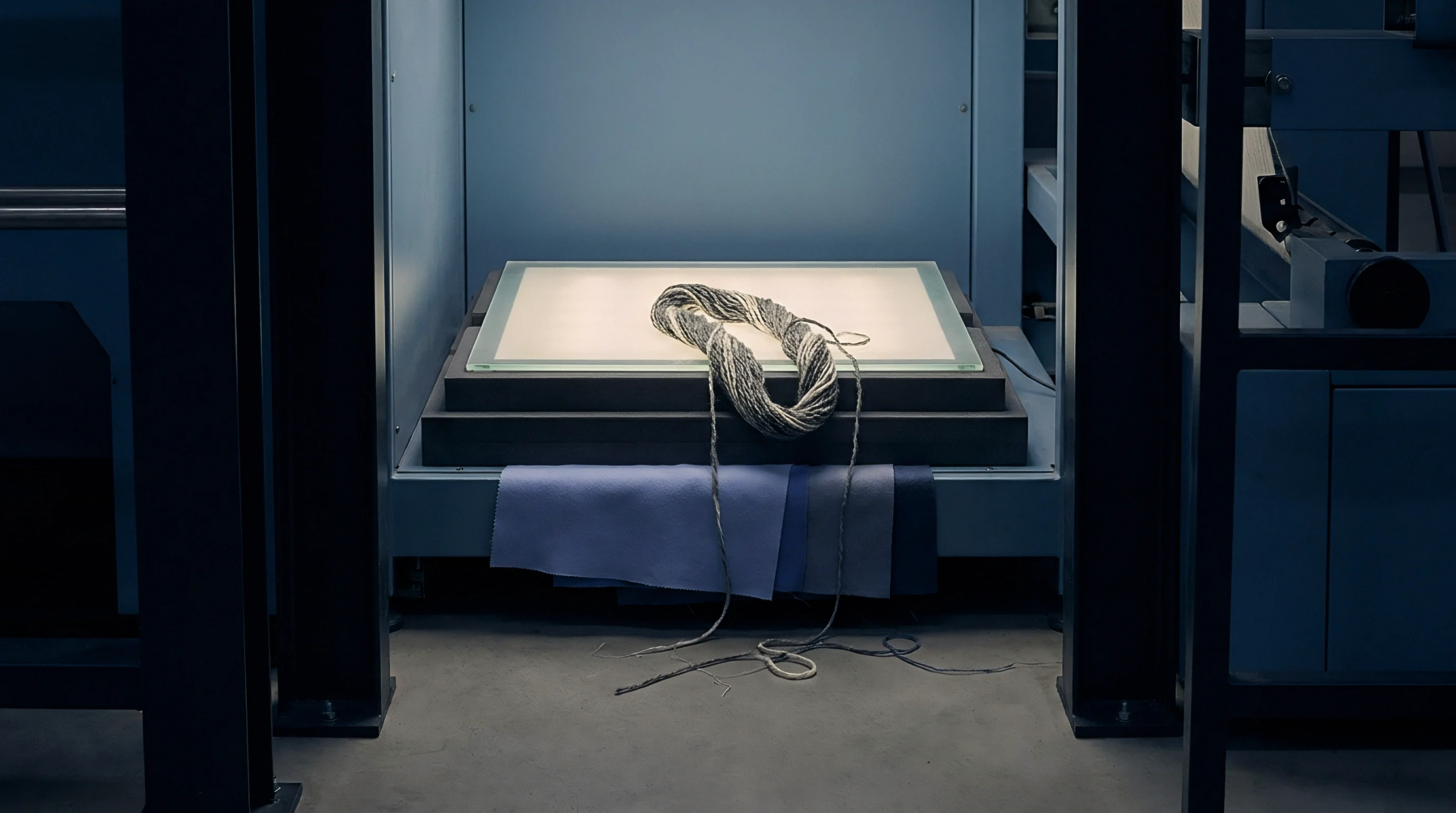
Minimum Colour Quantity Deciding a Range Plan before Design Does
Minimum colour quantities set dye vessel efficiency and enforce range plan fabric allocations long before garment sketches reach the pattern desk.
A physical flaw appears as a permanent line or streak on the surface of a finished fabric. The rope mark is a common defect that occurs during the wet processing of knitted and lightweight woven materials. It is caused by the fabric remaining in a folded or compressed state for an extended period inside the dyeing machine.
These lines often run in the longitudinal direction and are especially visible in dark or solid colors. The defect is usually permanent and cannot be removed by subsequent finishing or ironing. It represents a significant quality issue that can lead to the rejection of entire fabric rolls.
This flaw is a primary concern for dye house managers and quality control inspectors.
Formation of these creases happens when the fabric is circulated through a jet or overflow dyeing machine in a rope form. The rope mark is the result of excessive pressure and heat acting on the folds of the material as it passes through the transport tube and the nozzle. If the fabric does not unfold and change its position frequently, the pressure creates a sharp crease that becomes set into the fiber.
This risk is higher for synthetic fibers like polyester and for fabrics with a high degree of twist in the yarns. The speed of the fabric circulation and the volume of the dye liquor also play a role in the formation of these marks. Proper management of the machine settings and the use of anti-crease lubricants can help to prevent the fabric from sticking to itself.
Stability of the material structure determines how susceptible it is to the formation of permanent folds. The rope mark occurs when the mechanical stresses exceed the ability of the fiber to return to its original flat state. In some cases, the crease is so deep that it actually damages the yarns and changes the way they reflect light.
This results in a visible line that looks like a shade difference but is actually a structural change. The defect is often identified during the final inspection of the fabric as it is being rolled. If the marks are found, the roll must be downgraded and may be sold as second quality material.
This boundary highlights the need for careful handling of the fabric during the most aggressive stages of the dyeing process.
Financial loss for the textile mill can be substantial when a production lot is affected by this type of defect. The rope mark reduces the usable area of the fabric and increases the amount of waste during the garment cutting process. If the marks are widespread, the buyer may refuse to accept the shipment, leading to a complete loss of the material and the production costs.
Mills often have to provide discounts or replacements for the affected goods, which eats into their profit margins. To avoid these costs, factories invest in modern dyeing machines with features that promote even fabric circulation. They also perform regular trials to determine the best processing conditions for each type of material.
Effective prevention of these marks is essential for maintaining a high level of quality and profitability in the mill.
Minimum colour quantities set dye vessel efficiency and enforce range plan fabric allocations long before garment sketches reach the pattern desk.
Expertise is a utility, not a secret. sentiention™ publishes its working knowledge as open reference: intelligence layer covering the materials it sources, the markets it enters, and the reference that serves both.