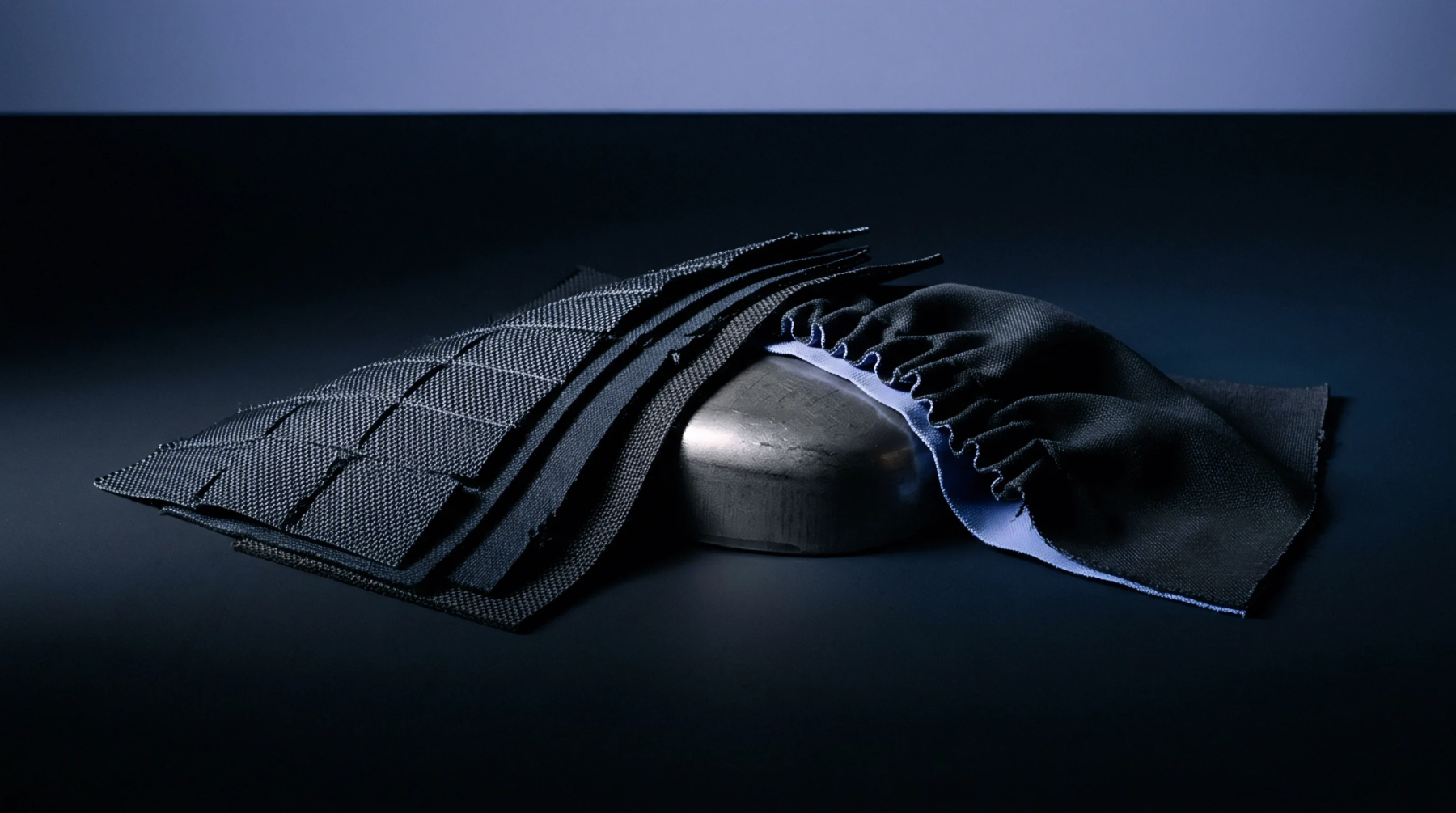
Finishing Process
Industrial treatment of textile fabrics using heated rollers under high pressure alters the surface and structural properties of the material. This finishing step, known as thermomechanical calendering, compresses the fabric structure to reduce thickness and air permeability. Passing the fabric through the nip of the rollers forces the fibres to flatten and bond slightly.
Fabric Impact
Heat softens the synthetic fibres while the high pressure reorganizes the yarn spacing within the weave. Applying thermomechanical calendering yields a smoother surface finish and increased luster, which is desirable for down-proof fabrics. The treatment also increases water resistance by reducing the size of the gaps between warp and filling threads, creating a dense barrier against wind and feather penetration without adding weight to the garment.
Processing Variable
Roll temperature and nip pressure are adjusted to control the degree of structural modification. High speed runs reduce the contact time, resulting in a more superficial treatment, while slower runs allow heat to penetrate deeper into the yarn core. These variables must be balanced to avoid making the fabric too stiff.
Mechanical Effect
Physical properties like tensile strength can be impacted if the heat and pressure are too high. Over-processing degrades the polymer chains, leading to a brittle structure that is susceptible to tearing.