Moisture Equilibrium
Hygroscopic behavior in textile manufacturing defines how cellulose-derived filaments absorb atmospheric water vapor under standard ambient conditions. Viscose regain capacity describes the exact percentage increase in mass that dry regenerated cellulose fibers experience when exposed to a specific relative humidity and temperature until weight stabilization occurs. Commercial yarn contracts and finishing specifications rely on this baseline because excessive water uptake alters linear density and distorts calculated billing weights.
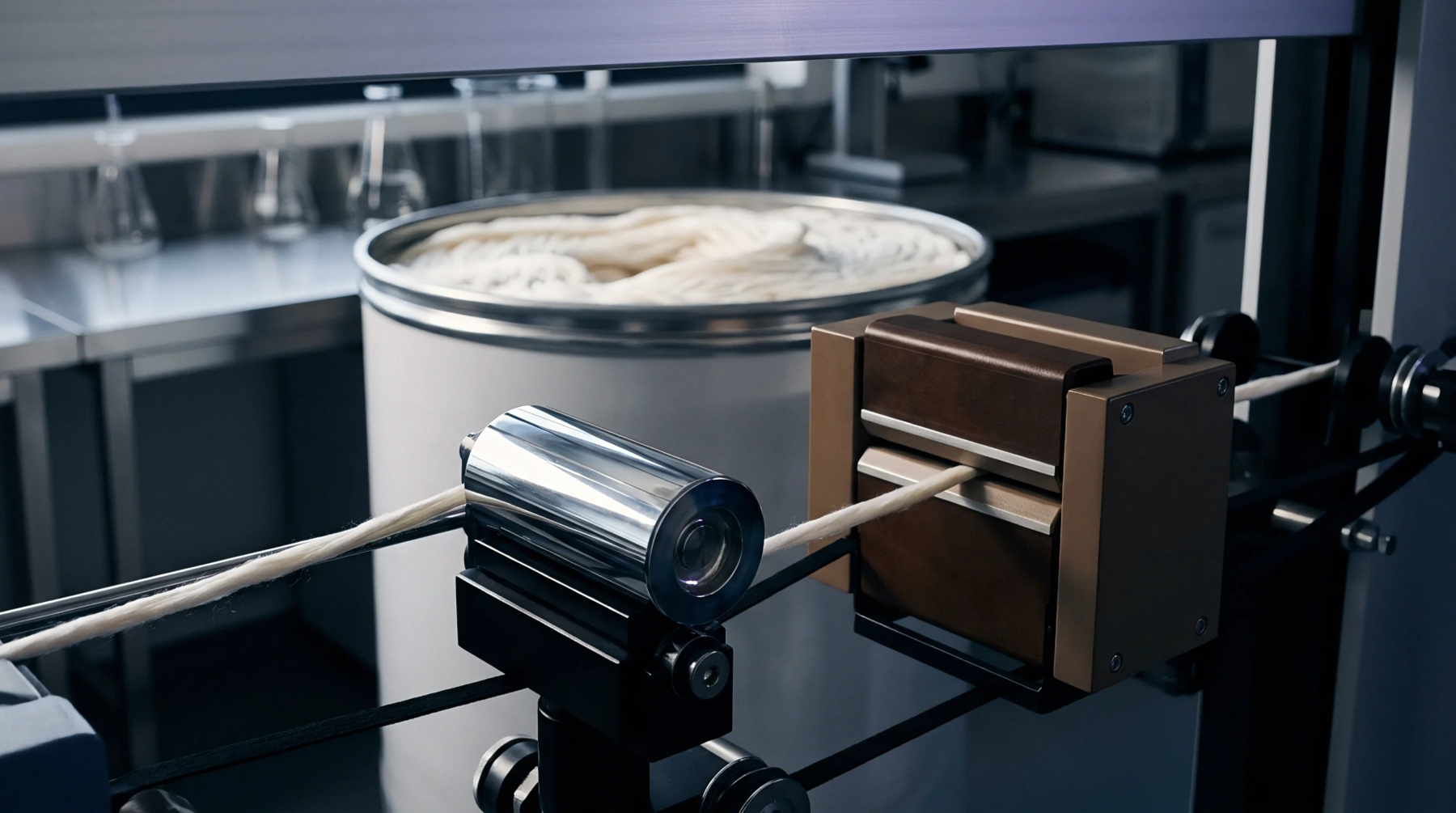
Standard atmospheric testing requires conditioning samples in a controlled chamber operating at a relative humidity of sixty-five percent and a temperature of twenty degrees Celsius. Laboratory technicians weigh conditioned bundles against oven-dry standards to calculate the percentage ratio.
Hygroscopic Mechanics
Molecular pathways inside regenerated cellulose structures permit water molecules to penetrate amorphous regions while crystalline domains remain largely impenetrable. Hydroxyl groups located along polymer chains attract polar moisture molecules through hydrogen bonding during ambient exposure. Internal swelling occurs as water penetrates the amorphous matrix, pushing adjacent molecular chains apart and altering physical dimensions within the yarn structure.
Ambient temperature variations alter equilibrium states because thermal energy disrupts established hydrogen bonds and releases previously bound moisture back into the surrounding air.
Commercial Variance
Mercantile transactions involving cellulosic yarns require strict adherence to standardized commercial moisture allowances to prevent financial disputes over water weight. Commercial weight formulas incorporate predetermined moisture percentages to establish fair billing masses regardless of regional atmospheric conditions at the time of delivery. Unscrupulous suppliers might exploit high humidity environments during final packaging to inflate shipment tonnage if moisture allowances are absent from purchase contracts.
Dyehouse operators must account for inherent moisture absorption when calculating dry mass inputs for chemical recipes to maintain consistent color yield across different production lots.
Testing Protocols
Laboratory verification of moisture absorption requires desiccating yarn samples in an automated drying oven until constant mass is achieved before standard conditioning begins. Precision balances record bone-dry weights in milligrams to eliminate initial measurement error before placing samples into conditioning racks. Technicians measure mass fluctuations at hourly intervals until successive weight readings show negligible variance, confirming that equilibrium is reached.
Final calculations divide the absorbed moisture mass by the dry fiber mass and multiply the resulting fraction by one hundred to determine the exact regain percentage for the production batch.