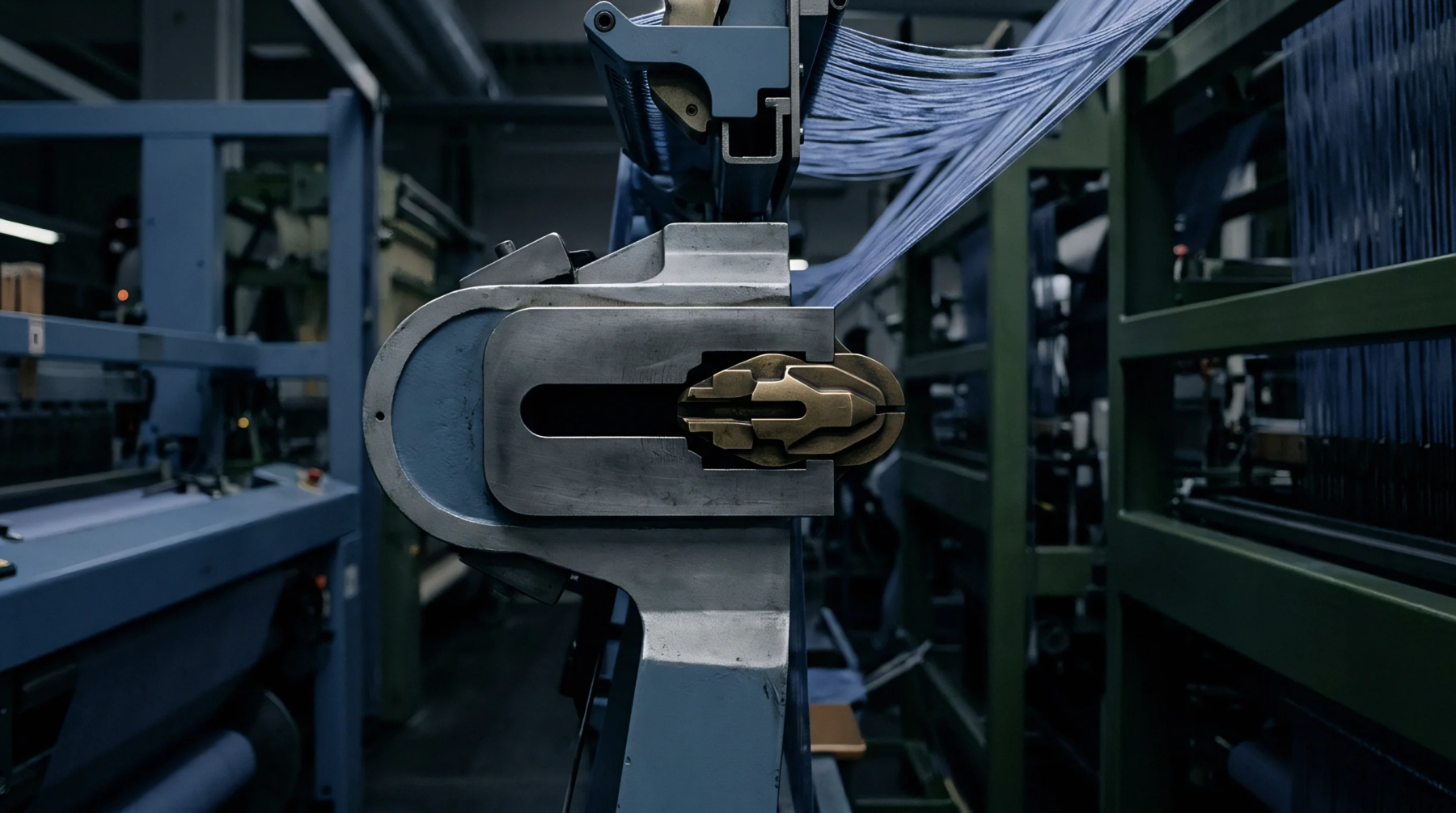
Protrusion Count
Optical sensor arrays counting the absolute number of protruding fibers measuring three millimeters or longer per hundred meters of yarn establish a direct count of cling-causing hairs. Measurement of the zweigle S3 hairiness index focuses exclusively on long fiber tails that cause mechanical entanglement between adjacent warp ends. Spinning mills rely on this length-specific counting method to detect worn spinning rings and damaged travelers during drafting.
Controlling long fiber count reduces warp stops during weaving.
Shedding Obstruction
Long protruding fibers interlock between neighboring warp yarns and prevent clean opening of the loom shed during picking operations. A high zweigle S3 hairiness index indicates severe vulnerability to yarn clinging and warp floating defects on air-jet looms. Suppressing long hairs improves weaving efficiency.
Combing Impact
Fiber length uniformity achieved during cotton combing removes short floating fibers and tucks long tail ends into the yarn core. Evaluating yarns via the zweigle S3 hairiness index verifies combing performance and binder fiber placement in high-value compact yarns. Effective combing sharply drops long fiber counts.
Threshold Limit
Values exceeding thirty protruding fibers of three millimeters length per hundred meters trigger immediate traveler replacement in ring spinning operations. Uncontrolled counts cause severe mechanical defects during high-speed warping.