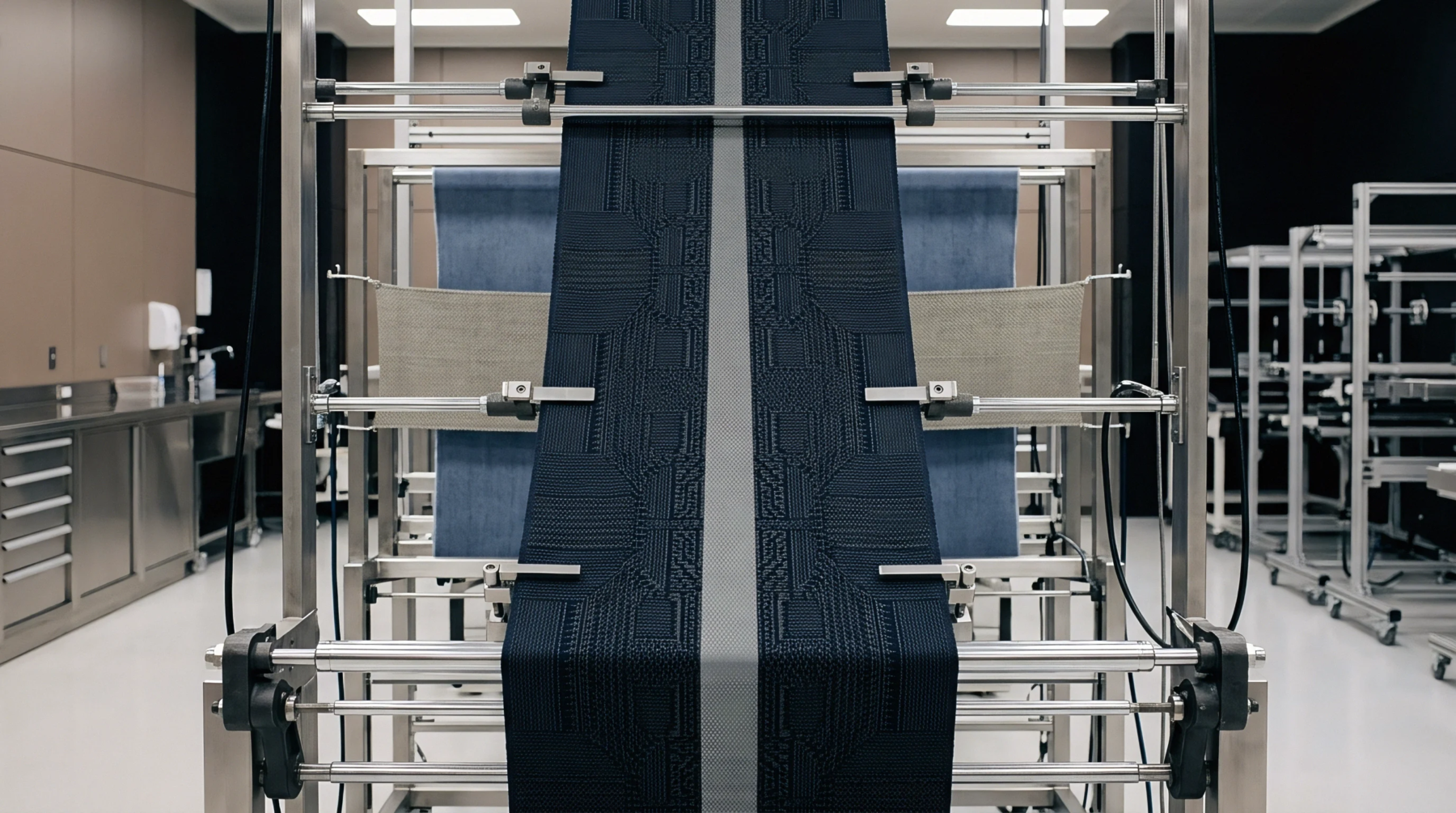
Shed Configuration
Weaving machine configuration involves the unequal displacement of warp yarns during the formation of the opening for the weft. Such asymmetric shedding allows for different tension levels between the top and bottom layers of the warp. Mills employ this setting to manipulate fabric appearance or to facilitate the passage of bulky weft yarns.
Tension Management
Differential tensioning creates a specific mechanical environment for the yarn. In this arrangement, the distance from the fell of the cloth to the heald frames differs for the upper and lower sheets. Lower tension on one sheet reduces the stress on delicate fibres during the insertion stroke.
This mechanical adjustment prevents warp breakage in low-strength yarns while maintaining a crisp shed for the picking element.
Surface Control
Fabric face characteristics change depending on the shed alignment. When the top warp sheet is slacker than the bottom, the warp yarns cover the weft more effectively on one side.
Production Checkpoint
Inspection protocols verify the setting through visual checks of the shed opening and tension measurements on the loom. Incorrect settings lead to uneven fabric selvedges or recurring warp breaks. The loom technician adjusts the timing and height of the heald frames to reach the specified asymmetry.