Fibrous Architecture
Textile yarns manufactured from uncombed staple fibres positioned in a randomized mesh represent a primary construction category in soft fabric manufacturing. A carded woollen yarn relies on roller carding to interlock short and long fibres without removing the shorter fraction. Tensile limit remains secondary to warmth and surface loft.
Mechanical Preparation
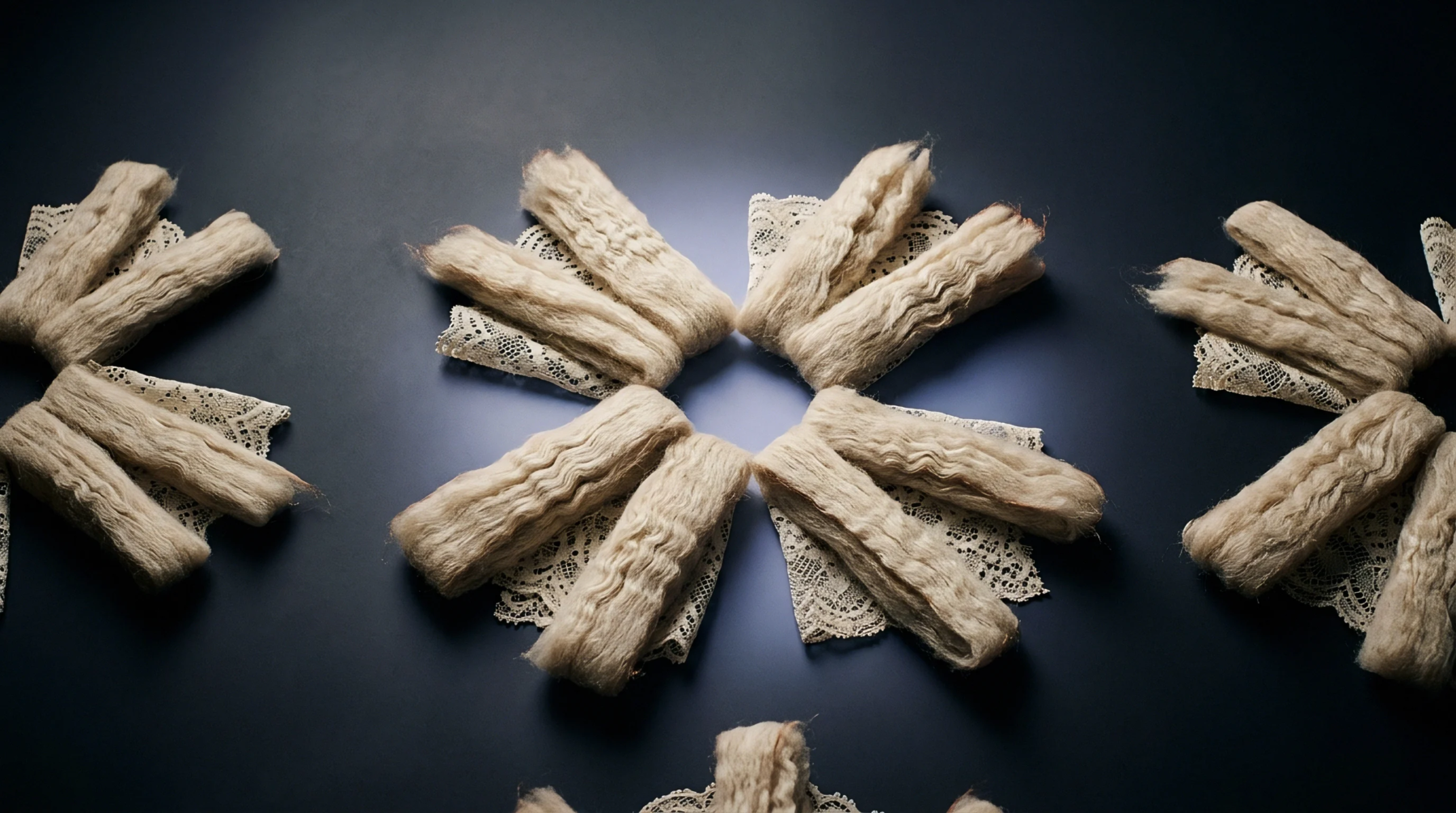
Mechanical processing uses fine-wire clothing on large rotating drums to open raw fleece stock into a thin web. Carded woollen preparation deliberately bypasses gilling and combing operations, leaving varied fibre lengths mixed throughout the web matrix. Mechanical condensers slit the fibrous sheet into narrow ribbons before rubbing leather aprons roll them into false-twist roping.
Spinning frames insert true twist directly into these soft ropings, creating a lofty structure with trapped air pockets. Low orientation among constituent fibres generates bulk while maintaining low density across the yarn body.
Structural Behavior
Bulk retention defines the physical behavior of these assemblies during weaving or flat knitting. Interlocking surface fibres generate natural insulation properties during wear. Tensile forces collapse lofty yarns if winding tension exceeds strict operational thresholds.
Specification Boundary
Commercial verification isolates yarn count uniformity and residual fat percentage. Standard testing measures residual spinning oil levels, because excess lipid content interferes with wet processing. Processing moves outside carded woollen classifications when combing machinery removes short staples to form a parallel sliver.