Fabric Relaxation
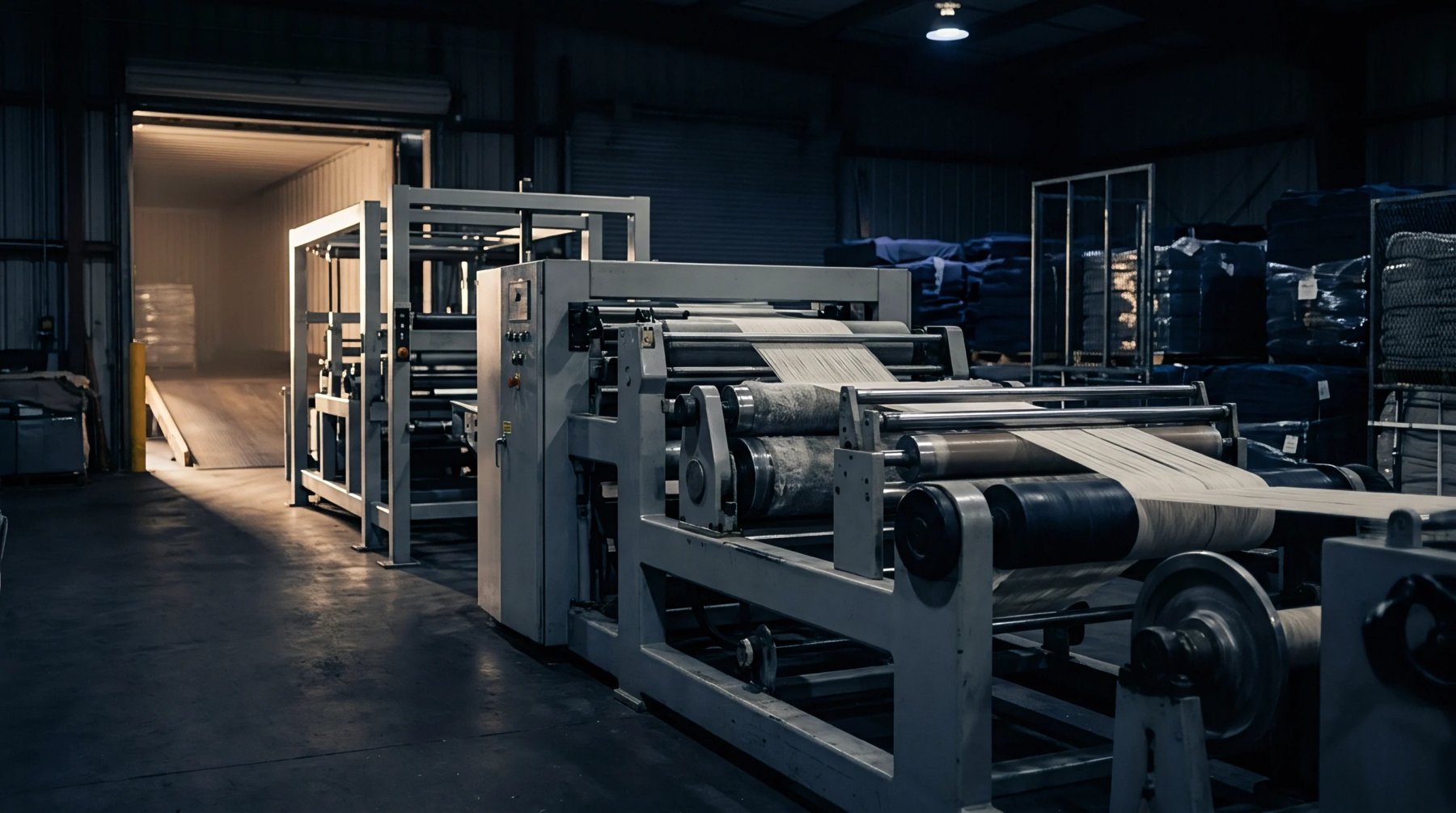
Tension control during mechanical textile finishing determines the residual shrinkage and hand feel of the processed material. Adjusting the chain overfeed ratio dictates how much extra fabric is fed onto the pins or clips of a tenter frame relative to the speed of the transport chain. Delivering the fabric faster than the chain travels allows the yarns to relax and crimp before they are locked in place by heat.
Fabric relaxation is essential for producing stable fabrics that do not shrink excessively when washed by the consumer.
Overfeed Control
Mechanical feed rollers operate at a higher surface velocity than the main transport pins to force extra length into each linear meter of chain. The selected chain overfeed ratio balances fabric thickness and density against the risk of surface puckering or uneven pinning. If the feed rate is too high, the fabric will sag between the pins and develop wavy edges that complicate later cutting operations.
Conversely, setting the ratio too low leaves the fabric under excessive lengthwise tension during heat-setting, resulting in high residual laundry shrinkage. Production supervisors monitor the feed velocities continuously to maintain a balanced yield.
Shrinkage Resistance
Garment manufacturers require strict dimensional tolerance to ensure consistent fit after multiple wash cycles. Running a high chain overfeed ratio compensates for the stretching that occurred during earlier scouring and dyeing operations. Pre-shrinking the fabric during finishing minimizes post-purchase shrinkage complaints.
Finishing Boundary
Boundary limits in overfeed settings depend on the weight and construction of the woven or knitted material. Thick, heavy cotton knits require a higher chain overfeed ratio to restore their natural loft and density compared to lightweight nylon weaves. Finishing mills must calibrate these parameters for each individual fabric quality to avoid structural defects.