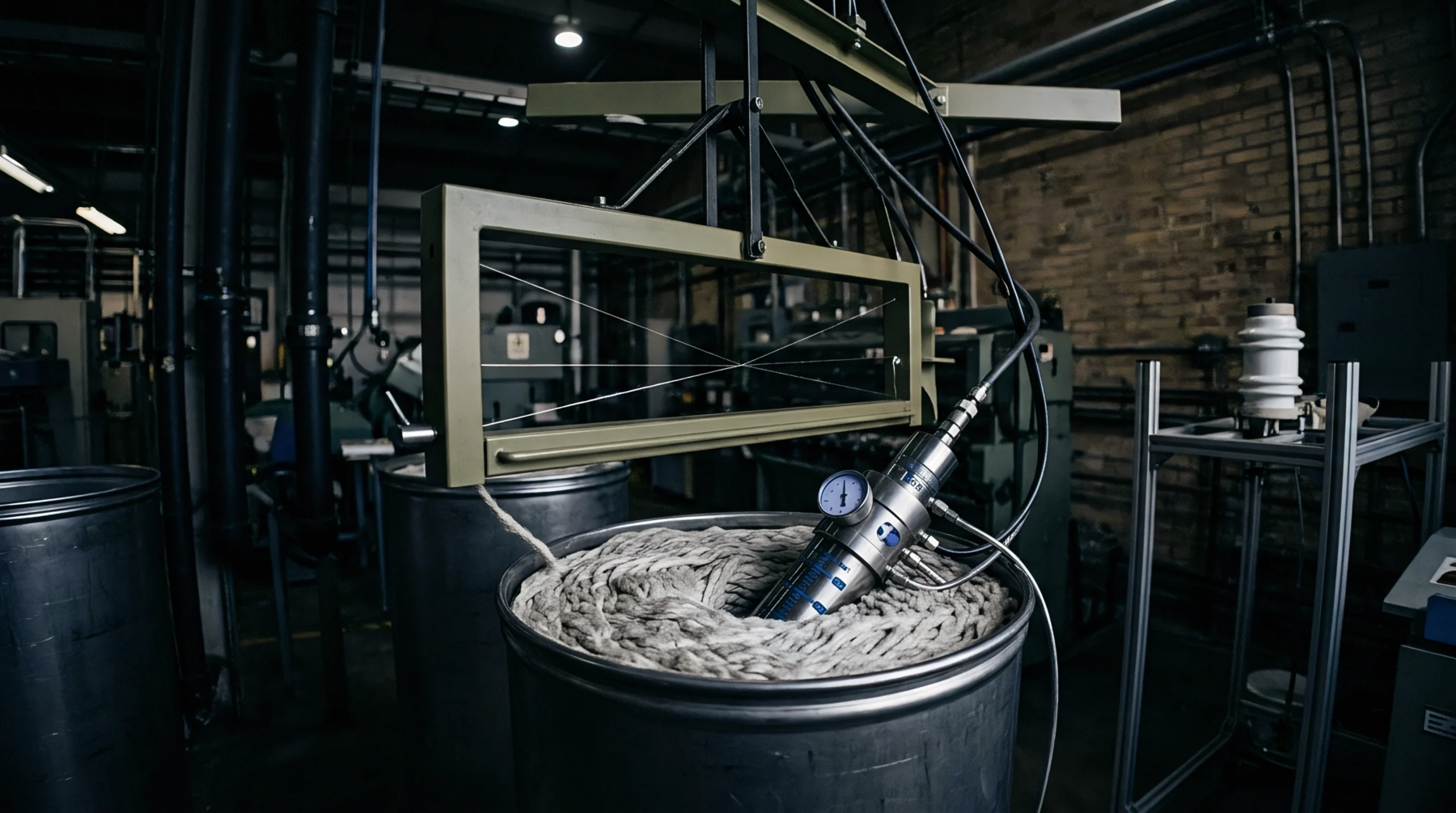
Decompression Velocity
The rate of pressure reduction inside a closed extraction or dyeing vessel over time dictates thermodynamic phase changes and gas expansion kinetics within polymer matrices. Governed in units of megapascals per minute, depressurization rate controls how rapidly dissolved supercritical fluids nucleate and escape from synthetic fibres during cycle termination. When the pressure drops, the fluid density decreases abruptly, forcing dissolved gas out of solution within the swollen amorphous domains of the textile substrate.
Controlling this velocity prevents physical destruction of synthetic yarns while ensuring rapid turnaround times in industrial processing. If the pressure releases too slowly, batch cycle times extend unnecessarily, whereas an excessive velocity causes catastrophic structural defects.
Cellular Nucleation
Rapid pressure drop inside gas-saturated polymers triggers supersaturation, prompting sudden cell nucleation within the polymer matrix. When the depressurization rate exceeds the diffusion rate of the gas through the polymer boundary layer, the escaping gas cannot migrate out smoothly and instead expands within the soft segments. In elastomeric yarns such as spandex, this expansion produces internal voids that permanently compromise tensile performance.
Slower pressure reduction allows the gas to diffuse steadily through the filament surface without tearing internal macromolecular chains. The boundary between defect-free degassing and destructive voiding depends on polymer glass transition temperature and operating heat.
Structural Consequences
Filament internal damage manifests as surface blistering, longitudinal fibrillation, and significant loss of modulus. High depressurization rate regimes shatter the structural cohesion of elastomeric cores, dropping yarn tenacity below commercial delivery specifications. In tight fabric rolls, localized pressure pockets generate uneven ballooning across inner layers, causing permanent barré defects in knitted goods.
Microscopic examination of fractured filaments reveals sponge-like internal cavities where gas nucleation overwhelmed chain relaxation mechanisms. Maintaining a gradual pressure ramp downstream of the extraction phase prevents these physical deformations across dense material packages.
Process Regulation
Automated relief valves governed by programmable logic controllers manage the depressurization rate along multi-stage linear slopes. Verification requires downstream tensile testing according to ASTM D2256 alongside cross-sectional scanning electron microscopy on finished filaments. Density measurements of treated yarns confirm whether microvoid formation has occurred during the pressure release sequence.
In commercial garment scouring facilities, cycles employ staged decompression holds to permit safe outgassing of high-density knits. Production lots showing sudden pressure drops are quarantined immediately to check for filament rupture and uneven elastic recovery.