Mechanical Region
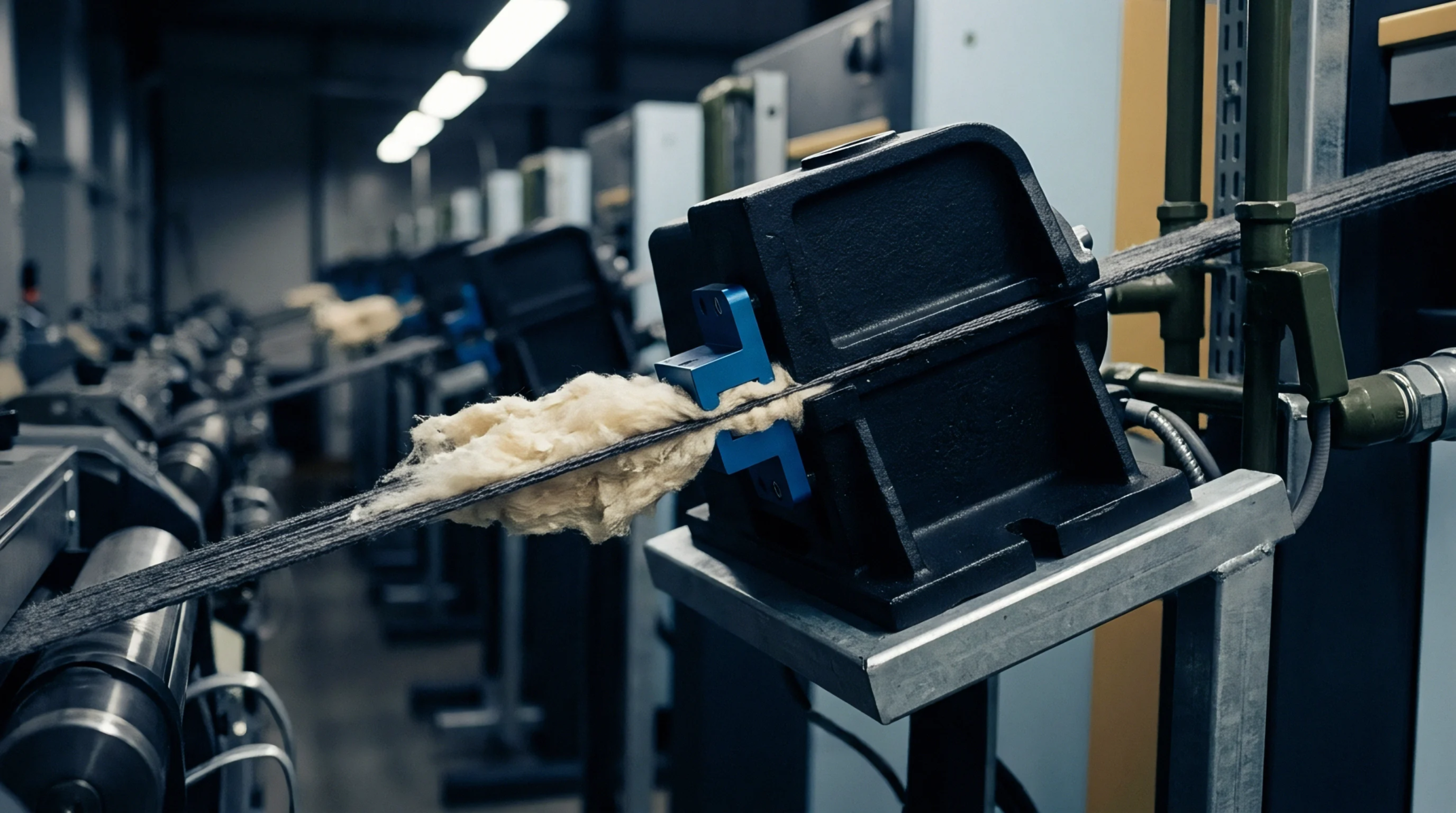
Spanning region between successive pairs of rollers in a spinning frame operates to reduce the density of fiber bundles. This primary drafting zone establishes the physical boundary where parallel fibers are slid past each other to make the strand thinner. The distance between the nip points of the entry and exit rollers must exceed the longest fiber in the blend to prevent rupture.
Adjusting this distance allows spinners to accommodate varying cotton staples.
Velocity Gradient
Acceleration occurs when the front rollers rotate faster than the back rollers. Because the drafting zone relies on this speed differential, fibers transition from a slow-moving inlet speed to a rapid delivery speed. This action rearranges the fibers into a longer and thinner strand.
Control of this process determines yarn uniformity.
Friction Field
Inter-fiber friction provides the resistance needed to draw out the strand uniformly. In the drafting zone, shorter fibers require external guidance like aprons or condenser guides to prevent uncontrolled clustering. Without this physical guidance, erratic movement produces thick and thin regions.
This variation degrades final yarn strength.
Production Control
Operational limits depend on the fiber length distribution and roller pressure. Mill operators adjust the settings of each drafting zone to match the specific cotton or synthetic grade being processed. Improper spacing leads to fiber damage or excessive yarn hairiness.
Regular mechanical audits ensure the draft ratio remains stable.