Determining Fiber Loss Mechanics in High Speed Air Jet Spinning
Differential aerodynamic stripping in air jet spinning ejects short cotton fibers, skewing intimate mixture ratios and altering delivered yarn costs.


Whirl
Compressed air enters the injector tract at tangential inclinations between thirty and forty-five degrees, generating fluid rotations exceeding three hundred meters per second inside the spiral zone. The expanding air cone strikes the forward tip of the stationary spindle, producing a localized pressure drop immediately past the front drafting rollers. Fibers emerging from the nip line encounter this expanding pneumatic envelope before mechanical twist stabilizes the strand.
The central core bundle passes directly down the hollow spindle collector hole while outer strand boundaries experience intense aerodynamic torque.
Centrifugal acceleration within the fluid stream acts unequally across individual filaments depending on instantaneous positioning relative to the boundary wall. Long filaments anchored in the central strand resist radial detachment through longitudinal tension transmitted from the downstream delivery rollers. Peripheral staple lengths lack sufficient friction to hold their linear orientation inside the advancing core.
The rotating air volume peels loose tail ends away from the main strand axis, wrapping them across the exterior conical spindle surface to create binding sheath turns.
Turbulent air velocity at the stationary spindle tip strips unsupported staple ends before twist insertion takes place.
Radial detachment accelerates when individual filament lengths drop below the aerodynamic transport threshold. When fiber acceleration forces exceed the inter-fiber cohesive grip governed by surface wax levels and finish friction, loose fibers detach entirely into the exhaust air stream. The process purges weak mechanical links from the core while discharging clean staple mass into the collection filter box.
Delivery speeds running between four hundred and five hundred fifty meters per minute compress this separation event into less than two milliseconds.
Aerodynamic Shear within Spiral Chambers
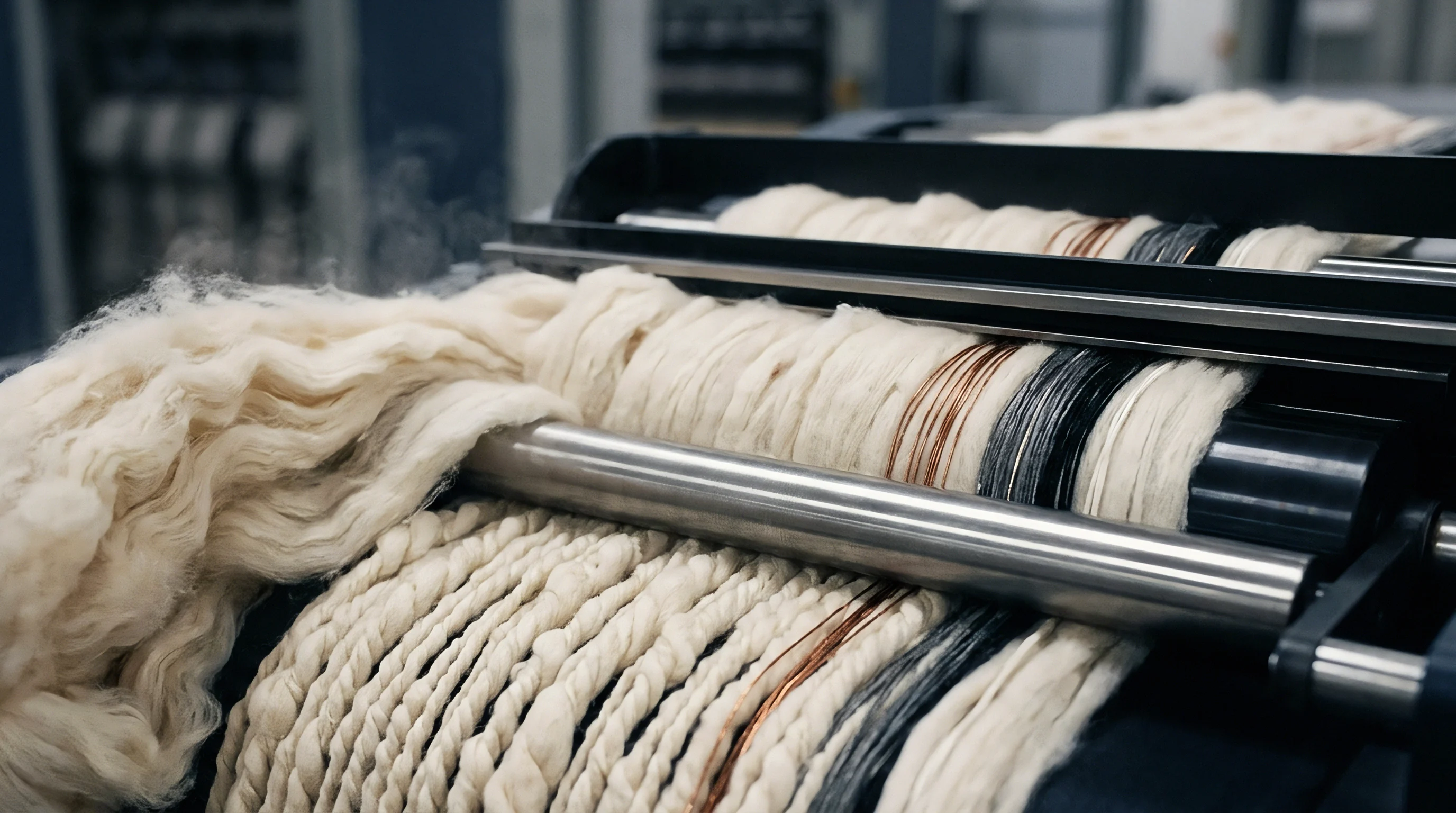
High-velocity injection creates extreme shear gradients across the gap between the static spindle apex and the rotating air boundary. Fluid shear stress increases with the square of the operating gauge pressure inside the intake manifold. Core fibers remain aligned along the central axis of low atmospheric pressure, yet peripheral fibers experience violent tangential deflection toward the chamber walls.
The resulting velocity differential separates floating filaments whose trailing ends have already exited the drafting nip while their leading ends remain unbonded to the forward-moving core.
Airflow drives the separation.
Air velocity distributions measured along the outer diameter of the hollow spindle reach supersonic local bursts under supply pressures above 0.50 MPa. These localized pressure waves strip away fibers possessing lower flexural rigidity or damaged cuticle layers before sheath formation finishes. Fragmented cellulose segments and disconnected single fibers pass downward through peripheral evacuation channels designed to prevent chamber clogging.
The mechanical consequence is continuous mass depletion across the delivered yarn package relative to the sliver feed mass entered at the rear creel.
Nip
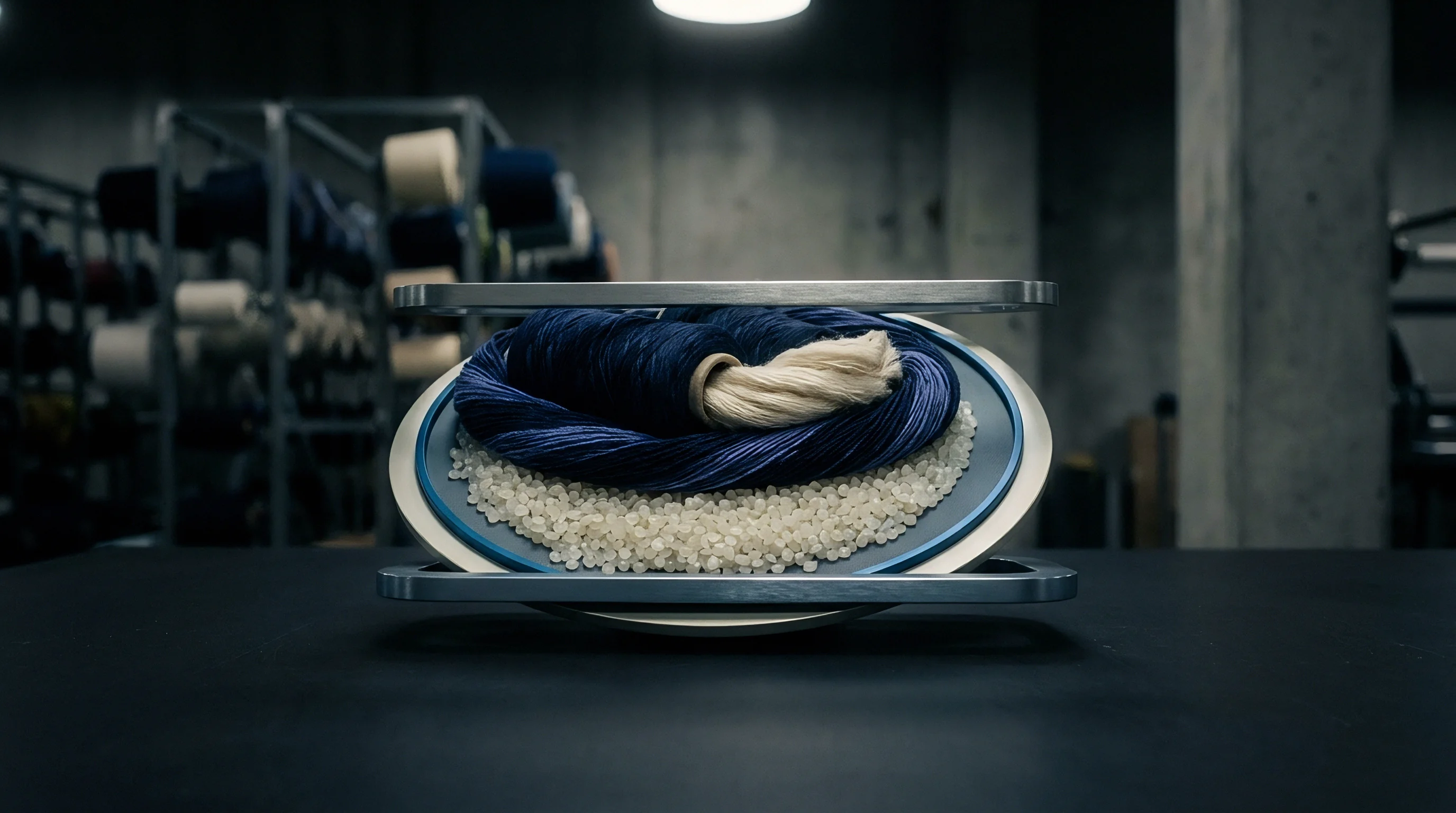
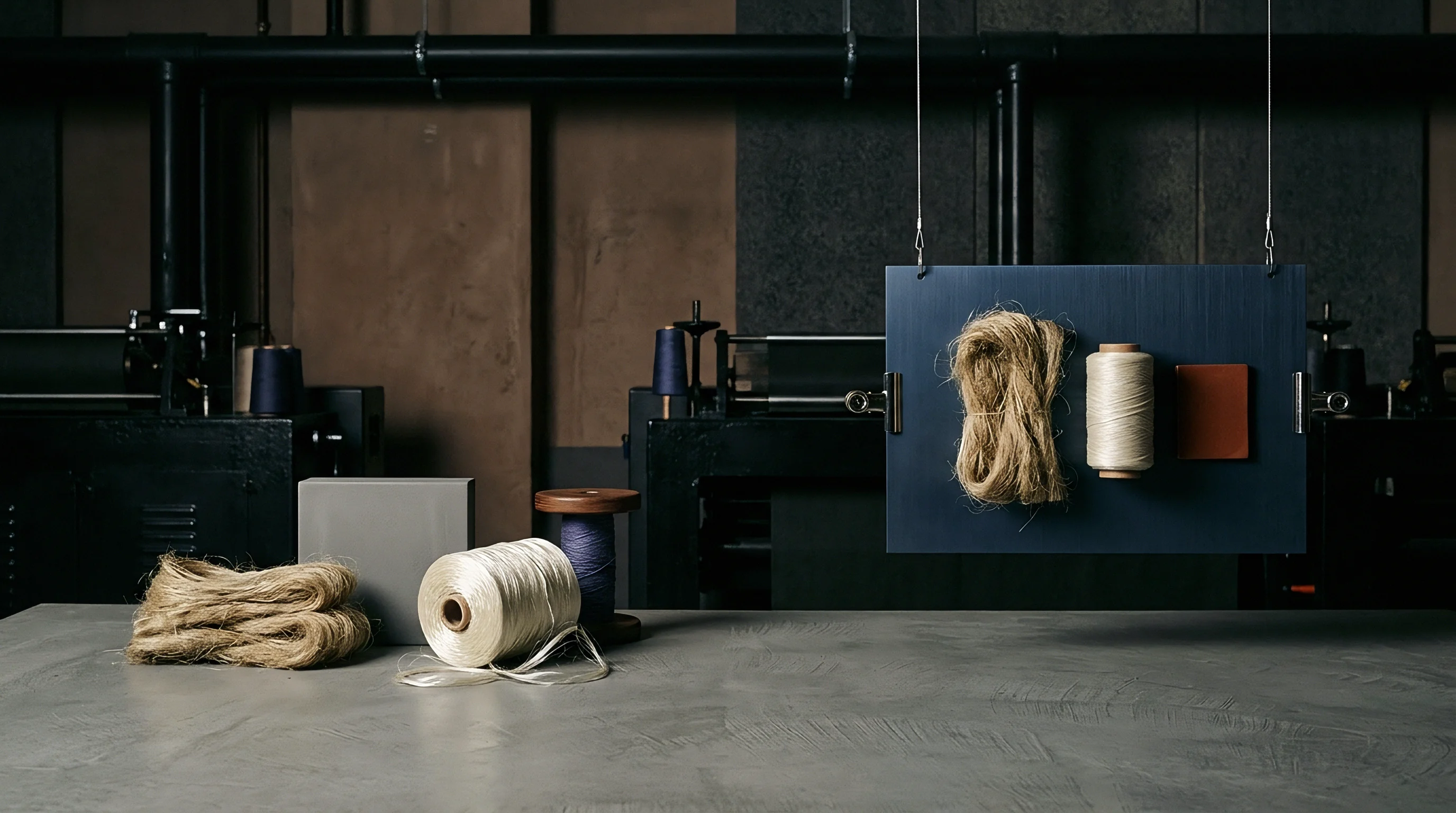
Delivery geometry between the final drafting apron and the injector block governs the mechanical stability of incoming sliver mass. The free span distance between the front roller contact line and the spindle intake tip measures between 2.5 and 4.0 millimeters on industrial vortex frames. Short fibers whose physical length remains under sixteen millimeters lose physical contact with both drafting surfaces prior to entering the negative pressure zone created by the stationary spindle.
These floating elements travel unsupported across the intermediate opening, subject entirely to suction transients generated by tangential air injectors.
Combing cuts this loss.
Fibers with compromised root anchorage peel outward from the flat ribbon profile formed by the four-roller drafting system. The front roller top cot composition, typically rated at sixty-five to seventy-five Shore A hardness, determines the release profile of the drafted web. Softer cots widen the contact footprint, maintaining frictional control over shorter staple lengths until the leading ends enter the pneumatic guide tract.
Harder cots release floating fibers abruptly, elevating mass discard into the waste chamber.
Does Airflow Pressure Dictate Short Fiber Ejection?
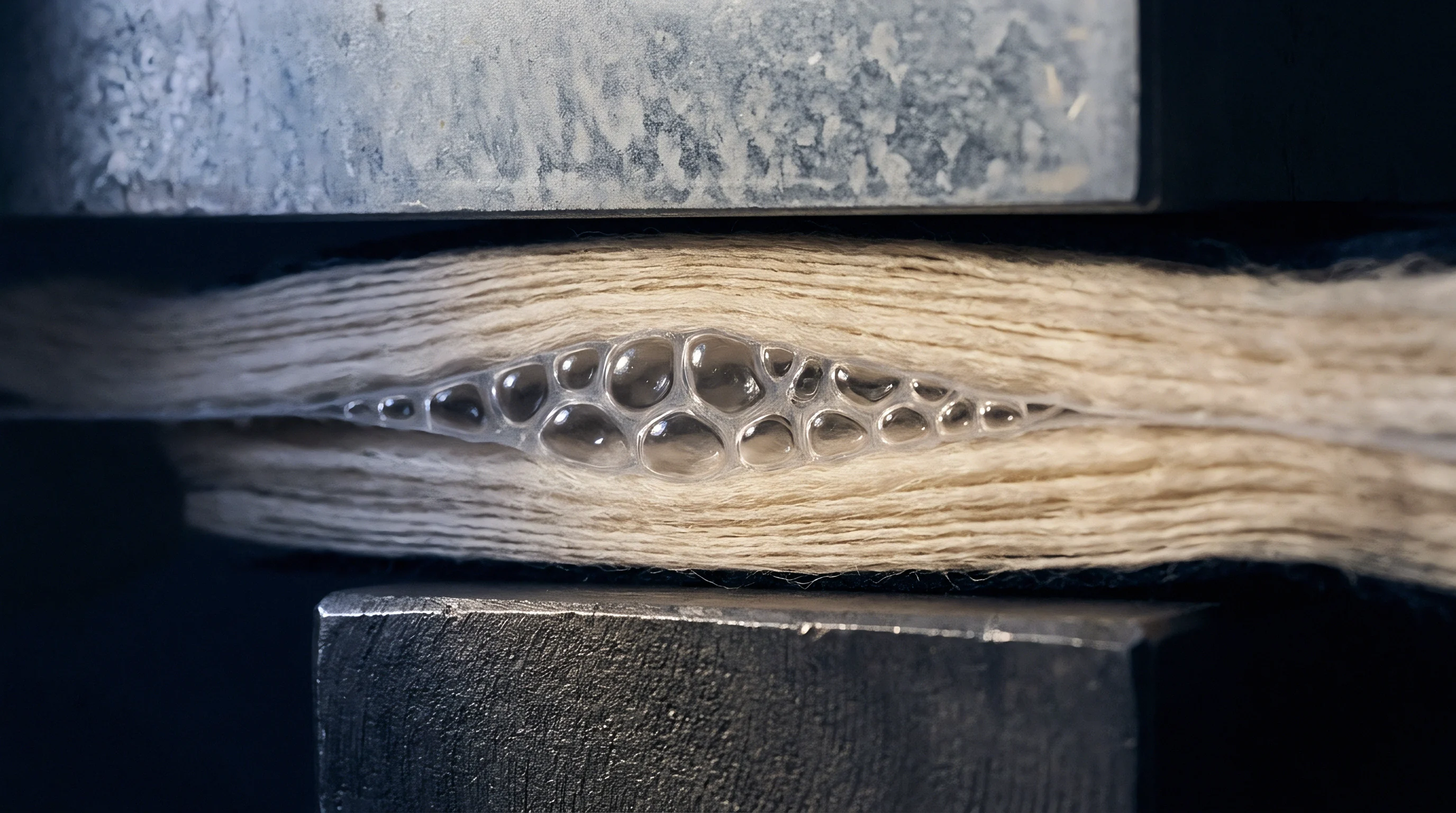
Operating pressure adjustments inside the pneumatic distributor alter fiber loss rates with strict mathematical predictability. Raising pressure from 0.35 MPa to 0.55 MPa expands the swirl field volume, increasing the angular velocity of wrapper strands while drawing a higher percentage of the sliver fringe into the suction exhaust. The drafting ribbon loses edge cohesion under the elevated suction pull, releasing fibers that would otherwise pass into the core yarn structure under lower operational settings.
Short fibers leave first.
- Leading Edge Ejection occurs when an unguided fiber tip encounters peripheral swirl velocity before entering the spindle orifice. The leading tip deflects into the bypass exhaust duct, drawing the entire staple length out of the delivery strand.
- Trailing Tail Fling develops when the anchored head of a fiber enters the hollow spindle while the trailing body remains free in the vortex chamber. Centrifugal force breaks the inter-fiber contact, casting the tail into the vacuum ring.
- Floating Fiber Drag pulls unheld short staple mass directly into the evacuation ports before drafting alignment settles. This loss concentrates among fibers shorter than half the mean staple length.
Machinery builders routinely claim that elevated exhaust waste represents a controlled cleaning cycle that purges dead cotton and nep defects to deliver superior yarn uniformity.

Trap
Suction ducts connected to the base of the spindle housing divert ejected fibers directly into central filtration waste units. Pneumatic pressure balances maintained across these extraction chambers prevent back-pressure waves from stalling the high-velocity vortex at the spinning tip. Fiber fragments trapped inside the evacuation stream consist predominantly of true short fibers, fractured fibrils, and detached sheath material.
The filtration box accumulates this material continuously, isolating it from the wound yarn packages.
The nozzle strips loose margins.
Quantitative analysis of extracted chamber waste reveals a dramatic leftward shift in staple length distribution compared to the parent sliver. Advanced Fiber Information System measurements verify that short fiber content by number inside the vacuum collector exceeds the base sliver short fiber level by two to three times. Carded slivers fed directly to vortex units yield aggregate waste levels reaching eight to twelve percent by weight.
Combed slivers prepared with fifteen to twenty percent comber noil extraction drop air jet spinning waste down to three to five percent.
Nozzle gauge pressures above 0.55 MPa increase cotton fiber waste past 6.2 percent without improving yarn tenacity.
Physical collection rates fluctuate when raw fiber moisture content shifts across production shifts. Low relative humidity on the spinning floor reduces natural wax plasticity on cotton surfaces, accelerating fiber breakage under aerodynamic impact. Higher room moisture increases cohesive clinging, lowering chamber waste while causing irregular wrapper twist distribution and degraded yarn hairiness readings.
| Nozzle Pressure (MPa) | Delivery Speed (m/min) | Exhaust Waste (Mass %) | Waste Mean Length (mm) | Yarn Short Fiber Content (%) | Yarn Tenacity (cN/tex) |
|---|---|---|---|---|---|
| 0.35 | 380 | 3.15 | 14.2 | 8.4 | 13.8 |
| 0.40 | 420 | 3.90 | 14.8 | 7.9 | 14.6 |
| 0.45 | 450 | 4.65 | 15.1 | 7.2 | 15.4 |
| 0.50 | 480 | 5.40 | 15.7 | 6.8 | 15.9 |
| 0.55 | 500 | 6.25 | 16.4 | 6.5 | 16.1 |
| 0.60 | 500 | 7.40 | 17.1 | 6.3 | 15.8 |
Rotor spinning behaves differently.
Air jet spinning discards waste along the entire active production line rather than holding it in a closed rotor groove. When waste extraction filters choke or drop suction below eighty pascals, loose fibers re-enter the spinning orifice, producing thick slubs and yarn breaks. Maintaining stable negative pressure across the whole exhaust ducting layout prevents localized waste buildup from modifying individual spindle spinning tensions.
Whether secondary turbulence models can isolate real-time wall friction from pure aerodynamic drag inside the extraction chamber remains an open question in fluid spinning research.

Drift
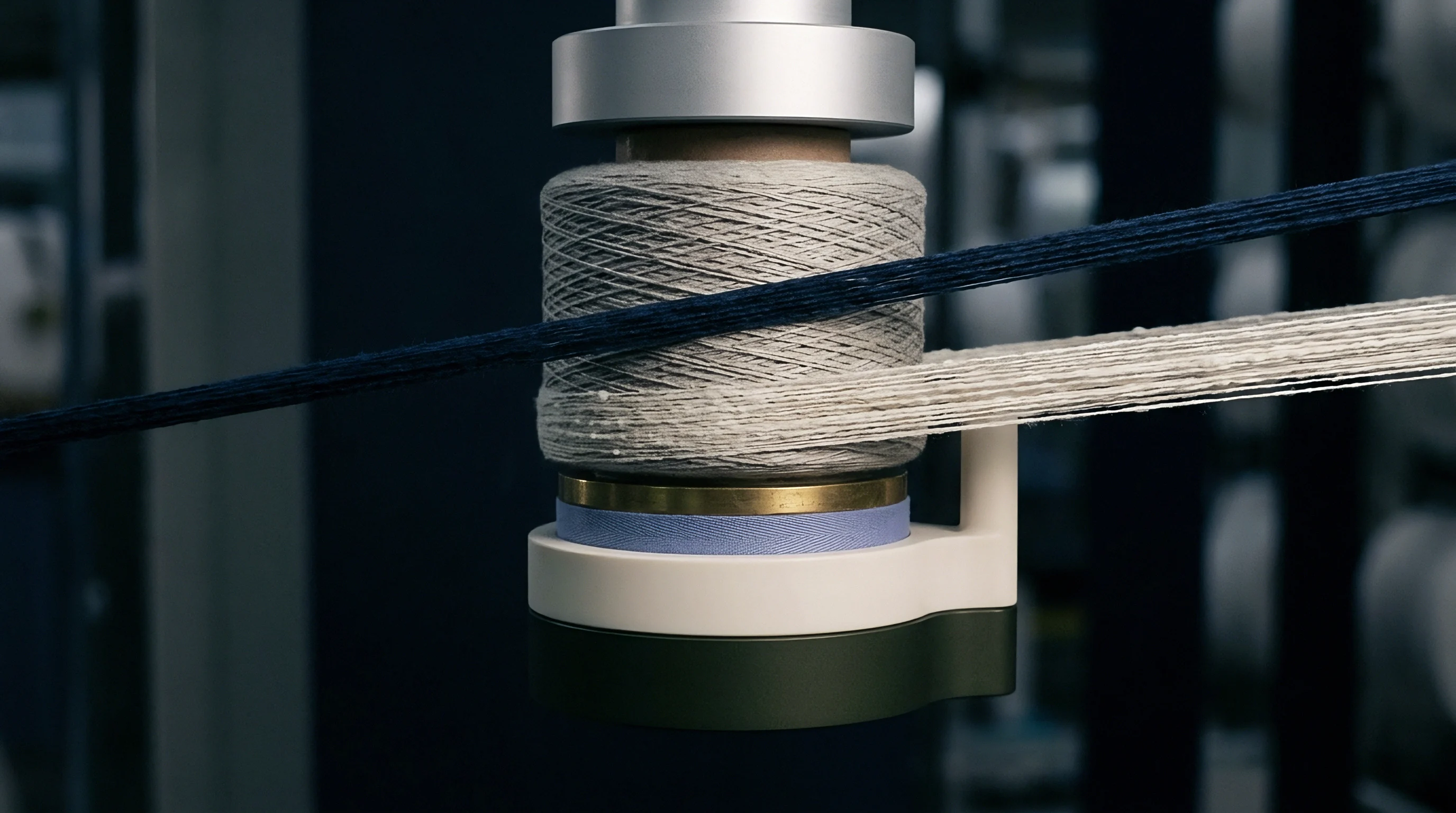
Binary raw material compositions experience severe component ratio migration between sliver intake and final cone winding. When spinning intimate mixtures of combed cotton and polyester staple, the pneumatic sorting action within the nozzle discriminates sharply between fiber types. Synthetic polyester fibers, manufactured to precise uniform lengths of thirty-eight millimeters with zero short fiber content, resist aerodynamic ejection.
Cotton staple presents a wide length distribution curve containing short fragments that evacuate easily through the suction ports.
Polyester resists aerodynamic shear.
Cotton breaks under vortex drag.
Consider an intimate mixture sliver batched at 60.0 percent combed cotton and 40.0 percent polyester staple. As the strand moves through the spinning nozzle at 0.50 MPa, cotton suffers an absolute waste loss rate of 6.2 percent by weight, whereas polyester loses only 0.8 percent through stray filament flinging. Over a one-thousand-kilogram production run, 600 kilograms of cotton yield 37.2 kilograms of vacuum waste, while 400 kilograms of polyester release 3.2 kilograms of waste.
Total recovered yarn mass equals 959.6 kilograms, comprising 562.8 kilograms of cotton and 396.8 kilograms of polyester.
Testing confirms the differential loss.
The resulting yarn tests by quantitative chemical analysis per ISO 1833 at 58.65 percent cotton and 41.35 percent polyester. The nominal 60/40 sliver specification drifts by 1.35 absolute percentage points in the final yarn package. Where raw sliver preparation relies on carded cotton with fifteen percent short fiber content, final mixture drift frequently exceeds 3.5 percentage points toward the synthetic carrier.

Do Variable Staple Lengths Distort Blend Percentages?
Variations in natural fiber length distributions alter the final mass ratio on every spindle line across the spinning room. Cotton lots demonstrating lower uniformity index ratings release disproportionate volumes of material into the waste ducts. The synthetic component remains mechanically trapped within the core structure, increasing its relative mass proportion inside the wound package.
Synthetic staple carriers stabilize natural fiber cores only when uniform staple length prevents premature suction detachment.
| Intended Ratio (Cotton/PES) | Sliver Input (ISO 1833 %) | Cotton Loss in Waste (%) | PES Loss in Waste (%) | Delivered Yarn Ratio (%) | Compositional Shift (%) |
|---|---|---|---|---|---|
| 65 / 35 | 65.1 / 34.9 | 5.8 | 0.7 | 63.8 / 36.2 | -1.3 Cotton |
| 60 / 40 | 60.2 / 39.8 | 5.4 | 0.8 | 58.9 / 41.1 | -1.3 Cotton |
| 50 / 50 | 50.4 / 49.6 | 4.9 | 0.6 | 49.2 / 50.8 | -1.2 Cotton |
| 35 / 65 | 35.3 / 64.7 | 4.2 | 0.5 | 34.4 / 65.6 | -0.9 Cotton |
| Data represents averages of ten five-kilogram lots analyzed under standard laboratory conditioning per ISO 139 with chemical solvent extraction per ISO 1833. | |||||
Mill quality audits confirm these shifts through systematic material verification routines executed across intake and discharge points.
- Bale Plucker Laydown Audit establishes the baseline short fiber content and micronaire range across individual cotton components before opening.
- AFIS Fiber Distribution Testing measures the upper quartile length and short fiber weight percentage directly from finisher drawing sliver.
- Exhaust Box Weight Reconciliation checks mass collection totals against theoretical production yields every eight-hour shift.
- Chemical Dissolution Assay Verification determines the definitive ratio of cellulose to synthetic polymer in delivered yarn bobbins using 75 percent sulfuric acid reagents.
Uncontrolled fiber loss that shifts cotton content below contract specifications triggers wholesale shipment rejections, mandatory relabelling protocols, and costly customs penalties at destination ports.
Ledger
Commercial margins collapse when spinning loss differentials pass uncalculated into product pricing sheets. Sliver purchased at gross weight includes fiber mass destined for exhaust boxes rather than billable yarn inventory. A combed cotton component carrying a waste factor of six percent inflates the clean fiber cost required to produce one kilogram of finished yarn.
Buyers negotiating spinning contracts must adjust raw material allowances to reflect these pneumatic losses accurately.
Customs tariffs track net weight.
The invoice reflects delivered mass.
Clean sliver protects yarn yield.
Tariff classification shifts amplify the financial risk of differential fiber loss. Under international customs regimes, garments crossing borders face distinct duty schedules determined by chief weight. A fabric designed as 52 percent cotton and 48 percent polyester falls under Chapter 52 cotton headings.
If air jet spinning strips 5.5 percent of the cotton fraction into waste ducts while retaining the polyester, the resulting yarn delivers at 50.6 percent polyester and 49.4 percent cotton. Customs inspection laboratories using ISO 1833 tests reclassify the entire consignment under Chapter 55 man-made textiles, where duty rates regularly jump by eight to twelve percentage points.
Standard commercial contracts invoking ASTM D1909 commercial moisture allowances penalize buyers when unrecorded exhaust waste shifts dry fiber mass.
Mill waste records confirm this.
Standard purchase contract terms governing air jet yarns establish that delivered yarn composition must match declared specifications within an absolute tolerance of plus or minus one percent, transferring all duty exposure and rework liabilities to spinning mills that fail to adjust sliver laydowns against documented aerodynamic waste rates.