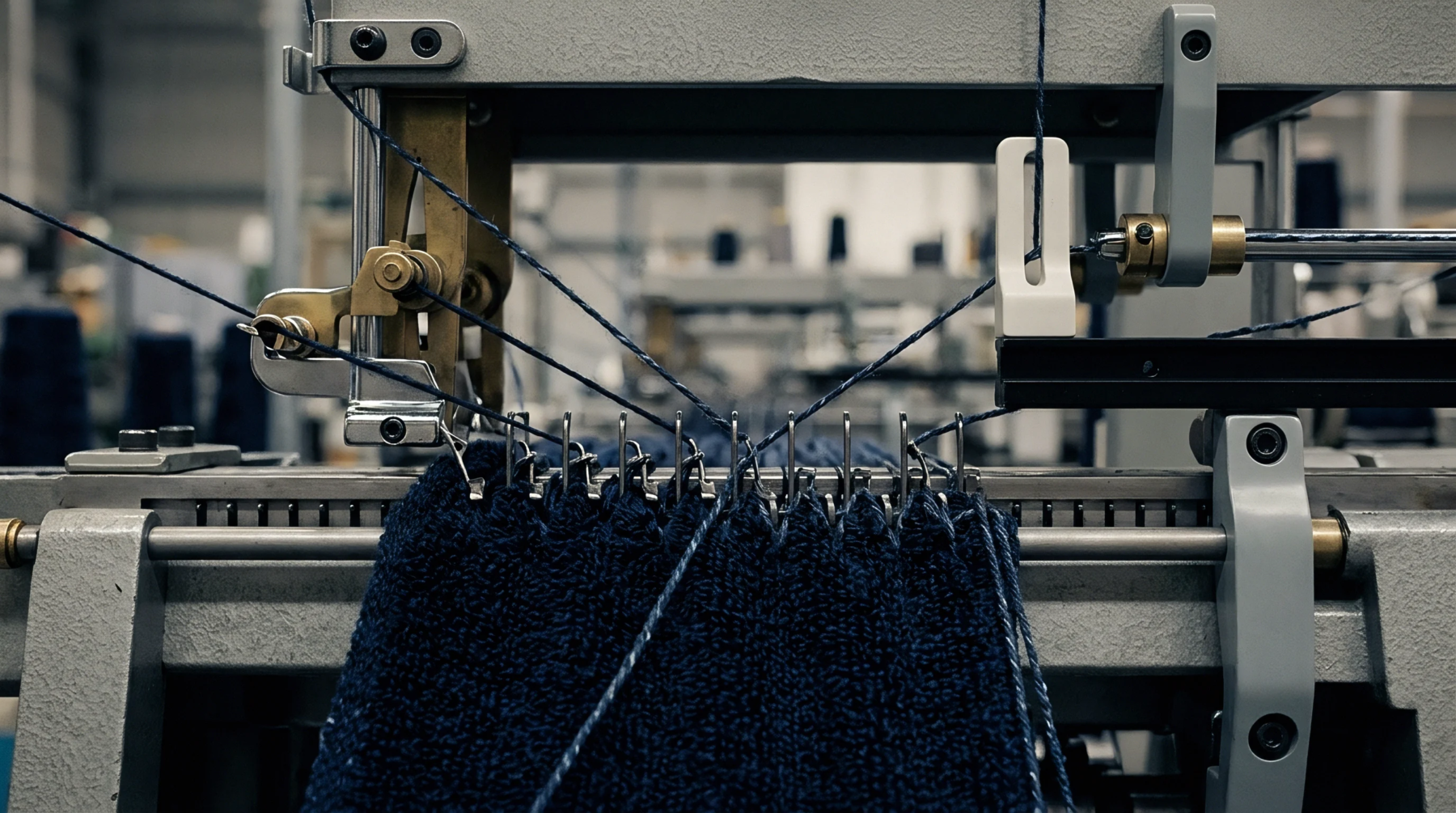
Pattern Mechanism
Mechatronic lateral positioning assemblies shift warp knitting yarn guides without relying on traditional mechanical pattern discs or chain links. An electronic guide bar utilizes dedicated linear motor drives or servo-actuators coupled directly to lightweight carbon-fiber guide bars. Each movement step executes during the needle downstroke phase, shifting yarn across needle spaces within microsecond windows.
Computational controllers translate digital CAD pattern design files directly into shogging strokes across hundreds of knitting cycles. The definition applies exclusively to the motorized guide bar traversing system, excluding stationary guide bars and mechanical drum linkages.
Shogging Dynamics
Linear motors generate rapid acceleration profiles to achieve accurate underlap and overlap traverse moves across varying pitch distances. In an electronic guide bar, instantaneous positioning accuracy must remain within fractions of a millimeter to avoid guide strikes against ascending needles. Real-time feedback sensors verify physical bar placement prior to every needle swing cycle.
Pattern shifts across long repeats require no downtime for chain link reassembly or mechanical cam grinding. High dynamic stiffness prevents mechanical resonance vibrations during production runs exceeding two thousand courses per minute.
Production Flexibility
Pattern capabilities expand because structural repeat lengths are no longer constrained by mechanical chain circumference or drum diameter limits. Complex jacquard nets, alternating technical underlaps, and variable openwork motifs transition instantaneously via pattern file uploads. Mechanical wear typical of push rods and steel pattern links is eliminated, standardizing shogging accuracy across seasons.
Setup labor decreases dramatically, allowing flexible manufacturing runs on short lead times. Modern mills exploit this adaptability to switch swiftly between technical meshes and elastic nets.
Quality Verification
Inspection protocols check for needle strike damage, miss-laps, and dropped stitches caused by microsecond synchronization lags. Physical fabrics undergo optical transmission analysis to ensure that openwork apertures match digital design dimensions across full piece widths. Positional tracking errors manifest immediately as broken filaments or split yarns, requiring automated machine shutdowns via safety interlocks.
Mechanical calibration verifies servo zero-points against needle bed registers before production releases. Digital precision eliminates mechanical repeat errors across long production runs.