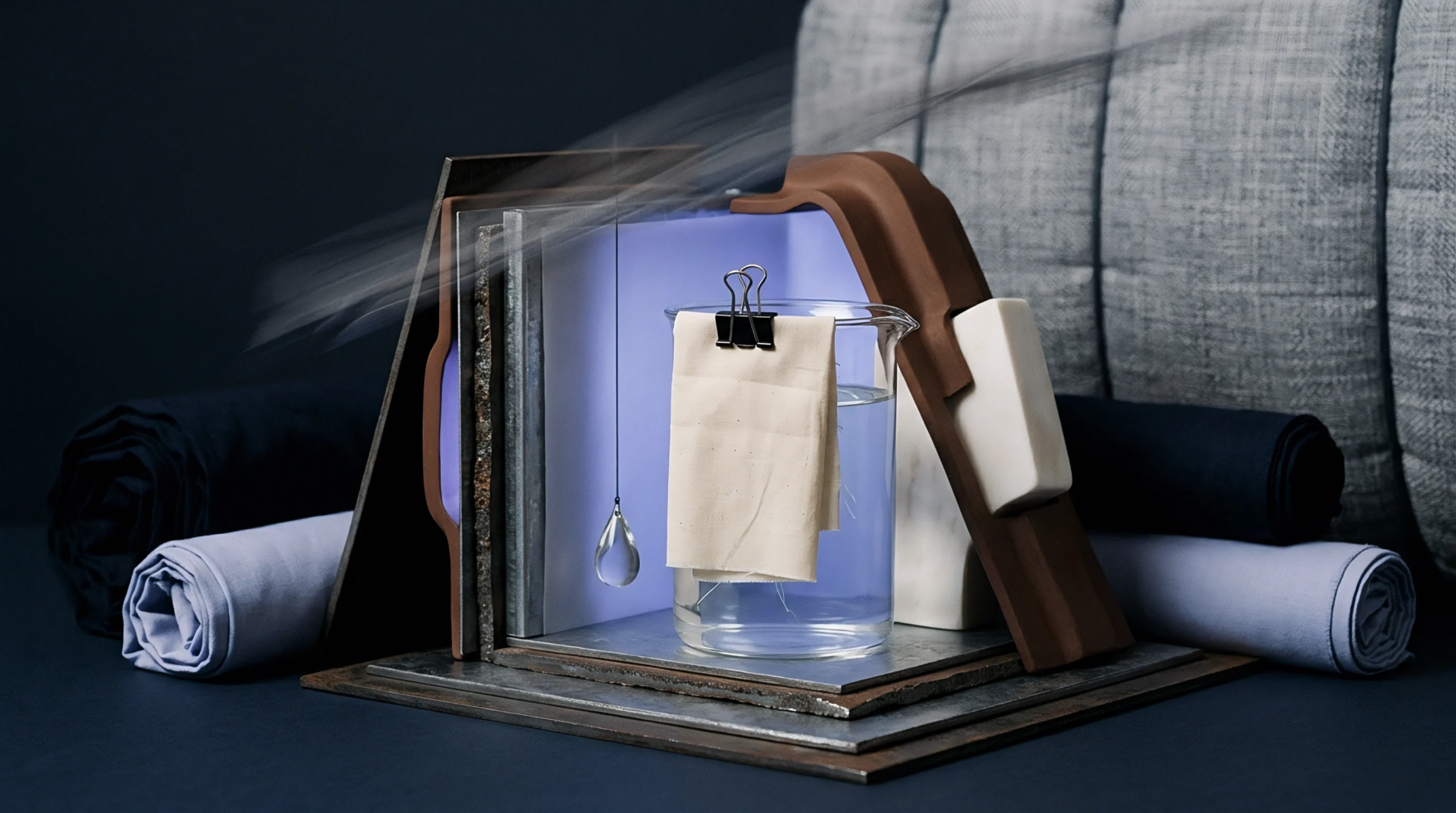
Polymeric Barrier
Impermeable polymer sheets engineered with low surface energy restrict liquid water transport while facilitating gas diffusion across technical textile laminates. Thin films acting as hydrophobic membranes maintain high water entry pressure through low surface energy and submicron pore architectures. These functional layers form the central barrier in multi-layer weatherproof garments.
Liquid penetration occurs if external hydrostatic pressure exceeds the capillary breakthrough pressure of the material.
Pore Geometry
Monolithic solid films or microporous polymeric structures prevent liquid water passage by exploiting capillary action principles. Structural design in hydrophobic membranes relies on pore diameters below two hundred nanometers to block water droplets while allowing individual water vapour molecules to pass via partial pressure gradients. Polyurethane, polyolefin, polyester, or fluoropolymer chemistries determine overall flexibility and thermal stability.
Physical lamination joins the membrane to woven or knitted face fabrics.
Permeability Quantitation
Standard test method ASTM E96 measures water vapour transmission rate under controlled temperature and humidity gradients. Quality control checks on hydrophobic membranes verify breathability values above ten thousand grams per square metre per twenty-four hours.
Contamination Boundary
Surfactant residues from detergent washing or skin oil accumulation lower the surface tension of liquid phase water in contact with the membrane. Reduced liquid surface tension enables water penetration through pores at pressures far below rated specification thresholds.