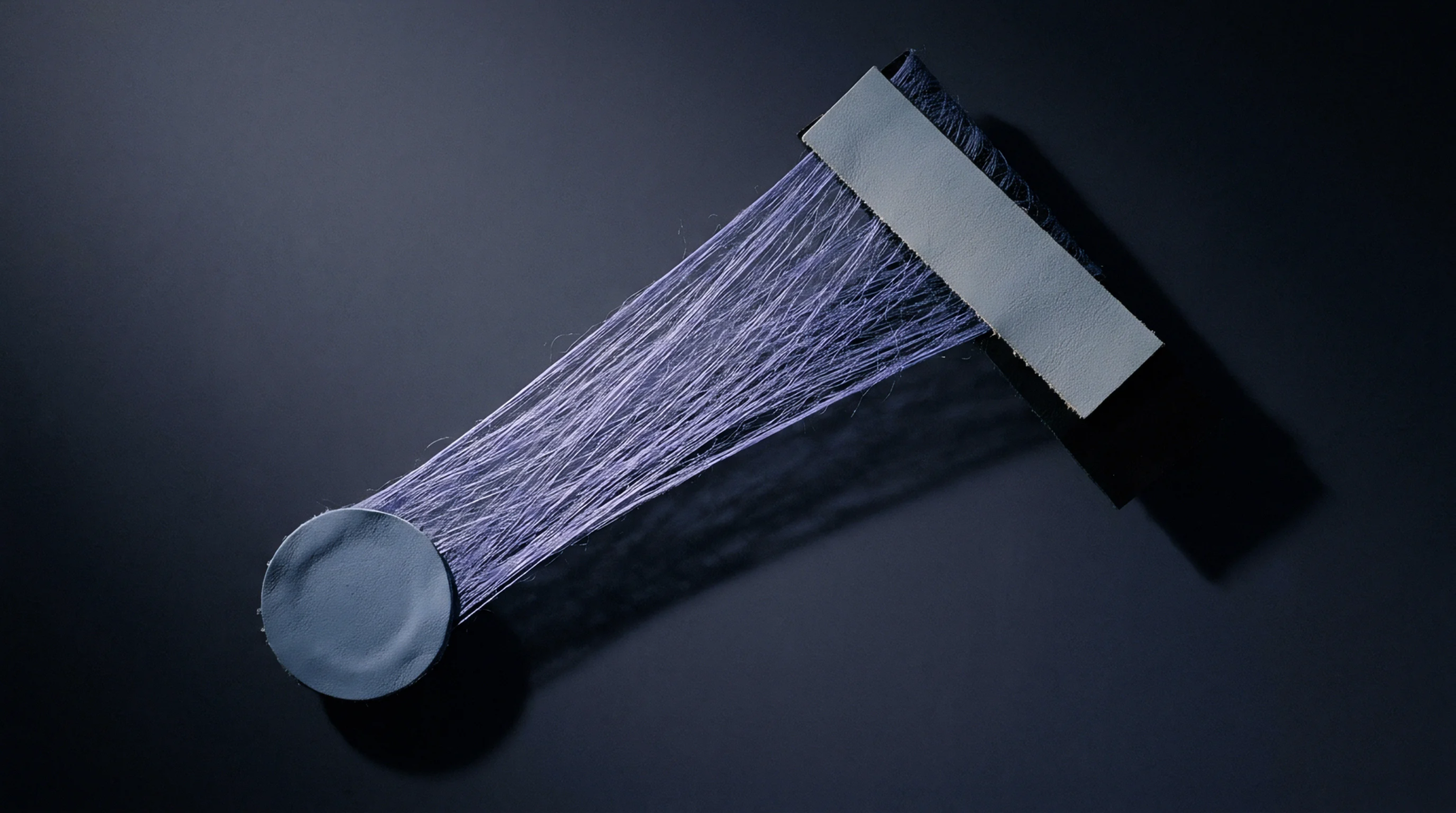
Chemical Residue
High-molecular-weight synthetic or natural macromolecules that resist dissolution when exposed to targeted chemical solvents constitute a stable phase in quantitative material testing. Testing protocols isolate the insoluble polymer to separate blended textile constituents without altering the chemical structure of the remaining substrate. In standard binary blend analysis, polyester acts as the non-reactive component when a polyester and cellulosic mixture is exposed to concentrated sulfuric acid.
The scope excludes polymers that swell, partially dissolve, or undergo extensive hydrolytic chain degradation in the chosen solvent medium.
Analytical Mechanism
Chemical separation tests, such as those described in ISO 1833, leverage differences in polymer solvency to determine blend percentages by mass. The specimen undergoes solvent digestion at a controlled temperature and duration, leaving the resistant polymer intact. Technicians capture the remaining particulate or fibrous residue inside a sintered glass filter crucible, washing it with neutral water and dilute ammonia to strip residual solvent traces.
An oven dries the clean residue at 105 degrees Celsius until mass equilibrium is reached on an analytical balance. Correction factors account for nominal surface mass loss caused by solvent exposure.
Production Relevance
Identification of insoluble fractions prevents improper garment dyeing and finishing treatments. Finishing mills rely on polymer solvency characteristics when designing chemical finish applications, such as stripping sizing agents or scouring lubricants without weakening base fibers. Synthetics resistant to chemical baths allow aggressive cleaning cycles that would degrade delicate natural counterparts.
Conversely, recycled polymer feedstocks must be free from unwanted insoluble contaminants that clog spinnerets during melt extrusion.
Verification Threshold
Laboratory reports verify blend ratios by measuring mass retention of the insoluble phase after solvent digestion. Variations in polymer crystallinity, molecular weight, or heat-setting history can slightly modify dissolution kinetics, necessitating strict adherence to contact times. Calculations apply standard moisture regains to dry insoluble weights to determine statutory commercial fiber composition percentages.
Inaccurate residue drying or incomplete rinsing creates false mass readings that breach regulatory labeling thresholds.