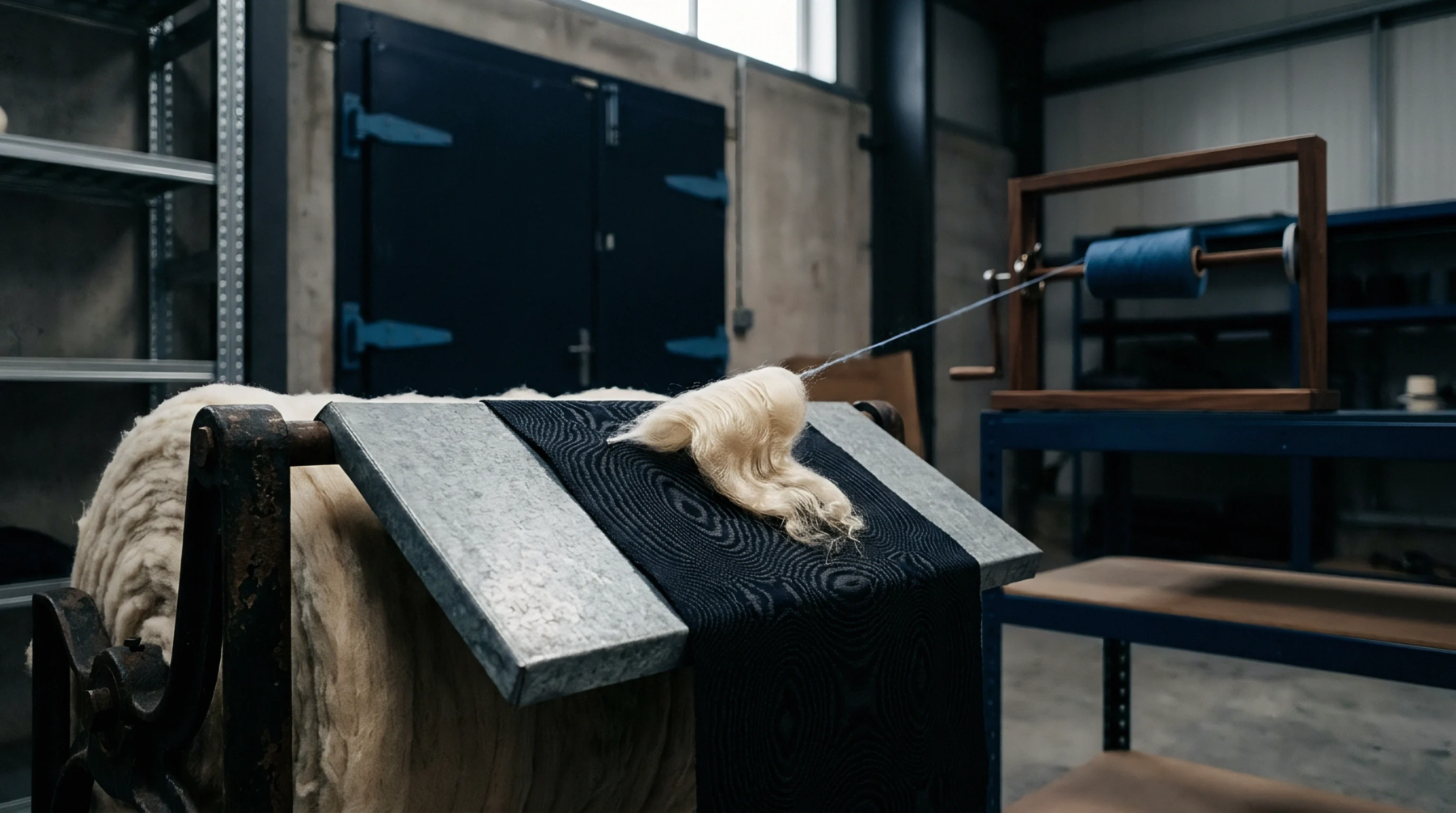
Raw Cashmere Classing and Guard Hair Percentage Estimation
Raw cashmere value hinges on clean down yield and optical verification of residual coarse hair content below zero point five percent by mass.
Cross-facility analytical calibration acts as a formal procedural framework ensuring that distinct testing installations generate concordant physical metrics for commercial textile consignments. Inter-laboratory testing protocol establishes baseline tolerances across participating analytical sites by standardizing environmental conditions, equipment calibration schedules and operator procedures prior to physical evaluation. Bulk production lots destined for international retail markets frequently undergo independent verification at separate external facilities, making procedural alignment between those testing sites mandatory for commercial acceptance.
Discrepancies arising from divergent testing methods create contractual disputes between mill operators and garment buyers, necessitating rigid cross-site standardization. Analytical laboratories participating in commercial textile verification must adhere to designated reference values to prevent subjective bias from distorting physical property measurements.
Environmental control parameters dictate ambient temperature and relative humidity levels within testing chambers before any physical measurement occurs. Textile fibers and finished fabrics absorb atmospheric moisture readily, which alters tensile strength, elongation percentages and dimensional stability metrics significantly. Testing installations condition specimens at twenty degrees Celsius and sixty-five percent relative humidity for a minimum duration of twenty-four hours prior to evaluation.
Conditioning failures introduce moisture gradients across yarn samples, distorting breaking load determinations during tensile testing operations. Analytical technicians monitor psychrometric charts continuously to verify that atmospheric fluctuations remain within acceptable operational tolerances during the conditioning phase.
Statistical evaluation of inter-facility results relies on reproducibility limits and repeatability standards to quantify analytical error margins. Repeatability measures variation observed when a single operator tests identical specimens within one laboratory using identical equipment over a short timeframe. Reproducibility calculates the broader dispersion of test results obtained on identical material by distinct operators working in separate laboratories.
Analysis of variance techniques identify systematic bias originating from faulty extensometers or uncalibrated load cells across participating facilities. When inter-laboratory variance exceeds established statistical thresholds, participating laboratories initiate root cause investigations to isolate mechanical or environmental anomalies.
Verification certificates derived from aligned testing protocols provide the definitive evidentiary basis for settling commercial disputes regarding fabric specifications. Brand buyers stipulate inter-laboratory concordance requirements within supply agreements to protect against substandard shipments entering retail distribution channels. Mill management relies on verified protocol compliance to release finished goods consignments without incurring costly secondary inspections at port destinations.
Final payment release hinges entirely upon the generation of matching analytical reports from mutually recognized testing facilities.
Raw cashmere value hinges on clean down yield and optical verification of residual coarse hair content below zero point five percent by mass.
Expertise is a utility, not a secret. sentiention™ publishes its working knowledge as open reference: intelligence layer covering the materials it sources, the markets it enters, and the reference that serves both.