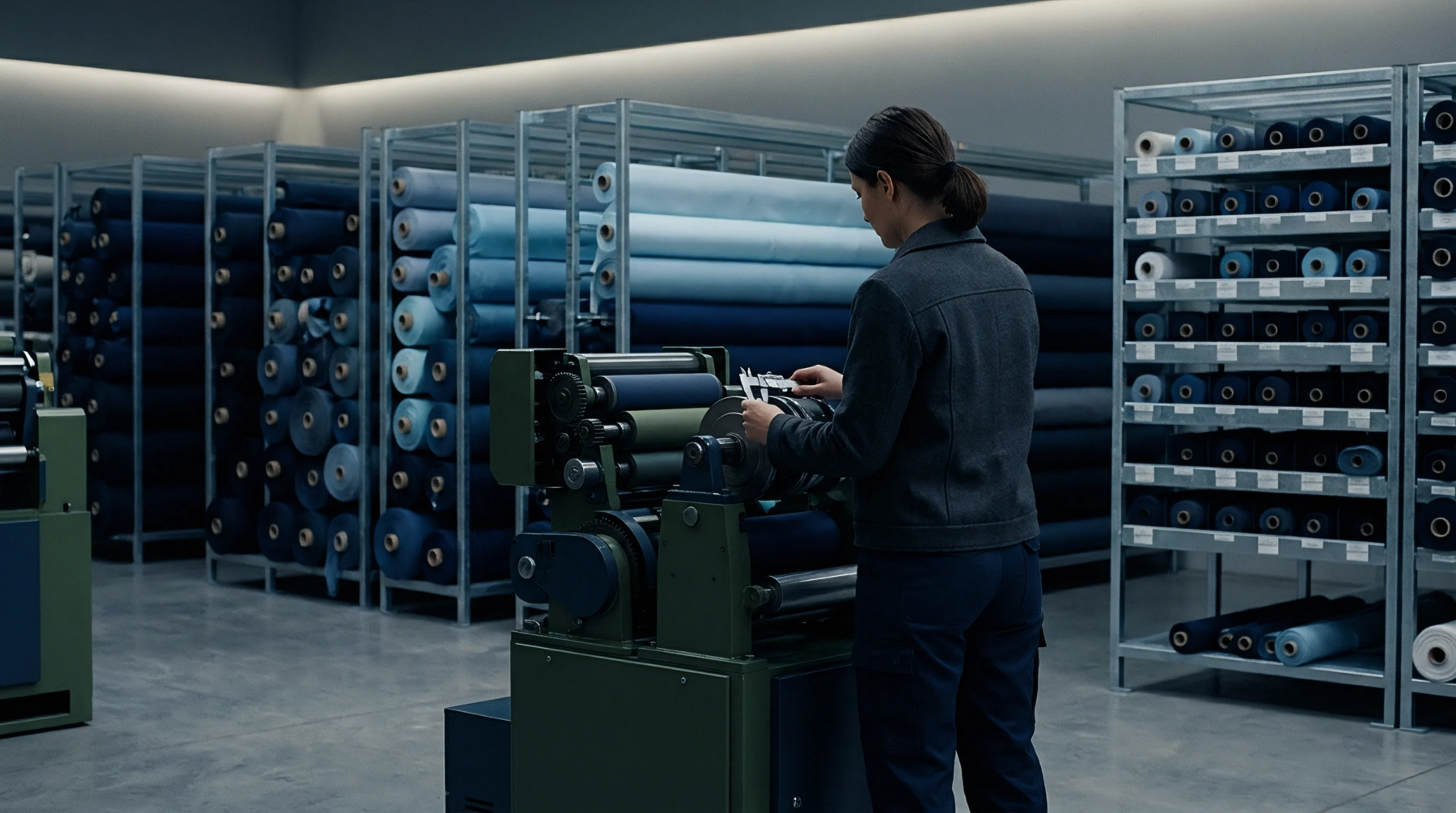
Cold Pad Batch Dosing Ratio Calibration for Reactive Dyeing Systems
Calibrating cold pad batch dosing ratios requires synchronized dye-to-alkali volumetric displacement to prevent reactive dye hydrolysis and batch shade tailing.
Standardised laboratory testing governs the exposure of synthetic coatings and polymer-treated technical fabrics to artificial fluorescent ultraviolet radiation and moisture condensation cycles. Industrial laboratories utilize ISO 11507 to forecast outdoor durability, yellowing resistance and surface embrittlement on coated textiles and architectural membranes. Test specimens undergo alternating cycles of controlled ultraviolet light exposure and moisture condensation inside enclosed weathering chambers.
Fluorescent UVA-340 or UVB-313 lamps simulate short-wavelength solar radiation responsible for polymer photodegradation. The standard sets specific operational parameters for irradiance levels, black panel temperatures and cycle durations to ensure repeatable material testing across test houses.
Test chambers maintain specimen surfaces in close contact with fluorescent ultraviolet lamps under defined irradiance setpoints. Exposure cycles alternate between dry UV radiation at elevated temperatures and dark condensation phases where heated water vapor condenses directly onto specimen faces. UVA-340 lamps replicate natural terrestrial sunlight wavelengths between 300 nm and 400 nm, making them standard for exterior fabric testing.
UVB-313 lamps emit shorter, aggressive wavelengths that accelerate polymer chain scission, though they risk producing degradation mechanisms unseen in outdoor use. Specimen mount racks expose sample faces while insulating reverse sides, driving moisture condensation through thermal differentials across the fabric thickness.
Technical outdoor fabrics, awning materials and polyurethane-coated textile substrates face strict performance minimums under accelerated weathering protocols. Commercial procurement specifications use ISO 11507 ratings to screen raw materials against photo-oxidative degradation, pigment chalking and tensile strength losses. Coated fabrics exposed to UV cycles undergo regular evaluations to detect crack formation, micro-crazing and peel strength decay in adhesive laminates.
Spectrophotometric colour assessments monitor yellowing and chromatic shifts across multiple exposure intervals, tracking delta values against contract boundaries. Textile buyers reject technical membrane lots that fail tear strength retention thresholds following specified hundred-hour exposure intervals.
Fluorescent UV weathering apparatus cannot replicate the entire solar spectral range because they lack the visible and infrared wavelengths found in xenon arc testing. Condensation mechanisms fail to reproduce the physical impact erosion caused by natural rain showers or windblown particulate matter. Chemical degradation pathways triggered by extreme ambient ozone, sulfur dioxide or industrial smog are completely absent from standard condensation cycles.
Laboratory acceleration cannot directly predict outdoor service life due to microclimate variables, installation angles and inconsistent seasonal ultraviolet exposures. Test specimens must remain flat and uniform to maintain standard distance from fluorescent tubes, which limits testing of complex three-dimensional garment items.
Calibrating cold pad batch dosing ratios requires synchronized dye-to-alkali volumetric displacement to prevent reactive dye hydrolysis and batch shade tailing.
Expertise is a utility, not a secret. sentiention™ publishes its working knowledge as open reference: intelligence layer covering the materials it sources, the markets it enters, and the reference that serves both.