Atmospheric Preparation
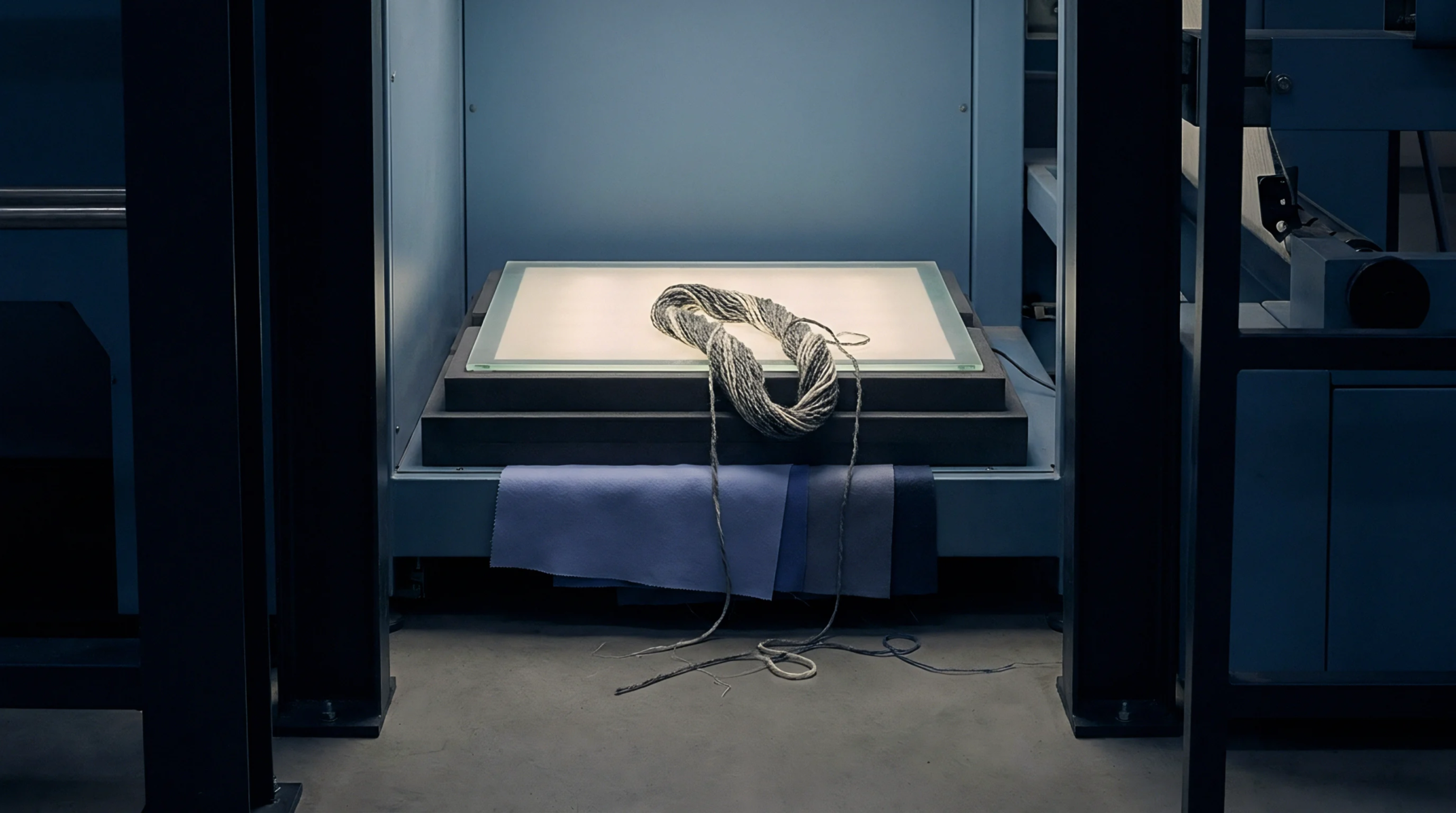
Standardised procedures specified in international textile testing manuals mandate controlled relative humidity and temperature exposure prior to physical specimen preparation. Compliance with ISO 3759 conditioning requires exposing fabric samples to a standard atmosphere of twenty degrees Celsius and sixty-five percent relative humidity until moisture equilibrium is reached. Equalizing internal moisture contents ensures reproducible dimensional measurements across different testing facilities.
Unconditioned textiles exhibit variable shrinkage results due to hygroscopic expansion or contraction of constituent fibres.
Equilibrium Rate
Absorption and desorption rates differ based on fibre composition, yarn density, and fabric construction. Hydrophilic fibres like cotton and wool require longer exposure times to attain stable mass than hydrophobic synthetic yarns. Weighing specimens at regular intervals confirms that moisture equilibrium has been achieved.
Dimensional Checkpoint
Benchmarking specimen dimensions after standard conditioning isolates mechanical processing stress from environmental distortion. Benchmark lines drawn on raw or unconditioned fabrics shift as moisture levels change. Conditioning eliminates ambient humidity as a variable during subsequent laundering tests.
Hysteresis Error
Fabric samples approaching equilibrium from a wet state retain more moisture than samples approaching from a dry state. Pre-conditioning specimens in warm, low-humidity air drives off excess moisture before final chamber exposure. Systematic pre-drying prevents moisture hysteresis from distorting baseline dimensional measurements.