Measurement Technique
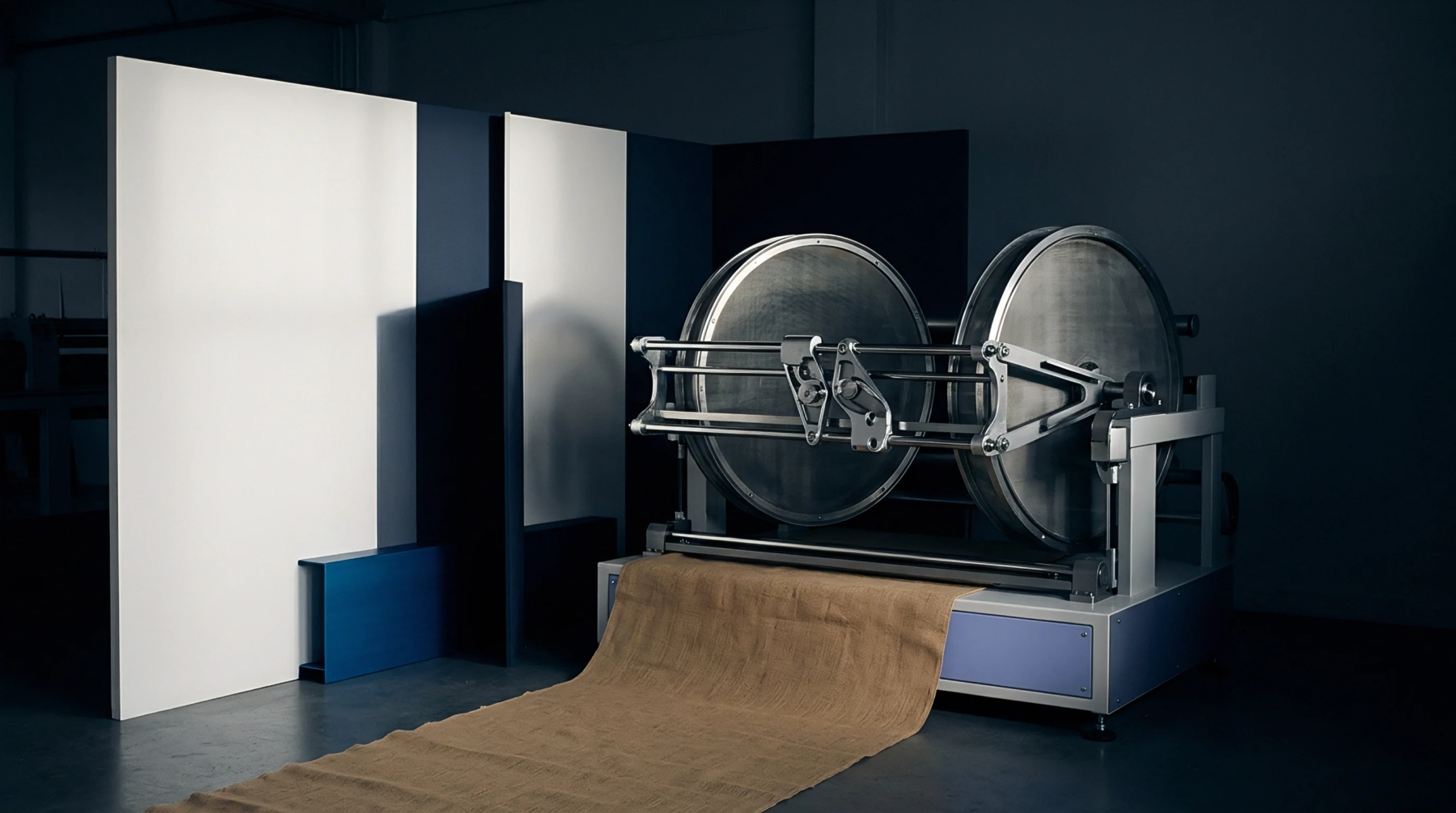
Non-contact optical systems determine the speed of moving textiles without causing scuffing or mechanical drag on delicate fabrics. This non-invasive assessment uses laser Doppler velocimetry, which measures the frequency shift of scattered laser light from a moving fabric surface. It provides precise speed data that allows mills to track shrinkage and feed ratios accurately.
Velocity Assessment
Two intersecting laser beams create an optical interference pattern of bright and dark fringes on the textile surface. As the yarn or fabric passes through this pattern, it scatters light that fluctuates at a frequency proportional to the material’s speed. This method is highly accurate even during rapid acceleration or deceleration.
Fringe Shift
The optical receiver processes the reflected light to calculate the velocity based on the fringe spacing and the measured Doppler frequency. This calculation is independent of fabric color, surface texture, or slip, making it superior to traditional wheel encoders. It is particularly effective for monitoring high-speed processes like yarn spinning or continuous fabric winding.
Process Diagnostic
Continuous velocity data enables the calculation of overfeed rates on stenters or compacting machines. If the speed ratio between the feed and takeout rollers is incorrect, the fabric will either be stretched or fail to achieve its target density. The sensor provides immediate feedback to the control system to correct speed mismatches before any fabric is damaged, ensuring that the dimensional stability of the finished apparel is preserved during bulk processing.
This real-time feedback loop reduces waste in the finishing department.