Optical Metrology
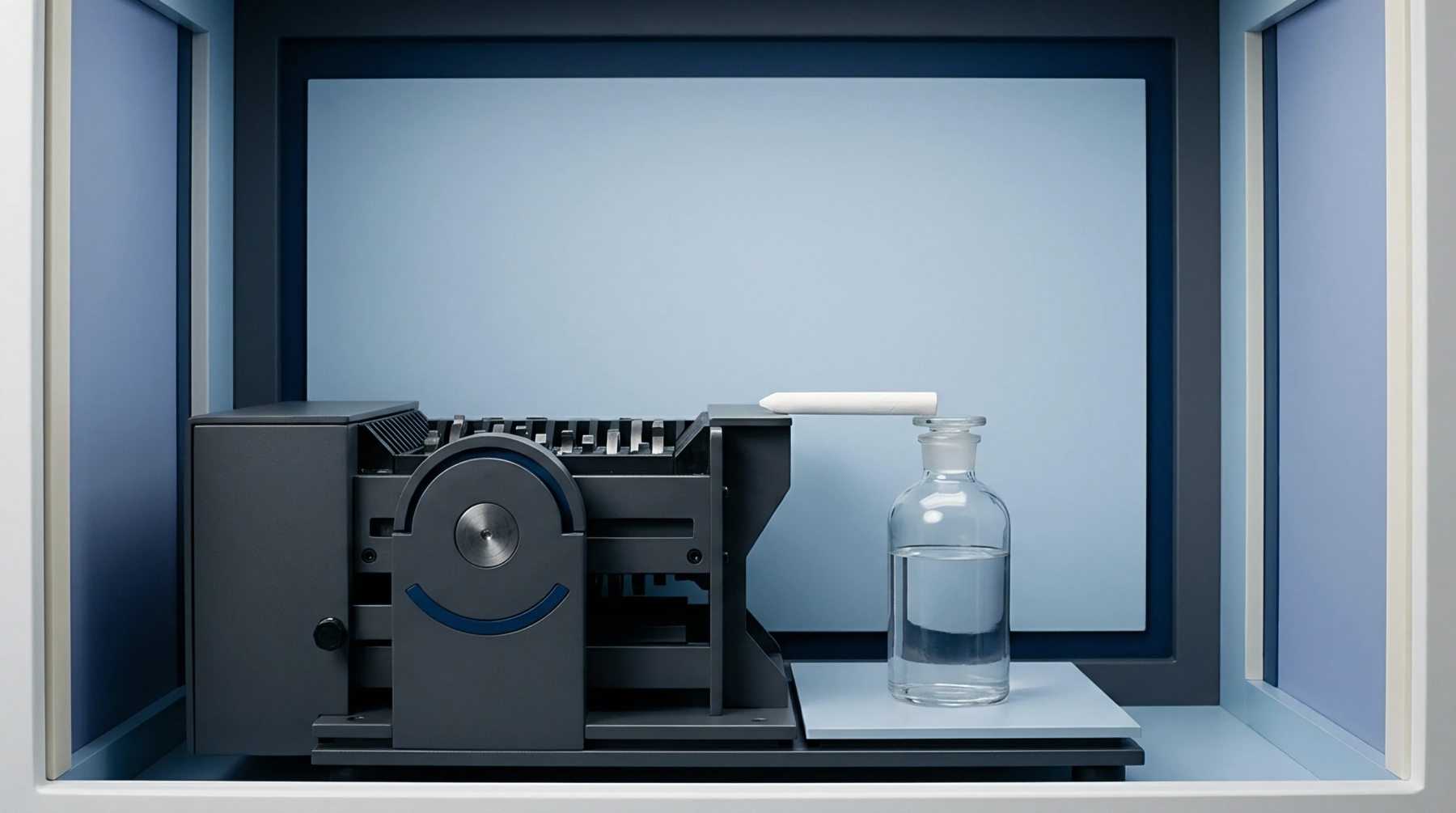
Coherent light diffraction provides direct calibration against master reference wools to measure individual fiber dimensions at high speed. The laser scan instrument disperses cut fiber snippets in an isoparaffin fluid stream that flows through a laser beam path. As each snippet crosses the light path, the change in optical intensity correlates directly with fiber diameter.
Calibration Protocol
Instrument calibration requires reference wool samples of known mean diameter measured by international standard laboratories. The laser scan system evaluates thousands of individual fibers per minute, producing a high-density dataset of fiber fineness across the sample. Temperature control of the carrier fluid is critical because changes in fluid density shift snippet velocity through the measuring cell.
Technicians verify system stability by running reference wool calibration checks at defined intervals during testing batches. Deviations in laser output power or optical detector response trigger immediate recalibration routines.
Distribution Analysis
Histogram outputs from this optical method display diameter distribution parameters, including standard deviation and coefficient of variation. Unlike pneumatic instruments, laser scan testing highlights coarse fiber tails that increase prickle factor in wearable garments.
Processing Impact
Spinning mills use detailed distribution data from this instrument to optimize fleece blending strategies. Identification of high-micron fiber populations allows yarn spinners to predict yarn strength and irregularity before commitment to production runs. High coarse-edge percentages trigger adjustments in combing settings to remove unwanted fibers.