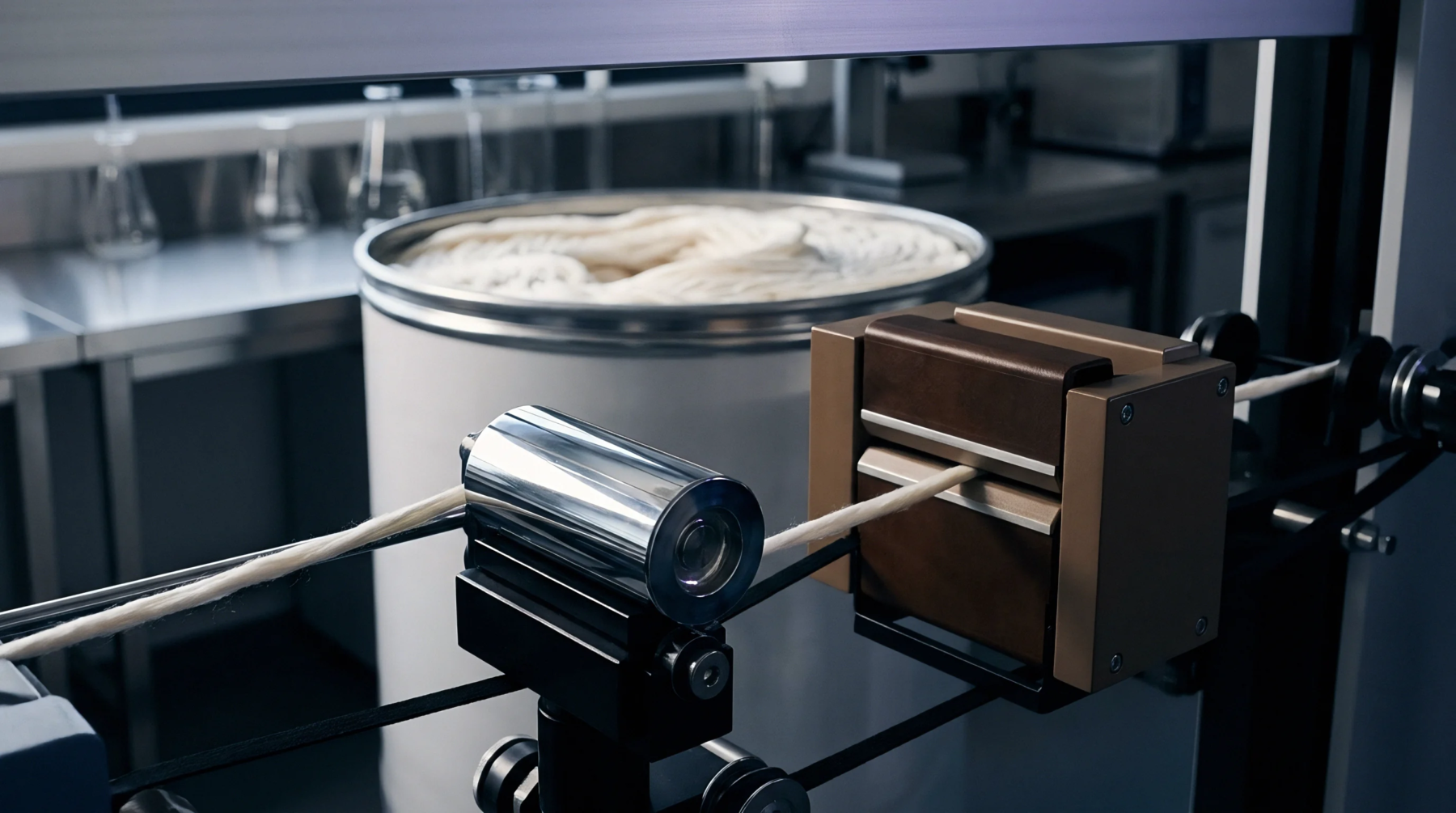
Optical Sensing
Machine automation devices monitor continuous fabric ropes during wet finishing to prevent mechanical damage at fabric join points. Automated loop seam detection identifies sewn connections between fabric rolls before those thickened sections reach sensitive machine components. Early recognition allows control systems to alter process parameters temporarily.
Passage Control
Physical passage of a raised seam through jet nozzles or calender rolls presents a severe mechanical hazard to processing machinery. During continuous rope processing, loop seam detection triggers nozzle opening or pressure relief valves to pass structural thick points safely. This automated action prevents fabric jamming and machine downtime.
Machine Protection
Sensor technologies utilizing magnetic, ultrasonic, or optical elements detect metallic threads or thick seam profiles as the fabric rope circulates. In modern jet dye vessels, loop seam detection provides exact cycle timing data to track fabric speed and revolution count. Machine control units calculate rope length and liquor ratio based on seam passage intervals.
Signal Calibration
Quality verification of automated detection hardware requires regular calibration against standardized seam profiles and varying fabric weights. Evaluating loop seam detection performance involves verifying sensor response time under extreme moisture and temperature conditions within the machine vessel. Maintenance logs document sensor accuracy and response speeds to guarantee continuous operational safety.
Technical audits verify seam sensor reliability across varied fabric construction weights.