Chemical Treatment
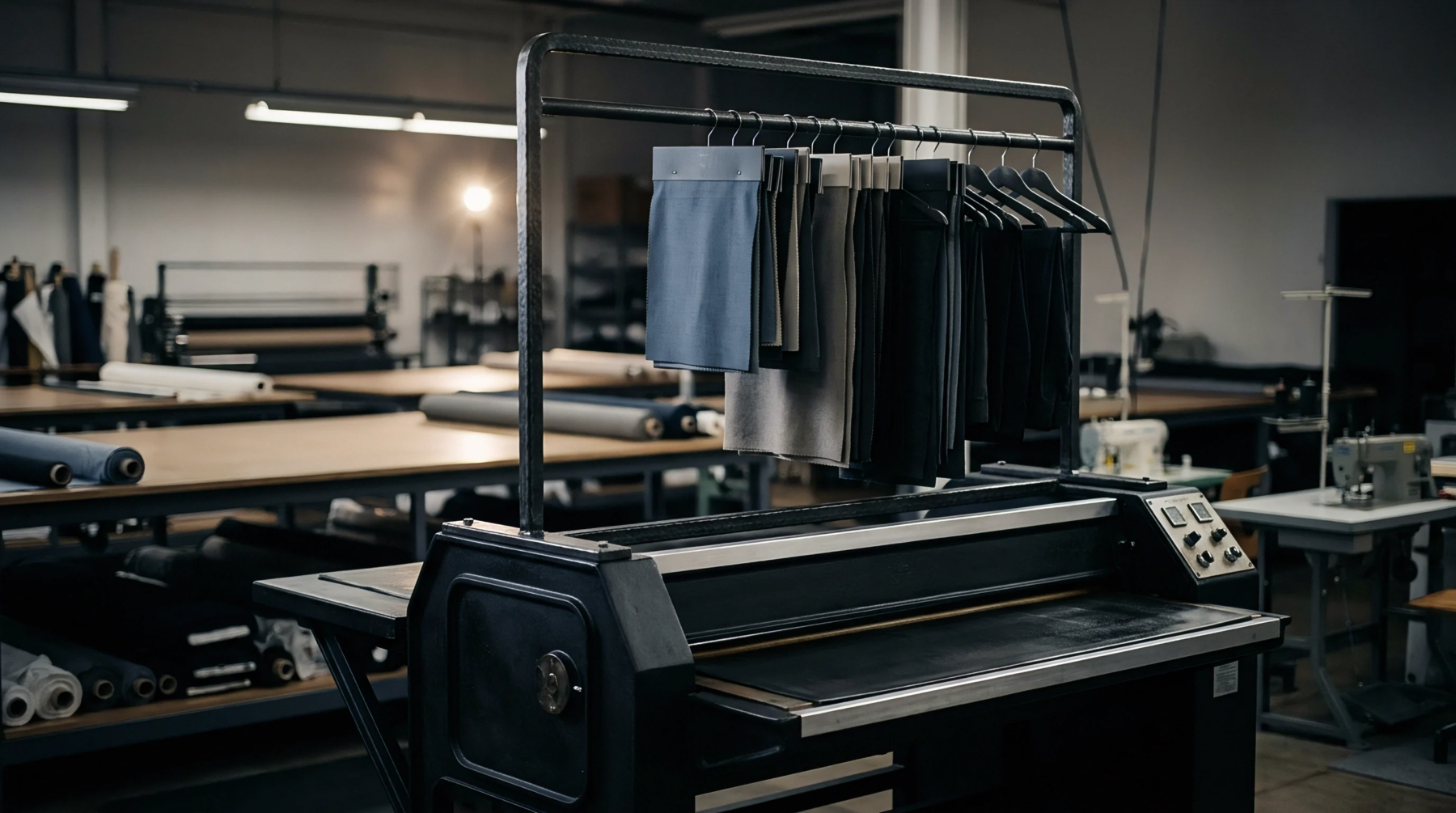
An industrial finishing method applies liquid chemical agents to a moving fabric web using a trough and squeeze rollers to impart specific performance characteristics. This procedure is called padded textile finishing, and it is used to add flame retardants, water repellents, or softeners to woven and knitted materials. It does not apply to spray finishes or foam applications that do not involve squeezing.
Finishing Process
The dry fabric is pulled through a chemical bath where it absorbs the treatment solution before passing through the nip of the pressure rollers. Squeezing removes excess liquid and forces the active ingredients deep into the yarn bundle, ensuring an even distribution across the fabric surface. After squeezing, the wet fabric is fed into a high-temperature dryer where the finish is cured and chemically bonded to the fibres.
This process allows for continuous, high-volume production with precise control over the amount of chemical applied to the textile.
Quality Standard
Textile mills use this method to achieve uniform performance characteristics that can withstand multiple domestic wash cycles. Outdoor clothing brands rely on this application to ensure their water-repellent jackets remain effective under harsh weather conditions. This finishing provides a highly durable and cost-effective treatment for consumer apparel.
Treatment Constraint
Very delicate or loose-weave fabrics cannot be processed this way. The high mechanical pressure of the squeeze rollers can distort the fabric structure and cause permanent defects.