Preventing Filament Damage in Micro Denier Elastomeric Warp Knits
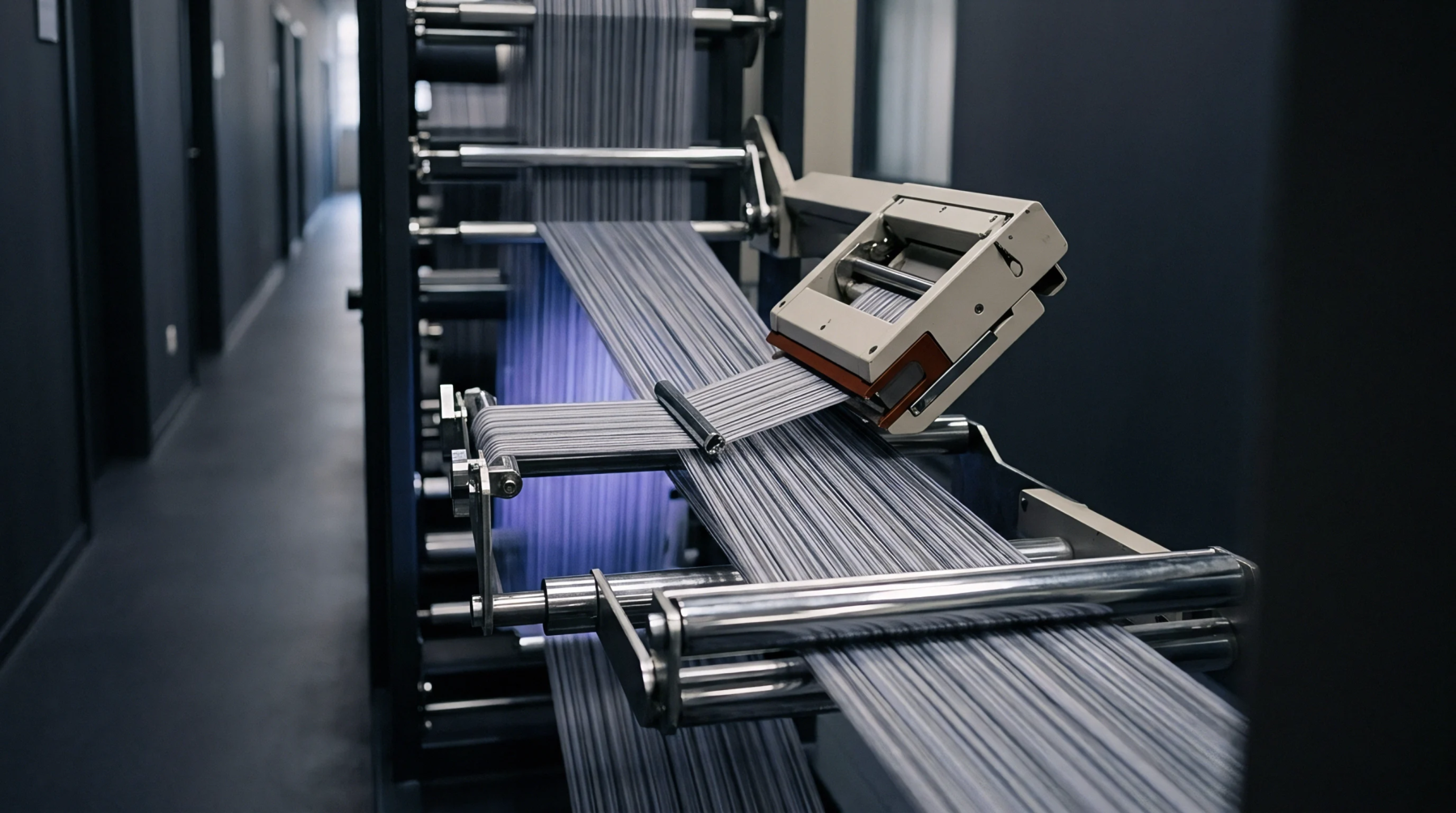
Preventing filament damage in micro denier elastomeric warp knits demands precise beam tension control, strict stenter thermal capping, and low-shear jet scouring.
High-tenacity polymer filaments defined by a linear mass density of less than one decitex per individual strand define the material landscape for fine textile applications. These polyamide 66 microfilament structures derive from the continuous extrusion of adipic acid and hexamethylenediamine polymers through spinnerets with extremely small orifice diameters. Precise control of cooling air and drawing ratios during the spinning process dictates the mechanical performance of the resulting yarn.
Consistent filament uniformity allows manufacturers to achieve higher surface area coverage compared to standard synthetic yarns. This structural refinement alters how fabrics interact with moisture and external friction forces.
Chemical interactions between the polymer chains and various dyestuffs rely heavily on the increased surface area provided by this specific construction. Dye molecules reach the internal portions of the fibre structure with greater speed than they would in coarser denier products. Equilibrium exhaustion rates differ between standard nylon variants and this refined form because the high surface to volume ratio accelerates particle diffusion.
Laboratories measure color fastness by subjecting the material to standard light exposure and washing cycles under controlled humidity. Increased surface area causes the color to appear more intense even when dye concentration remains constant. Variations in cross-sectional shapes such as trilobal or pentalobal profiles further modify the way light interacts with the material after it leaves the dye vat.
Engineers adjust bath additives to manage this reactivity during the finishing phase.
Mechanical load bearing capability decreases as the individual filament diameter drops below the microfilament threshold because of reduced molecular orientation along the axis. Textile mills compensate for this loss by twisting multiple filaments into a single ply yarn. High filament counts provide softness and drape qualities that heavier yarns cannot replicate.
Testing methods for these goods prioritize abrasion resistance and fatigue cycles rather than tensile strength alone. A thin layer of surface treatment application guards against static build up during high speed weaving operations. The inherent moisture regain of the underlying polymer provides a baseline for static dissipation in dry environments.
Maintenance of strict atmospheric conditions throughout the spinning room avoids premature snap breakage caused by polymer brittleness.
Bulk production batches require regular denier checks using gravimetric methods to confirm consistency across the output volume. Fabric houses demand certificates of analysis detailing the filament count and the tenacity per unit of mass before the material enters the production line. Measurements occur at the loom or after the completion of the knitting cycle to ensure tension settings stay within required parameters.
Deviations from the specified filament diameter indicate instability in the extrusion process or pump failure at the spin beam level. Real time monitoring systems provide data on strand integrity by detecting electrical resistance changes in the moving tow. Uniformity in the raw supply governs the quality of the final textile product.
Correct processing of this material ensures that fabric performance stays within the thresholds defined by the end application specifications.
Preventing filament damage in micro denier elastomeric warp knits demands precise beam tension control, strict stenter thermal capping, and low-shear jet scouring.
Expertise is a utility, not a secret. sentiention™ publishes its working knowledge as open reference: intelligence layer covering the materials it sources, the markets it enters, and the reference that serves both.