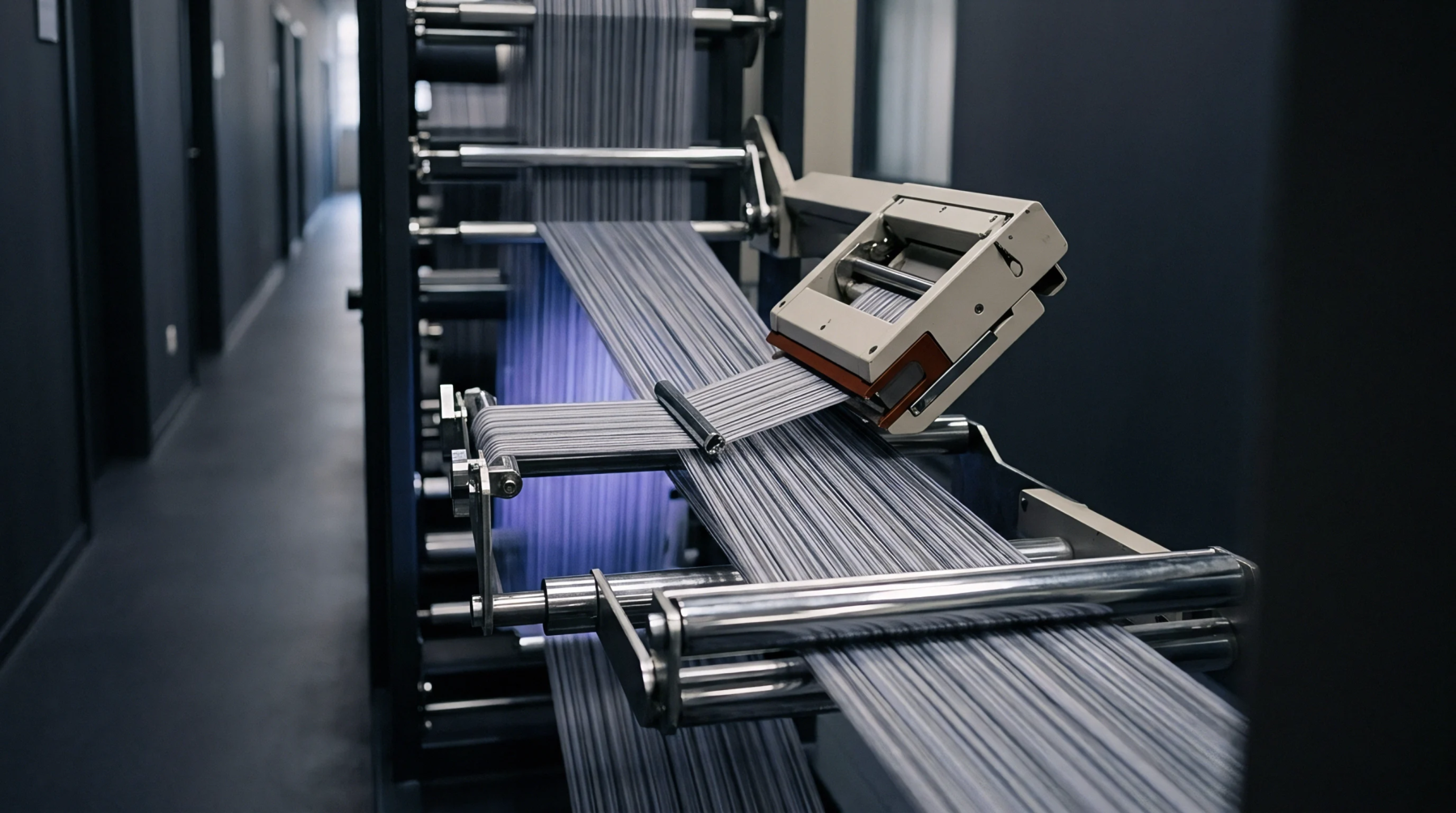
Preventing Filament Damage in Micro Denier Elastomeric Warp Knits
Preventing filament damage in micro denier elastomeric warp knits demands precise beam tension control, strict stenter thermal capping, and low-shear jet scouring.
Force exertion per unit area within the orifice of a liquid dispersion mechanism quantifies jet nozzle shear stress during the application of high-velocity finishing agents onto textile substrates. This phenomenon dictates the mechanical energy transferred to fibres during spray coating or specialized jet dyeing operations. Its influence determines the integrity of delicate yarn structures subjected to forced fluid contact.
The measurement covers the transition zone where liquid velocity gradients reach maximum intensity near the interior walls of the nozzle aperture. Applications remain limited to high-pressure fluid delivery systems where laminar flow transitions toward turbulent states, thereby altering the physical deposition patterns on synthetic or natural fibre surfaces.
Fluid friction against the hardened interior geometry of an injection head generates localized acceleration zones that affect the homogeneity of chemical solutions. If the velocity differential between the centre of the stream and the liquid film adhering to the metallic wall grows too large, droplet size distributions shift toward inconsistent ranges. Proper tuning of pump pressures maintains the stable flow required for uniform surface treatment.
Technicians verify the state of these orifices by checking for microscopic erosion patterns that increase roughness and unintended turbulence. High pressure pumps drive the solution through the constricted path where kinetic energy converts into potential damage for fragile textiles. Each orifice design forces a specific flow geometry, which dictates the distribution of force across the sprayed area.
Monitoring this value prevents the over-application of binders that can stiffen fabric handles or cause uneven colour fastness across the roll width.
Interaction between moving fluid and solid fibre surfaces changes when forces exceed the elastic limit of the base material. Friction energy often results in surface pilling or the mechanical detachment of loose microfibres from synthetic filaments. Low shear conditions preserve the tactile qualities of high-end silk or rayon, while elevated settings might create a distress effect necessary for specific denim finishes.
Manufacturers observe that changes in the viscosity of the applied fluid alter the internal resistance, thus creating variations in the load experienced by the yarn. Stable control of this interaction ensures that the physical properties of the treated textile remain consistent throughout the entire batch processing cycle.
Consistent reporting of pressure drop metrics ensures the comparability of application results across disparate production sites. Standardised testing procedures isolate the hydraulic intensity from variable environmental factors such as ambient temperature or moisture content in the air. Precise control of the aperture geometry prevents the accumulation of particulate matter that obstructs flow and generates unpredictable flow deviations.
Each machine configuration demands a specific calibration curve to maintain output quality within tolerance limits for industrial fabric production. Accurate measurement of this force provides the basis for reliable repetition of specialized surface textures without damaging the textile structure. Excessive fluid velocity during the coating phase degrades the finished quality of the material.
Preventing filament damage in micro denier elastomeric warp knits demands precise beam tension control, strict stenter thermal capping, and low-shear jet scouring.
Expertise is a utility, not a secret. sentiention™ publishes its working knowledge as open reference: intelligence layer covering the materials it sources, the markets it enters, and the reference that serves both.