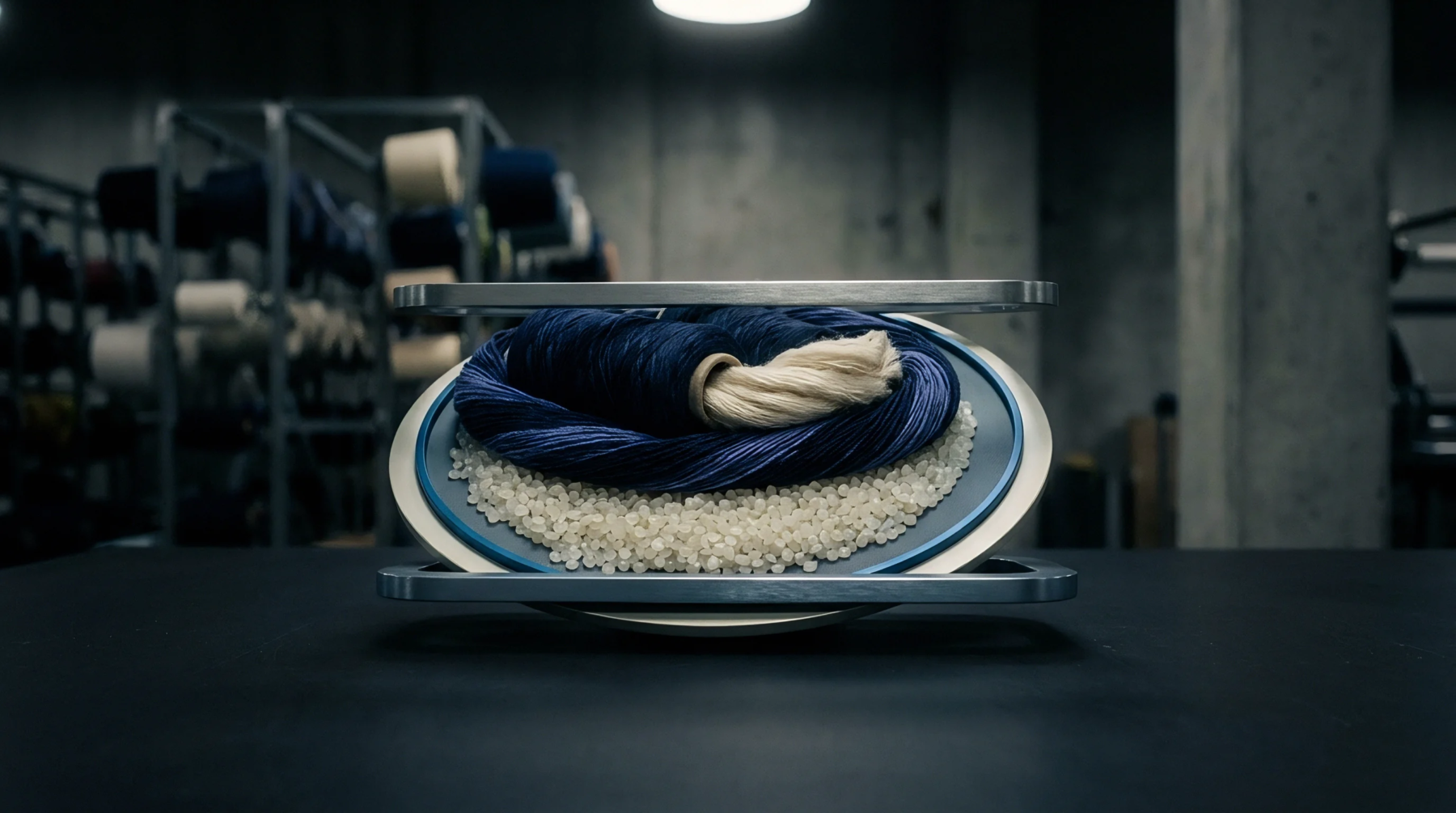
Contamination Source
Shredded polypropylene and polyethylene materials originating from agricultural bags and bale wraps present a severe contamination threat to raw cotton before yarn processing begins. This material is called polyolefin packaging scrap, which must be removed during the opening and cleaning stages to prevent yarn defects.
Spinning Disruption
Low melting point polymers like polypropylene melt under the friction and pressure generated during high-speed spinning and finishing processes. When polyolefin packaging scrap enters the drafting system, it melts on the rollers, causing fiber wraps and yarn breakage. Furthermore, because these polymers do not absorb water-soluble dyes, the resulting yarn displays white spots that ruin the visual appearance of the finished fabric.
This dyeing failure is often impossible to detect until the fabric has been knitted or woven and dyed, leading to high rejection rates.
Prevention Strategy
Automatic optical sorters in the blowroom scan the opened cotton tufts to detect and eject foreign matter before it is carded. These machines identify polyolefin packaging scrap by its color and shape, using high-speed air jets to blow the contaminated fibers out of the production line.
Recycling Impact
Proper segregation of waste at the ginning stage prevents these synthetic materials from entering the supply chain. Mills penalize suppliers who deliver cotton containing plastic residues, forcing cleaner harvesting practices.