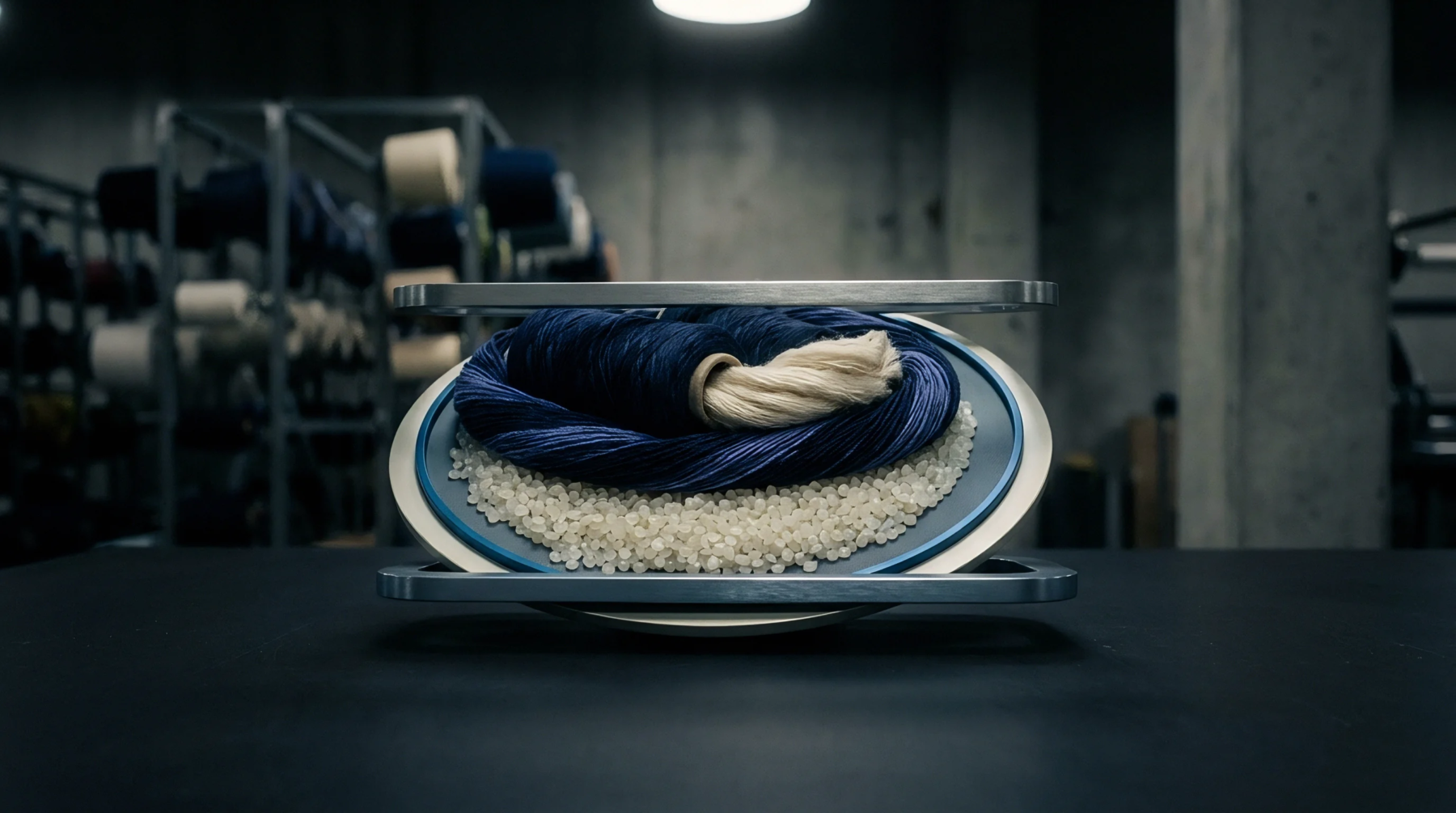
Thermal Degradation
Frictional cutting tip mechanics denotes the physical science governing thermal degradation rates along blade edges during high speed synthetic textile processing. High rotational velocities generate localized heat that exceeds thermoplastic melting points, forcing operators to regulate contact pressure closely to prevent fiber fusion. Mill technicians monitor this operational zone continuously during continuous filament splitting.
Synthetic filaments react differently to sustained thermal loads than natural cellulose products do. Cellulose chars under extreme heat, whereas thermoplastic polymers melt and redeposit across adjacent yarns. When blades operate beyond designated temperature thresholds, molten buildup alters edge geometry instantly.
This mechanical distortion ruins the cutting action and fouls subsequent production runs. Production supervisors enforce strict dwell time limits to maintain clean separation lines on technical apparel components.
Blade Calibration
Ultrasonic sensors measure edge displacement during continuous runs to detect microvibrations that signal impending mechanical failure. Mill engineers calibrate cooling fluid delivery rates against rotational speed tables to stabilize operational temperatures. Synthetic yarns demand precise blade sharpness because dull edges generate excessive friction through mechanical drag rather than clean shear.
Operators replace worn cutting modules immediately when microscopic edge rounding appears under stereomicroscopic inspection. Automated tension controllers adjust yarn feed rates dynamically to compensate for thermal expansion along the blade path.
Material Resistance
Monofilament denier variations dictate the mechanical load experienced by the cutting assembly during high speed processing. Heavy industrial yarns create severe abrasion that accelerates mechanical wear on standard steel alloys. Tungsten carbide inserts resist this abrasive wear effectively during continuous multi shift operations.
Quality control auditors test finished selvage edges against established tensile thresholds to verify that thermal sealing remains uniform. Tensile strength tests confirm that the thermal cutting edge seals yarn ends adequately without creating brittle heat affected zones.
Quality Verification
Laboratory technicians examine random fabric samples under high magnification to confirm edge integrity before bulk shipment release. Inspection protocols require zero fiber agglomeration along the cut boundary to pass final mill acceptance standards. Correctly calibrated cutting equipment leaves smooth edges that resist fraying during downstream garment assembly procedures.
Final laboratory reports document thermal parameters alongside dimensional stability metrics for every manufactured lot.