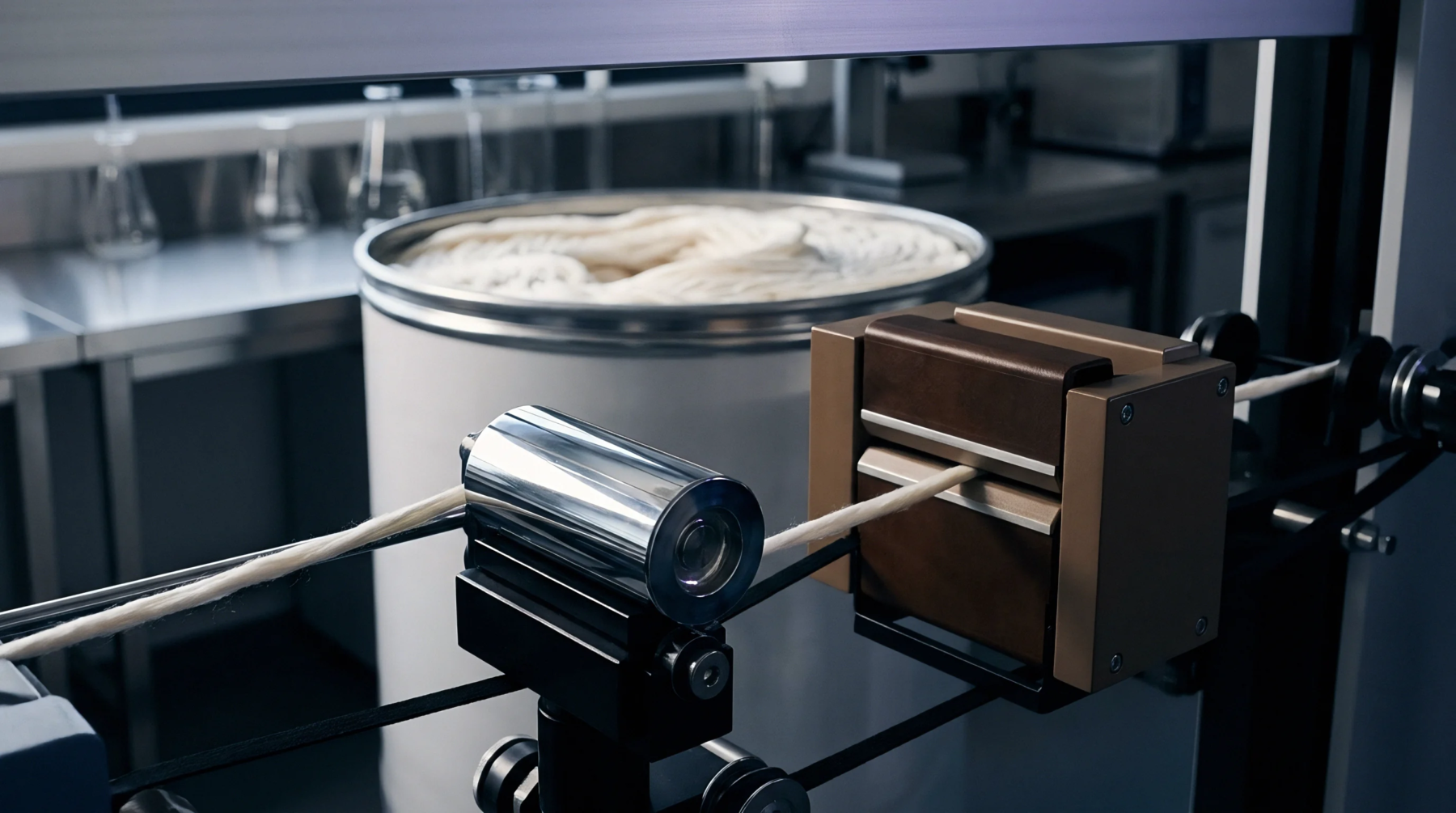
Dimension Control
Controlled delivery of fabric to a finishing machine allows the material to relax and reduces residual shrinkage before the final winding. To achieve this relaxation, positive overfeed supplies the fabric to the stenter pins at a speed faster than the exit speed of the conveyor. This action prevents the finished garment from shrinking excessively when it is laundered by the consumer.
Tension Mitigation
Mechanical tension built up during weaving or knitting is released when the fabric is allowed to bunch slightly on the pins. When the feeding rate is too low, positive overfeed fails to relieve these internal stresses and leaves the fabric prone to stretching. This results in poor dimensional stability and can cause garments to twist out of shape after washing.
Proper feeding settings ensure a stable fabric weight per square meter.
Setting Optimization
Operating parameters must be adjusted based on the specific knit structure and fiber content. If the feed rate is too high, positive overfeed causes the fabric to sag and create uneven edges.
Quality Evaluation
Laboratory technicians perform wash trials on sample cuts to measure the effectiveness of the shrinkage control. They verify that the fabric dimensions remain within the specified tolerance limits. Stable measurements confirm that the finishing line settings were correct.