Sensing Mechanism
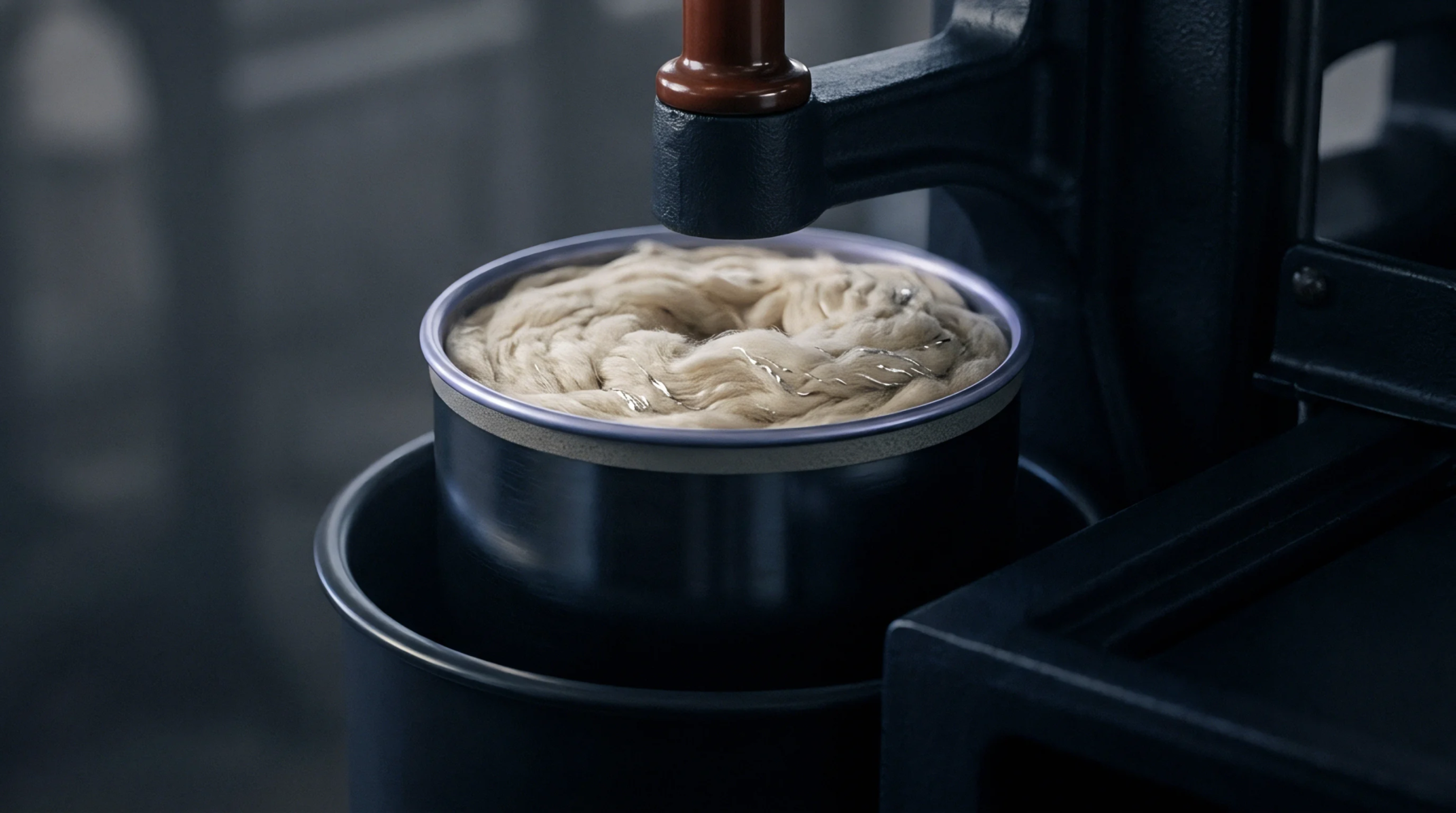
Contact-based measurement tool that determines moisture content by passing an electric current through a textile sample. A resistance moisture probe utilizes the inverse relationship between electrical resistance and the amount of water present in the fibres. Most models feature two or more pins that the operator must drive into the material.
Measurement Range
Conduction through the fibre increases as more moisture is absorbed. The resistance moisture probe measures this flow and converts it into a moisture percentage using internal lookup tables for cotton, wool, flax and synthetic blends. Because it requires physical penetration, this tool is best suited for bales, yarn packages, rolls and heavy felts.
Operational Factor
Accuracy depends on the depth of the pins and the orientation relative to the fibre grain. Using a resistance moisture probe across the grain generally yields a different result than a measurement taken along the grain. Operators must maintain consistent force to ensure the pins make full contact with the internal layers of the package.
External Interference
Salts and impurities in the water can lower the resistance and produce a falsely high moisture reading. The resistance moisture probe is sensitive to the chemical composition of the finish applied to the fabric. Regular cleaning of the electrodes prevents the buildup of residues that might interfere with the current flow.