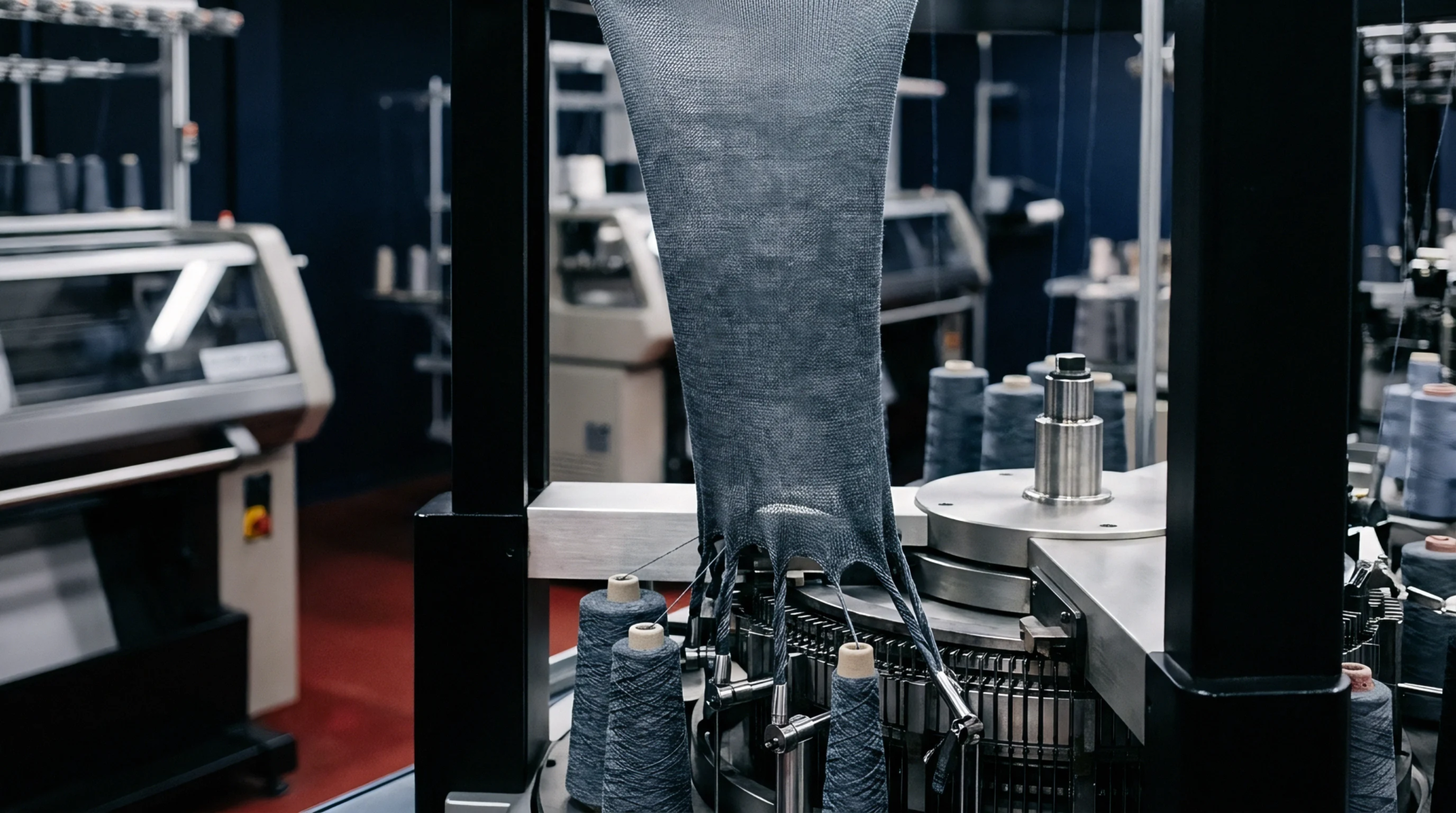
Mechanical Consolidation
Continuous compressive finishing uses heat and moisture to shrink tubular knitted fabrics along the longitudinal axis before garment assembly begins. Rotary compacting sits inside the industrial wet processing stage where woven or knitted structures face relaxation shrinkage penalties. Mills employ heavy felt belts pressed against heated cylinders to force structural relaxation into the material.
The mechanical action eliminates residual stretch from prior dyeing and bleaching lines. Commercial buyers verify this dimensional stability through standard wash test shrinkage protocols before bulk fabric rolls leave the factory floor.
Shrinkage Control
Dimensional stability requirements dictate the operating parameters of industrial machinery during final finishing. Finished cotton jersey requires strict control limits to prevent excessive distortion after consumer laundering cycles. Thermal energy softens internal polymer bonds while mechanical pressure forces loops closer together.
Fabric tension must remain near zero during this phase to allow permanent structural set without fiber distortion. Operators adjust cylinder temperature gradients to match the specific GSM weight of the processed textile.
Machine Mechanics
Mechanical shrinkage relies on a tensionless feeding system paired with a heavy rubber pressure belt wrapped around a steam heated drum. The rubber belt undergoes compression as it curves around the cylinder radius, which forces the fabric surface to contract accordingly. Steam injection hydrates the textile matrix, increasing plasticity prior to the actual compression zone.
Subsequent cooling drums fix the newly arranged molecular structure in place before winding the material onto transport rolls. Fabric velocity differentials between feed and delivery rollers determine the exact percentage of longitudinal shrinkage achieved.
Commercial Tolerance
Mill acceptance standards establish maximum allowable residual shrinkage percentages for delivered bulk shipments. Apparel manufacturers reject fabric lots exceeding established limits because garments warp during commercial laundering. Quality control laboratories measure area shrinkage through standardized domestic washing and drying cycles.
Finished goods destined for high end retail markets undergo rigorous dimensional verification to protect brand integrity. Precise mechanical settings ensure consistent dimensional performance across entire production batches.