Rotary Screen against Digital Print When Repeat Orders Shrink
When repeat print orders fall below 800 metres, digital printing eliminates rotary screen setup fees and waste, cutting landed costs and lead time.
Mesh
Rotary screen printing transfers patterns through seamless nickel cylinders etched with microscopic perforations. Standard electroformed screens run from 60 to 155 holes per linear inch, with wall thicknesses between 80 and 120 micrometres. Open area shrinks as the mesh gets finer: an 80-mesh screen yields about a 25 percent open area, while a 155-mesh screen drops below 14 percent.
This geometry limits both how much paste passes through and how crisp the edges remain. Thick print pastes need coarse meshes to penetrate the fabric, but fine line detail calls for higher mesh counts, restricting wet deposits to under 40 grams per square metre. If a design combines solid blotches with fine lines, rotary setups require separate screen positions for each, multiplying the tooling needed.
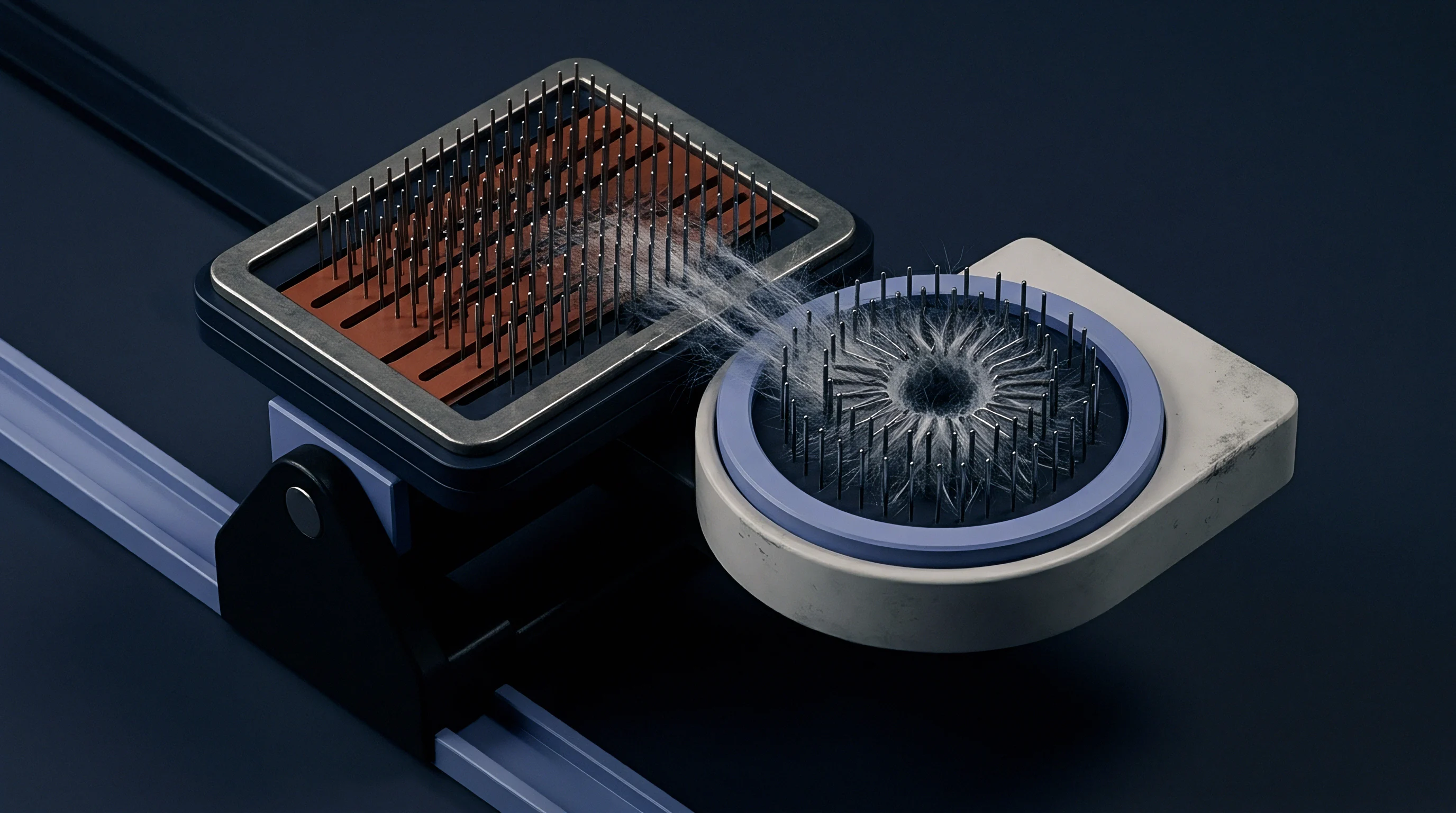
Piezoelectric drop-on-demand digital printheads replace photo-engraved metal cylinders with arrays of microscopic silicon nozzles firing at over 20 kilohertz. Industrial heads carry native resolutions of 600 to 1200 nozzles per inch, spitting droplets between 3 and 18 picolitres. Instead of laying down a continuous film of thick paste, digital systems build tone by varying where and how densely drops fall.
A 4-picolitre drop lands on treated cotton fabric with a wet footprint under 25 micrometres, cutting down lateral wicking before evaporation pins the liquid in place. That micro-metering lets a single pass render smooth gradients, half-tones, and hairline vectors without adding print stations.
Resolution Limits and Mechanical Geometry
Screen production methods set firm limits on image detail. Electroforming creates square or hexagonal mesh apertures whose metal bridges block fluid along continuous diagonal lines. On fine geometry or thin lettering below 0.2 millimetres, those bridges leave stepped serrations along line edges ~ the familiar rastering effect.
Etching beyond the pitch of the nickel matrix weakens the cylinder under squeegee pressure. Rotary printers work around this by laying down thicker paste, relying on controlled lateral bleed to fill in the mesh gaps. Because lines then swell 15 to 35 percent beyond the film artwork, technicians have to compensate with negative trap allowances during initial color separation.
Digital raster image processors bypass mechanical bridge constraints by controlling each nozzle individually. Variable drop volume technology modulates fluid mass drop by drop, putting smaller droplets at the edges and larger ones inside solid fills. Edge sharpness comes down to drop placement accuracy instead of fluid squeezing through metal holes.
At a standard throw distance of 1.2 millimetres from nozzle plate to fabric, drop deflection stays under 0.5 degrees, keeping registration within plus or minus 10 micrometres. With no screen touching the fabric surface, raised textures do not smear, protecting design geometry on slub cottons, waffle knits, and structural dobby weaves.
Single-pass digital lines firing 7-picolitre drops at 600 dots per inch achieve continuous line definition down to 0.08 millimetres on pre-padded 100 percent cotton lawn without edge bleeding.
Droplet Dynamics on Prepared Fabric
Substrate preparation dictates how fluid behaves in both methods, though absorption mechanics work at completely different volume scales. Rotary printing deposits wet films between 20 and 80 micrometres thick onto fabric that has been singed, desized, scoured, and bleached. That volume delivers enough liquid carrier to hydrate yarn cores, pushing dye deep into the inner lumen of natural fibers under squeegee pressure.
Coverage stays even over rough surfaces simply because the heavy fluid layer floods high and low points alike.
Digital inkjet delivers a tiny fraction of that fluid, laying down wet film thicknesses under 8 micrometres. Plain, untreated cloth sucks up low-viscosity digital inks instantly along yarn gaps, resulting in blurred details, weak color yield, and bleed between colors. Inkjet production therefore requires pre-padded fabric treated with thickeners, alkali, and humectants.
Sodium alginate or synthetic polyacrylate coatings form a thin gel barrier on the surface that catches and freezes ink drops within milliseconds of impact. The liquid vehicle evaporates while dye stays locked in the surface gel until high-temperature steaming triggers the reaction.
Print defects stem from very different mechanical and fluid failures across the two technologies:
- Screen Mesh Moiré ~ Mechanical interference patterns created when the screen mesh frequency aligns with the fabric thread count per centimetre, causing visible wave distortions in light coverage areas.
- Nozzle Jet Deviation ~ Directional misalignment caused by dried ink crusting or particulate build-up at a nozzle aperture, leaving thin white lines along the length of the roll.
- Squeegee Pressure Drift ~ Wear on polyurethane squeegee blades or a drop in magnetic bar force across a 320-centimetre roll face, creating color density differences between the drive side and operator side.
- Satellite Drop Splatter ~ Secondary droplets splitting off from the main ink stream during high-frequency firing, landing off-target and leaving faint color halos along sharp edges.
Minimum charges per nickel cylinder cover two hours of room preparation, laser burning, and end-ring gluing regardless of whether the screen runs one hundred or one hundred thousand metres on the press.
Breakdown
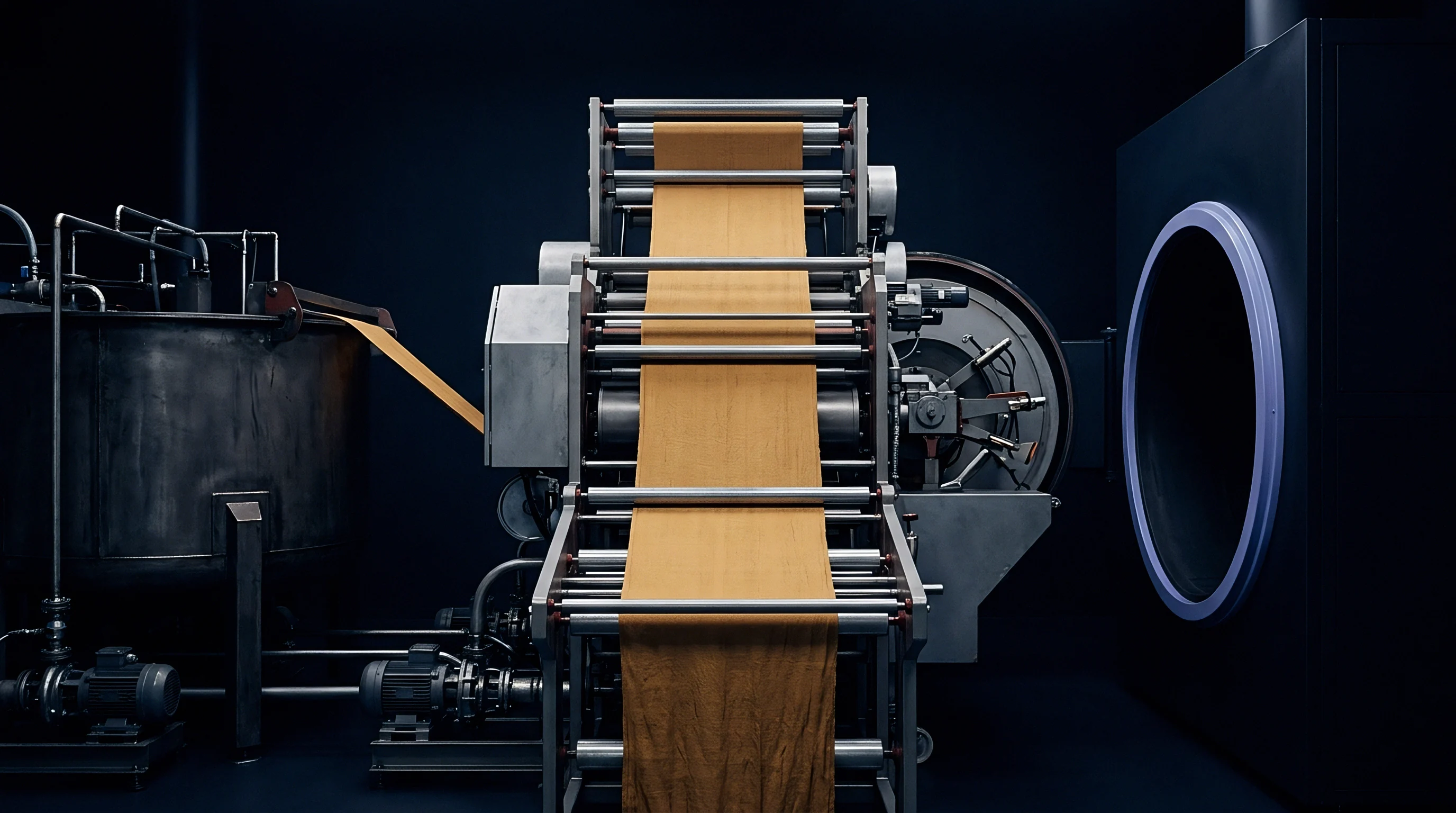
Rotary press downtime hits hard through lost capacity, wasted labor, and scrapped material. Switching a 12-color rotary press to a new design requires full tear-down and washing. Operators have to drain residual paste from up to twelve squeegee assemblies, feed tubes, and reservoirs.
Every screen comes off the press head, goes to a wash station for high-pressure cleaning, dries, and gets racked. Paste left inside feed lines and screen heads averages 3.5 kilograms per color position, generating over 40 kilograms of wet dye waste on every pattern change.
Setting up the next pattern means mounting clean screens, locking end-rings into bearings, running feed hoses, and filling reservoirs with fresh paste. Operators zero the mechanical registration across all heads using optics or alignment cameras, then run test strike-off fabric through the dryer to check fit, squeegee pressure, and shade match under daylight lamps. Getting registration and squeegee angles right burns through 50 to 180 metres of waste fabric before production can run.
Total changeover takes anywhere from 90 minutes for a simple four-color print to over 240 minutes for a complex 12-color pattern.
Changeover Mechanical Sequence and Wash Water
Washing down a rotary line creates real environmental compliance issues and high water bills. Rinsing eight screens, paste pumps, and color pans uses 400 to 900 litres of fresh water per changeover. That wastewater carries high Chemical Oxygen Demand and heavy dissolved solids, requiring on-site chemical treatment and primary sludge filtration before it can go down the municipal drain.
In plants running six pattern changes a day, washdown volume can top 5,000 litres, adding treatment surcharges that eat into plant overhead.
Digital lines swap physical screen washing for automated printhead cleaning cycles. Changing colors requires no tear-down of print heads and no draining of fluid lines. To load a new pattern, the operator opens the file on the Digital Front End, sets fabric tension, and selects the substrate profile.
Inks stay sealed inside pressurized circuits with continuous de-aeration. If the next design uses the same ink set, changeover is just the time it takes to pull up the new vector file and run a 2-metre test strip for inspection ~ usually under 5 minutes, with zero liquid waste.
How Do Digital Printhead Purges Compare to Rotary Stripping?
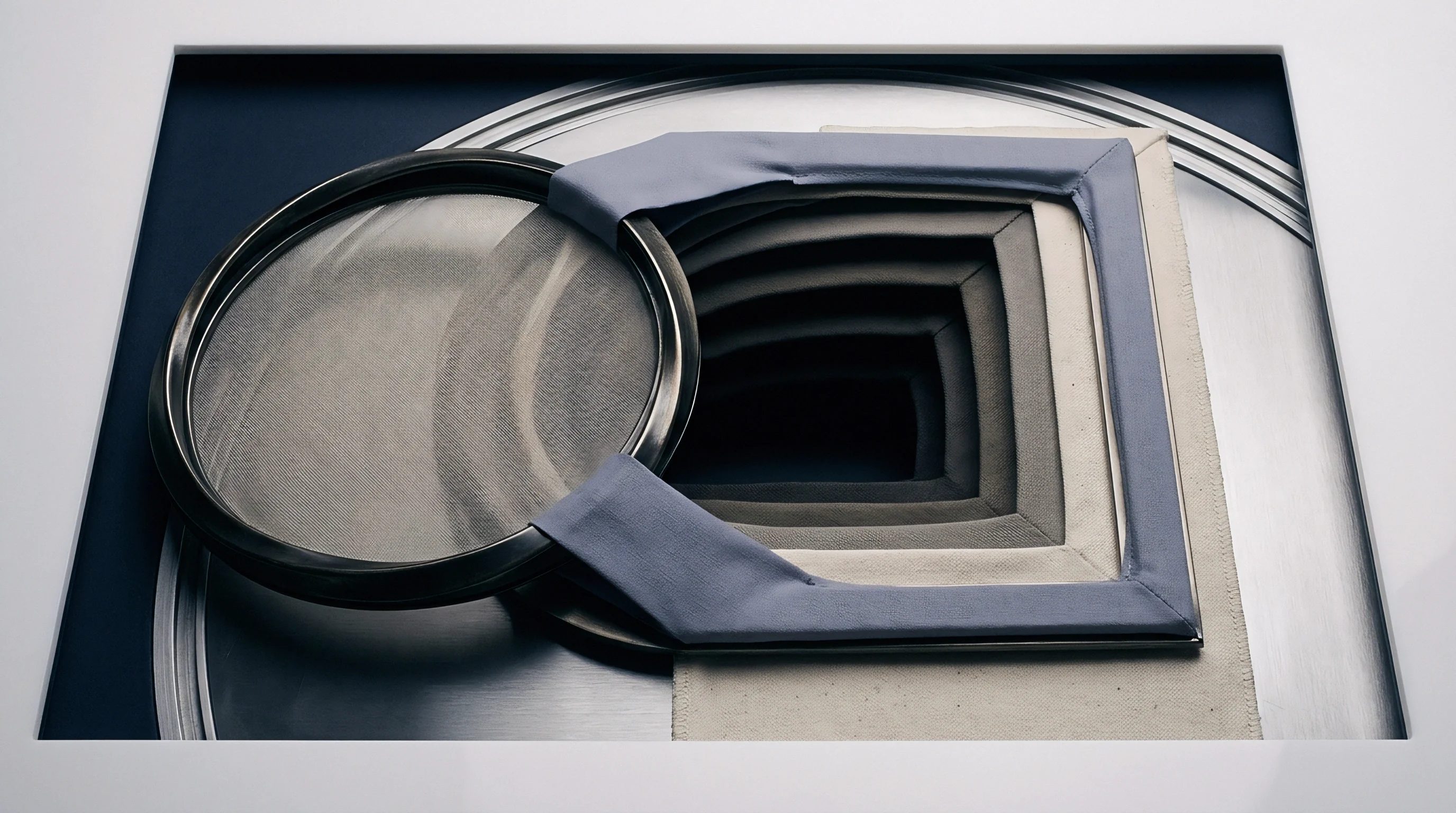
Digital print engine maintenance focuses on printhead health rather than washdown routines. Automated modules run periodic vacuum purges, spits, and elastomer wipes across the nozzle plates to stop ink from crusting and clear air bubbles. Each purge cycle consumes 15 to 80 millilitres of ink per color rail, dumping it into waste bottles for disposal.
Digital ink costs far more per litre than rotary paste, but total liquid waste per design change is two orders of magnitude lower.
| Process Metric | Rotary Screen (8-Color) | Scanning Digital (8-Color) | Single-Pass Digital (8-Color) |
|---|---|---|---|
| Hardware Changeover Time | 90 to 150 minutes | 3 to 8 minutes | 3 to 8 minutes |
| Paste/Ink Waste per Setup | 25.0 to 45.0 kg | 0.05 to 0.15 kg | 0.12 to 0.35 kg |
| Washdown Water Volume | 450 to 800 litres | 0 litres | 0 litres |
| Setup Alignment Waste Fabric | 40 to 120 metres | 2 to 5 metres | 3 to 8 metres |
| Max Operational Print Speed | 40 to 80 m/min | 4 to 12 m/min | 30 to 75 m/min |
| Direct Setup Labor Required | 3 Operators | 1 Operator | 1 Operator |
A 600-metre run on a 10-color rotary press consumes 160 minutes in setup and alignment, producing 52 kilograms of wet dye sludge and 620 litres of wastewater before delivering its first usable metre. Setup costs on short runs can surpass the value of the printed fabric.
Amortization
Tooling costs dominate unit economics as production runs shrink. An eight-color rotary pattern requires upfront expenditure on color separations, laser engraving or film output, nickel cylinders, and precision end-rings. With engraving averaging $110 to $160 per cylinder, total tooling runs $880 to $1,280 for an eight-color design.
Spread over a 20,000-metre run, that comes to a negligible $0.05 to $0.06 per metre. But if a repeat order drops to 500 metres, screen amortization jumps to $1.76 to $2.56 per metre, destroying any profit margin on the fabric.
Digital printing eliminates screen engraving costs altogether. The raster image processor sends design data straight to nozzle firing commands without physical tooling. Preparing a pattern incurs only a one-time digital proofing and color profiling fee, usually under $50, no matter how complex the pattern or how many colors it uses.
That drops the entry barrier for launching or reordering a design by over 90 percent, letting brands order exact replenishment volumes without tying up cash in screen inventory.
Screen Engraving Overhead and Capital Allocation
Storing rotary screens introduces hidden costs and physical risk. Nickel cylinders crease, dent, and fatigue easily during handling and storage. A mill managing 3,000 customer screens dedicates major floor space to climate-controlled racks.
When a repeat order arrives 12 to 18 months later, screens have to be pulled, checked for oxidation or lacquer breakdown, and often fitted with new end-rings if the glue failed. Having to re-engrave damaged screens on older patterns introduces unbudgeted expenses that wipe out original margin calculations.
Digital pattern libraries live on network servers as vector and raster files. Retrieving a design costs nothing in physical handling, takes up no floor space, and carries zero risk of damage. Color target data relies on spectrophotometric values and ICC profiles rather than physical fabric swatches stored in boxes.
When a reorder comes in three years after launch, the digital front end uses stored calibration curves to match the original shade on current fabric stock, bypassing screen retrieval and re-engraving entirely.
Standard mill purchase contracts state that screen tooling fees grant the buyer exclusive pattern usage rights but assign physical cylinder ownership and storage risk to the mill floor.
Unit Economics across Decaying Lot Sizes
Landed cost per metre balances fixed setup expenses against operating speeds and chemical costs. Rotary printing keeps a clear edge on long runs thanks to fast line speeds (50 to 80 metres per minute) and cheap paste ($1.80 to $3.50 per kilogram). Digital printing faces much higher ink prices ($18.00 to $45.00 per kilogram) and slower speeds (4 to 12 metres per minute on multi-pass scanning machines), but starts with zero screen cost.
As run lengths shrink, fixed rotary setup costs climb steeply on a per-metre basis, eventually crossing the flatter digital cost curve.
To see how this works across different volumes, take an 8-color floral pattern on 130 gsm combed cotton poplin. Going rotary incurs $1,040 in screen engraving ($130 per screen) plus $320 in setup (labor, downtime, alignment fabric). Paste comes to $0.42 per metre and press running cost is $0.18 per metre.
The digital route needs no screens, incurs a $30 RIP setup fee, $0.35 per metre for pre-padding, $1.85 per metre for ink (at 12 pL/dot average coverage), and $0.65 per metre in machine runtime.
| Order Quantity (m) | Rotary Tooling ($/m) | Rotary Run & Paste ($/m) | Rotary Total ($/m) | Digital Setup ($/m) | Digital Ink & Run ($/m) | Digital Total ($/m) |
|---|---|---|---|---|---|---|
| 100 | 13.60 | 0.60 | 14.20 | 0.30 | 2.85 | 3.15 |
| 250 | 5.44 | 0.60 | 6.04 | 0.12 | 2.85 | 2.97 |
| 500 | 2.72 | 0.60 | 3.32 | 0.06 | 2.85 | 2.91 |
| 1,000 | 1.36 | 0.60 | 1.96 | 0.03 | 2.85 | 2.88 |
| 2,500 | 0.54 | 0.60 | 1.14 | 0.01 | 2.85 | 2.86 |
| 5,000 | 0.27 | 0.60 | 0.87 | 0.01 | 2.85 | 2.86 |
| 10,000 | 0.14 | 0.60 | 0.74 | 0.00 | 2.85 | 2.85 |
For this specific setup, the crossover hits at roughly 720 metres. Below 720 metres, digital is cheaper per metre; above that, rotary takes the lead. When a repeat order drops from an initial 5,000-metre launch run to a 300-metre reorder, running it on a rotary press incurs a cost penalty over 100 percent per metre compared to digital.
Sourcing contracts should state that minimum order quantities apply only to initial rotary runs, and that repeat orders under 1,000 metres convert automatically to digital production using spectrophotometric matching, without re-engraving fees.
Chemistry
Formulation chemistry separates rotary pastes from digital inks in solids content, viscosity, and flow behavior. Rotary pastes rely on high molecular weight thickeners ~ sodium alginate for reactive dyes, sodium polyacrylate for pigments. Viscosity runs high, between 5,000 and 12,000 millipascal-seconds (mPa.s), with a shear-thinning profile.
That thick gel holds dye, alkali (sodium carbonate), and humectant (urea) in place. Squeegee pressure shears the paste through the mesh; once on the fabric, viscosity recovers instantly, preventing bleed without special fabric pre-treatments.
Digital inks demand low viscosity ~ typically 3 to 12 mPa.s ~ so micro-channels in piezo heads can form clean droplets. High molecular weight thickeners would choke nozzles, causing cavitation and dampening acoustic energy. Instead, inks use ultra-filtered liquid dye concentrates, co-solvents, surfactants, and biocides in deionized water.
Dye concentrations stay under tight limits to prevent micro-crystallization at the nozzle face during idle moments. Because digital inks carry no thickeners of their own, the fabric itself must supply the chemical package (alkali, thickener, and humectants) via pre-padding.
Rheology Modulation and Solid Particle Loading
Pigment printing clearly shows the gap between heavy-mass rotary transfer and low-mass jetting. Rotary pigment pastes use emulsion polymers with acrylate or butadiene binders alongside pigment particles up to 5 micrometres across, running 15 to 25 percent solids by weight. Curing in hot air at 150 degrees Celsius for 3 minutes crosslinks the binder into a film that encapsulates the pigment and locks it onto the fiber surface.
Digital pigment inks have to keep particle sizes under 200 nanometres to avoid clogging nozzles or settling in lines. Binders must either encapsulate the individual pigment particles at the nano scale or be padded on as a separate pre-coat or top-coat. Viscosity limits restrict how much binder ink can hold; push binder levels too high and the ink will not jet.
As a result, digital pigment prints tend to score lower on rub fastness (dry crocking ISO 105-X12 level 3-4 against rotary’s level 4) unless top-finished with a resin on a stenter frame.
Reagent concentration inside pre-padded cotton cloth dictates color yield, where an alkali imbalance of plus or minus 5 grams of sodium carbonate per litre alters final reactive dye fixation levels by up to 12 percent.
Fixation Requirements and Wash-Off Effluent Loads
Post-print washing and steaming depend on the dye chemistry and application method. Reactive dyes on cotton require saturated steam at 102 degrees Celsius for 8 to 10 minutes to bond dye molecules (monochlorotriazine or vinyl sulfone groups) covalently to the cellulose. Rotary reactive pastes carry alkali directly in the mix, reaching high fixation yields (75 to 85 percent) during steaming.
Digital reactive printing needs thorough post-print washing to flush out unfixed dye, alginate thickener from the pre-pad, and urea used for moisture uptake during steaming. A multi-stage wash line uses cold rinses, hot detergent boils at 95 degrees Celsius, and final cold rinses, consuming 18 to 35 litres of water per kilogram of fabric. Cutting wash cycles to save money leaves hydrolysed dye on the fabric face, leading to ISO 105-C06 wash test failures and color bleeding during home laundering.
Fastness and physical performance show clear differences between rotary paste and digital ink on identical cotton fabrics:
- Assess wash fastness under ISO 105-C06 test condition C2S at 60 degrees Celsius with perborate detergent; digital reactive prints should match rotary benchmarks at grade 4-5 for shade change and staining.
- Measure dry and wet crocking fastness per ISO 105-X12 on a motorized crockmeter; rotary pigment prints reach grade 4 dry fastness, whereas digital pigments need a top-finish crosslinker to pass grade 3-4.
- Check dimensional stability after three domestic washes under ISO 5077 and ISO 6330, accounting for tension distortion introduced during continuous pre-padding.
- Measure bending length and hand feel using ISO 9073-7 cantilever testing; digital reactive prints preserve original fabric softness, while rotary pigment blotch prints increase stiffness by 40 to 85 percent.
How does the long-term chemical stability of nano-dispersed digital pigment binders compare against conventional rotary acrylic polymers under repeated industrial washing over a garment’s life?
Threshold
Moving replenishment from rotary to digital printing takes more than comparing fabric metre rates. Fast retail cycles and high inventory costs make repeat orders hard to predict. Brands forcing standard rotary minimums (usually 3,000 to 5,000 metres per colorway) often wind up with unsold inventory destined for deep markdowns.
Digital printing changes that math by doing away with setup minimums, matching batch sizes directly to store sell-through.
The real value comes from faster lead times, working capital velocity, and supply chain flexibility. A rotary reorder requires retrieving screens, press scheduling, paste matching, strike-offs, and setup ~ pushing mill lead times to 4 ~ 6 weeks. Digital reorders pull from existing digital archives onto pre-padded fabric stock, cutting turnaround to 3 ~ 7 days.
That speed lets buyers capture active trend demand without overproducing stock.
Economic Crossover Logic for Order Replenishment
Pinpointing the cost crossover between rotary and digital routes means balancing setup fees, ink/paste costs, fabric prep, and post-processing. Fixed rotary costs drop per metre as runs grow, while digital costs stay largely linear. Production volume breaks into three clear decision zones:
- Short-Run Replenishment Zone (1 to 800 Metres) ~ Digital holds a clear economic advantage. Screen engraving and changeover downtime make rotary unviable here.
- Transition Boundary Zone (800 to 2,500 Metres) ~ A crossover region where pattern details decide the route. Heavy ink coverage, dark blotches, or simple 4-color prints lean rotary earlier in this range. Fine gradients, high color counts, and detailed lines favor digital up to 2,500 metres.
- Bulk Production Zone (Above 2,500 Metres) ~ Rotary retains a clear per-metre cost advantage through high line speeds and cheap paste, assuming full sell-through of inventory.
Shade Reproduction Continuity across Multi-Year Runs
Matching colors between an initial rotary bulk run and a small digital reorder requires strict spectrophotometric controls. Rotary presses rely on physical strike-offs evaluated in light boxes. Digital engines use spectral reflectance measurements (CIE L a b coordinates) mapped into ICC profiles.
Because rotary pastes and digital inks use different dye chemistry and concentrations, metamerism can occur when lighting changes (such as D65 daylight versus TL84 store lighting).
To prevent color shifts across methods, mills need a central spectrophotometric database, defining color standards by spectral data rather than physical swatches. When a reorder switches from rotary to digital, the front end calculates transform matrices, adjusting ink channels to keep Delta E (CMPC 2:1) under 0.8 against the rotary master. Pre-padding consistency across fabric lots is critical; variations in fabric yellowness or alkali absorption will throw off the shade.
When reorder volumes fall below break-even, shifting from rotary screens to digital lines protects gross margins ~ as long as fabric prep and spectral shade targets are locked before cutting the first metre.