Evaluating Comber Noil Percentages against Martindale Surface Abrasion Ratings
Lifting comber noil extraction from 10 to 18 percent raises Martindale abrasion by up to 80 percent, after which returns diminish against escalating fibre costs.
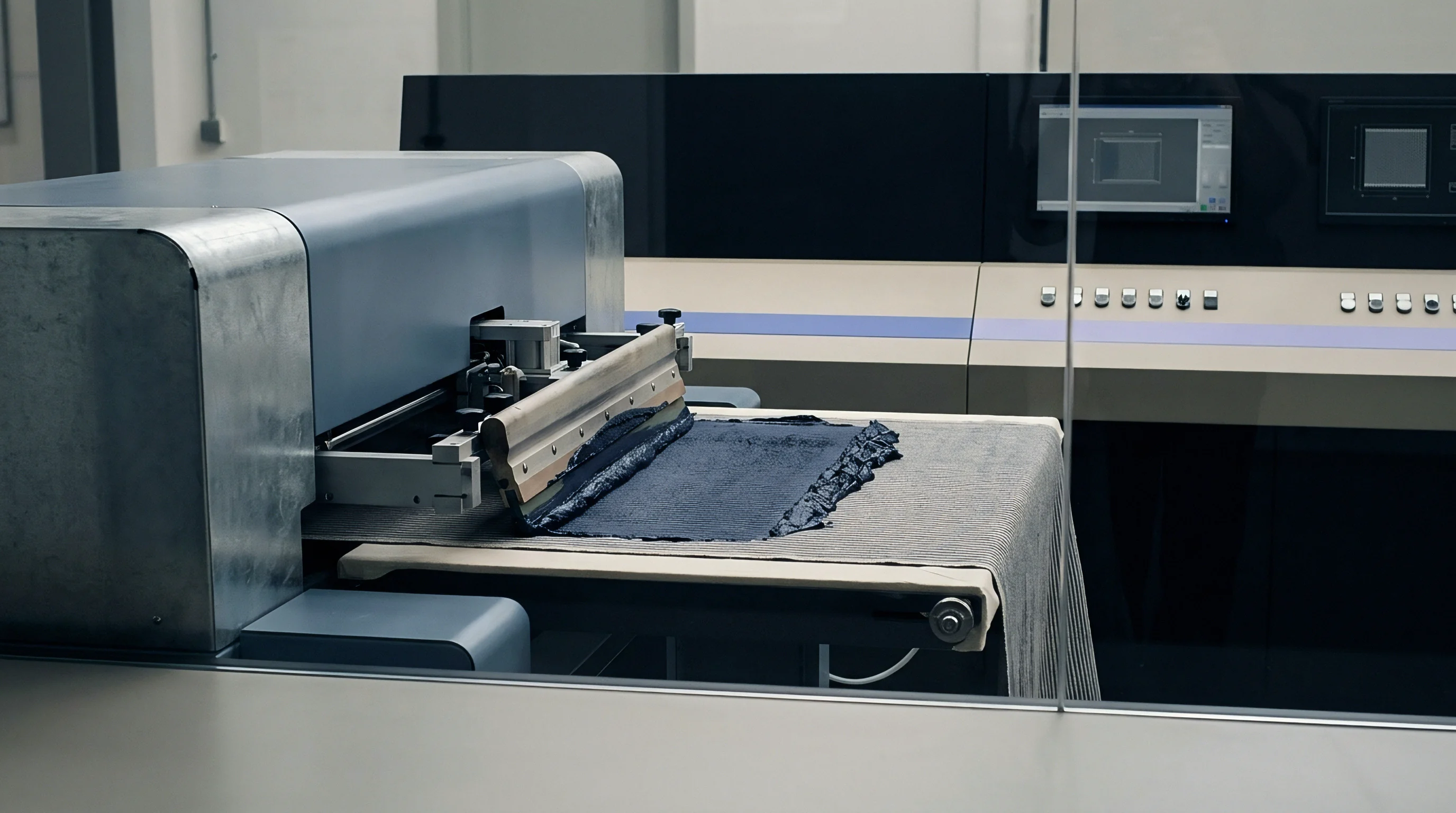
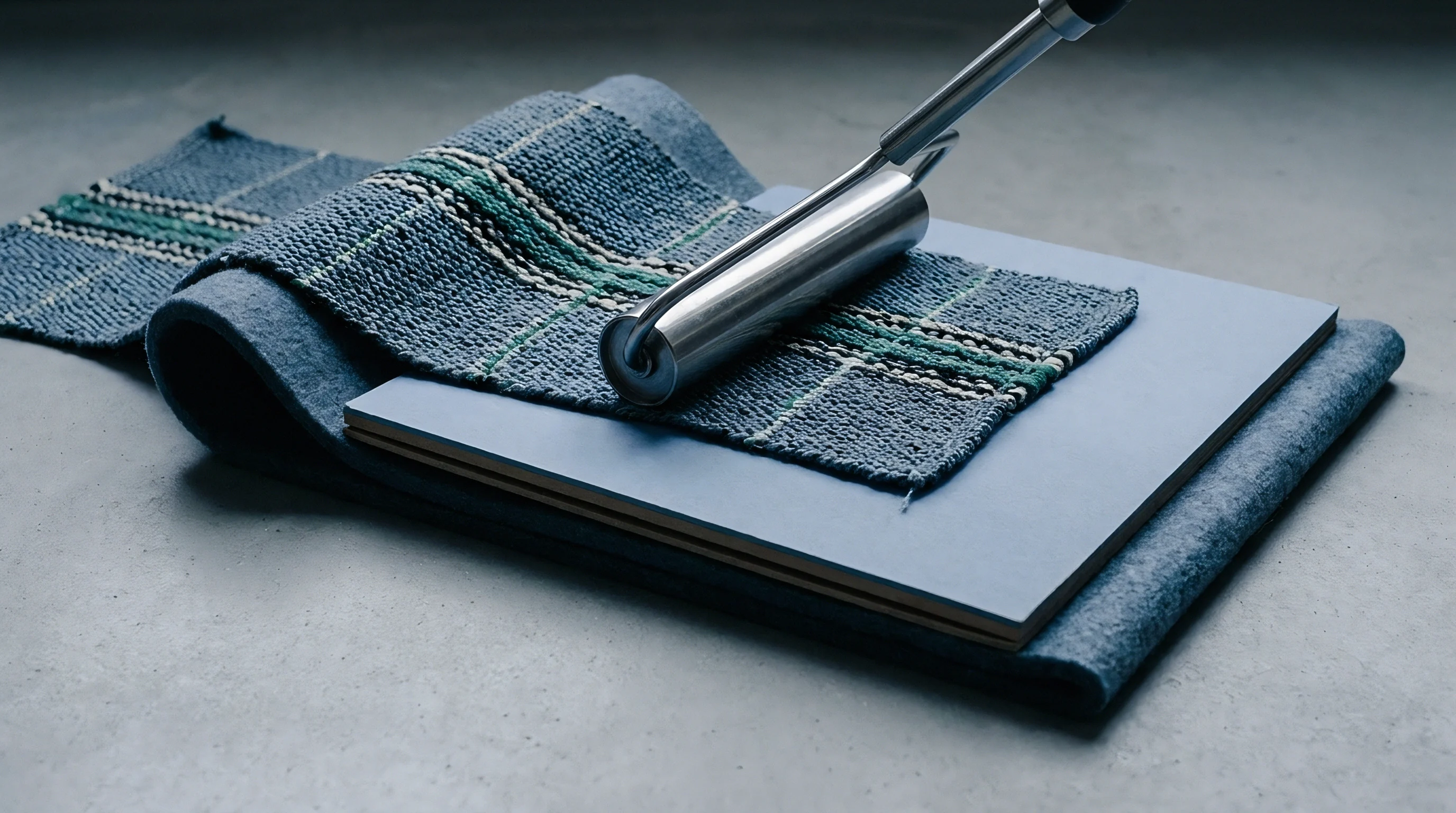
Lap
Cotton grading sheets arriving with mill lots show micronaire, upper half mean length, and uniformity index, yet spinning mills quietly vary comber waste extraction between eight and twenty-two percent to balance raw material yield against yarn tenacity. A test certificate displaying eighteen thousand Martindale revolutions on an upholstery twill against a contract threshold of twenty-five thousand points directly to fibre fractionation. Removing short fibres changes how cotton strands pack inside a spinning triangle.
Combing extracts hooked cotton fibers. Carded slivers present to the comber cylinder needles as a dense batt formed during ribbon or sliver lapping. Cylinder half-laps, populated with fine wire needles ranging from twenty to thirty-two teeth per square centimeter, strike the protruding fringe held by the nipper knives.
Fibres shorter than the detaching roller distance fall into the waste aspirator as comber noil. When extraction rates drop below twelve percent, cotton lots retain a significant short fibre content, classified by high-volume instrumentation as fibres measuring under 12.7 millimeters. Short fibers destabilize yarn geometry.
Extracting eighteen percent comber noil reduces the short fibre content of upland cotton from fourteen percent down to six percent under high-volume instrument testing.
Carded batts entering the combing zone experience directional mechanical forces that pull out tangled entanglements and neps while sorting fibres strictly by linear extent. Sliver preparation directly governs combing efficiency, because hooked ends entering the nip backwards avoid detaching roller capture unless the pre-combing draw frames deliver an even drafting tension across every delivery.
- Retained short fibre fraction increases internal sliver mass variance and creates loose strand ends that escape yarn core twist during ring spinning.
- Nep accumulation leaves tight entanglements on the yarn perimeter that act as high spots against abradant surfaces, initiating premature thread severance.
- Fibre alignment deficits prevent uniform tensile load sharing across the cross section, allowing individual cotton fibrils to snap sequentially rather than collectively.
- Seed coat fragments resist dye penetration and create brittle structural anomalies that shear off during mechanical rubbing actions.
High-volume instrument testing protocols set standard tolerances for upper half mean length at plus or minus 0.02 inches, but comber noil extraction percentage operates as an unmeasured internal mill variable unless specifically audited at the waste box. Buyers paying for premium combed yarn often receive semi-combed cotton extracted at nine to eleven percent whenever raw lint prices rise. Higher comber settings consistently produce smoother yarn profiles across all ring counts.
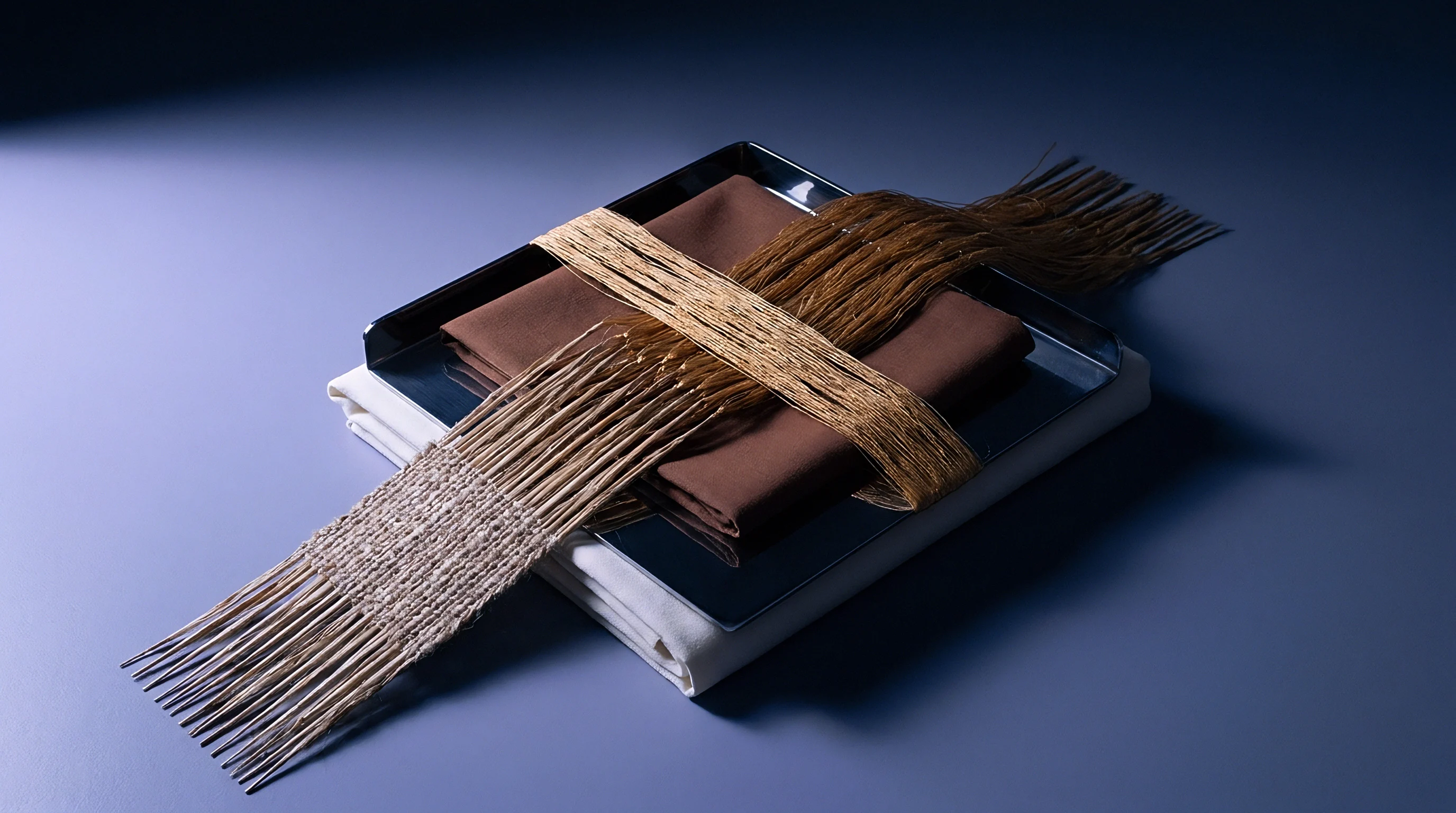
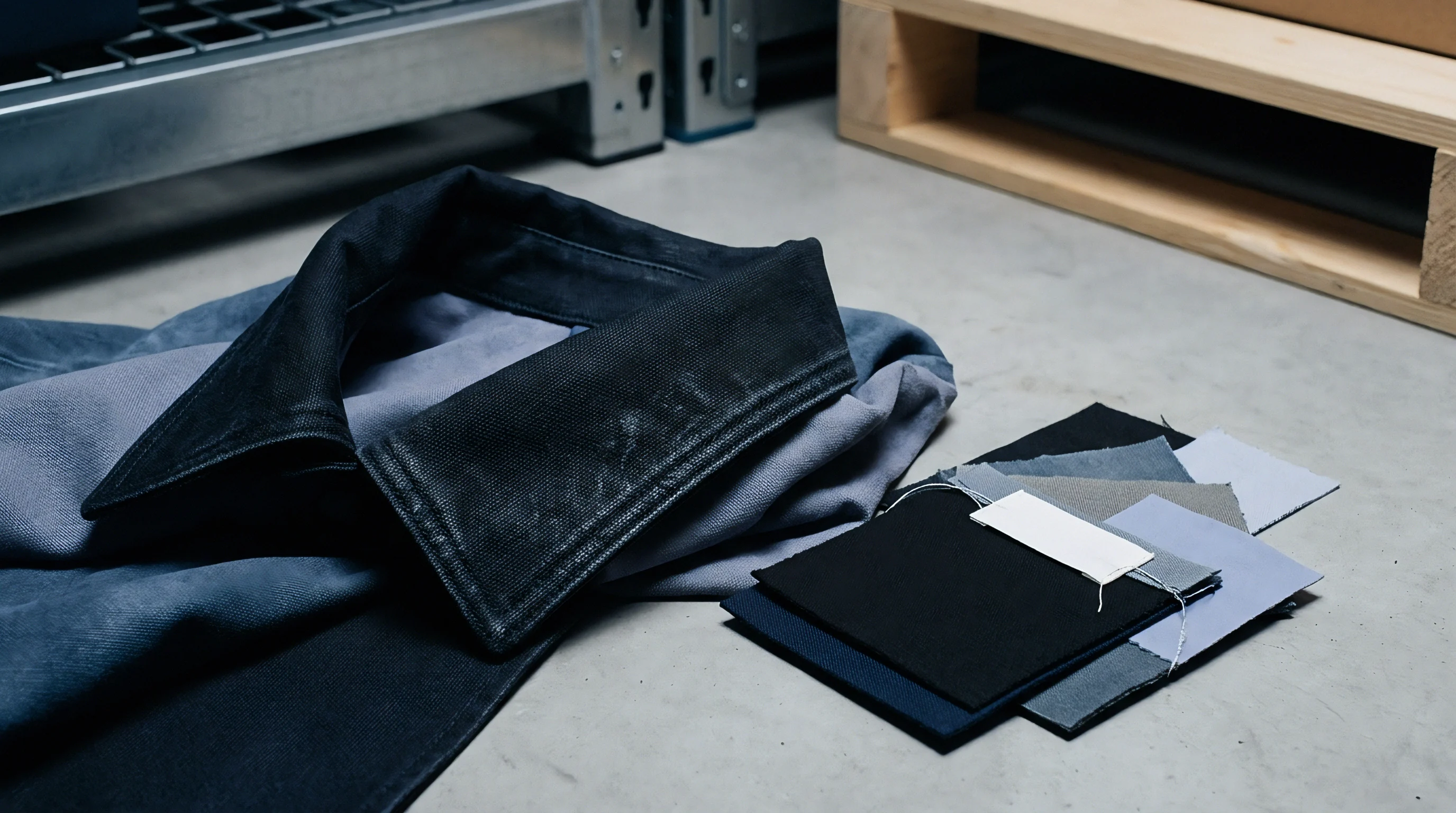
Torque
Twist multipliers define the helical path of cotton staples within ring-spun yarns, balancing internal frictional hold against residual rotational tension. Ring spinning concentrates long staples externally. When cotton passes through the drafting rollers into the spinning triangle, longer combed staples migrate toward the outer boundary where tension peaks, while shorter residual fibres sink into the core or project outward as surface hairiness.
A yarn spun from eighteen percent comber noil displays a compact core with minimal protruding ends per hundred meters, measured on standard optical tester channels.

How Does Fibre Fractionation Alter Yarn Packing?
Packing density inside the yarn cross section governs how external abrasive surfaces interact with individual cotton walls. In carded or lightly combed yarns containing fifteen percent comber noil or less, the cross section exhibits an irregular circular profile with loosely consolidated quadrants. Under the contact pressure of a wool abradant on a Martindale tester, these loose quadrants flatten rapidly.
Yarn hairy envelopes invite friction.
Twist multipliers alter fiber cohesion. As the twist multiplier shifts from 3.2 to 4.2 in combed yarns, the helical wrap angle steepens from twenty-one to twenty-seven degrees relative to the yarn axis. This geometric shift increases inter-fibre friction, preventing individual cotton strands from sliding out of the strand matrix when subjected to bidirectional frictional shear.
Fibre ends protruding from the yarn envelope invite frictional snagging long before the yarn core sustains mechanical abrasion.
Fibre migration indices show that cotton fibres longer than thirty millimeters stay locked along multiple twist turns, distributing frictional loads over their entire cuticle area. Short fibres below twelve millimeters lack sufficient axial length to bridge two consecutive twist revolutions, remaining anchored solely by the surface pressure of neighboring long filaments. Microscopic inspection of abraded specimens proves that these short fibres peel away first, creating loose fuzz that balls into surface pills before yarn crowns disintegrate.
Spinning supervisors regularly declare that higher spindle speeds produce sufficient pneumatic consolidation to substitute for the extraction of comber waste.

Cycles
Abrasion testing under ISO 12947-2 subjects specimens to multidirectional motion following a Lissajous figure formed by sixteen cumulative rotations, yielding a total translational distance that stresses surface yarns along every angular orientation. Abrasion heads apply twelve kilopascals. The motion repeatedly rubs the textile face against a standard worsted abradant mounted over woven wool felt.

Does Increased Noil Removal Guarantee Abrasion Life?
Extracting higher noil percentages yields diminished returns once short fibre content falls below five percent. In tests conducting rubs until the severance of two threads, Ne 30/1 ring-spun single jersey knitted cloth exhibits a non-linear relationship between noil extraction levels and total cycles before failure. Raising noil extraction from eight to fourteen percent delivers an eighty percent increase in Martindale revolutions, while pushing extraction from sixteen to twenty-two percent improves abrasion resistance by less than twelve percent.
| Fibre Fraction | Short Fibre Index | Ne 30/1 Plain Jersey (9 kPa) | Ne 30/1 3/1 Twill (12 kPa) | Ne 40/1 Plain Sheeting (9 kPa) | Yarn Hairiness H (Zweigle s3) |
|---|---|---|---|---|---|
| 8 Percent Noil | 13.8 Percent | 11,000 Rubs | 18,500 Rubs | 8,500 Rubs | 1,120 Ends |
| 12 Percent Noil | 9.4 Percent | 16,500 Rubs | 26,000 Rubs | 13,000 Rubs | 640 Ends |
| 16 Percent Noil | 6.1 Percent | 22,500 Rubs | 35,000 Rubs | 18,500 Rubs | 310 Ends |
| 20 Percent Noil | 4.5 Percent | 24,000 Rubs | 38,500 Rubs | 20,000 Rubs | 185 Ends |
| 24 Percent Noil | 3.9 Percent | 24,800 Rubs | 39,500 Rubs | 20,500 Rubs | 140 Ends |
| Data gathered under controlled atmospheric conditions of 20 degrees Celsius and 65 percent relative humidity following 24-hour conditioning. Specimen end point established at two broken threads for woven constructions and one broken loop for jersey knit. | |||||
Coarser yarns survive more rubs. A Ne 30/1 yarn in a 3/1 twill weave withstands significantly higher cycle counts than a Ne 40/1 sheeting yarn due to the volumetric yarn density per square centimeter and the protective float geometry of the twill interlacing. Float structures permit yarn bundles to deflect slightly under the travelling abradant head, spreading instantaneous shear stresses over a wider contact arc than plain plain weave crossings permit.
ISO 12947-2 specifies yarn severance or complete thread destruction as the technical end point, voiding abrasion ratings based solely on luster change.
Establishing the correct comber setting requires a systematic laboratory qualification sequence before running production quantities through the spinning hall:
- Cut twenty-gram sliver samples from draw frame deliveries immediately ahead of the comber lap winder to verify baseline short fibre content.
- Adjust the comber feed distance per nip and index scale to target specific noil extraction thresholds between fourteen and eighteen percent.
- Spin experimental roving hanks into sample ring bobbins, conditioning yarn cops for twenty-four hours before assessing Zweigle hairiness values.
- Produce sample swatches on pilot sample looms, testing four specimens per lot to calculate mean revolutions to yarn severance under standard Martindale weights.
Specimen failure halts the counter. Knitted jerseys wear along loops. Abrasion testing leaves open whether minor variations in relative humidity during transit affect secondary wall fibril peeling on the Martindale plate.

Rupture
Scanning electron microscopy of cotton fibres subjected to thousands of Lissajous rubs exposes distinct stages of structural deterioration across the outer cell wall. Nep clusters seed yarn severance. In yarns spun with low comber noil extraction, mechanical friction first abrades the primary cuticle and waxes, exposing the spiraling cellulose microfibrils of the secondary wall layer.
Transverse fissures form along natural growth rings, causing fibrillation and ultimate transverse fracture.
Synthetic winch ropes deployed on maritime recovery vessels experience identical cyclic shearing stresses, where surface filaments shred into microscopic fibrillar dust long before internal strands yield. In cotton cloth subjected to abradant disks, short fibres dislodge from the yarn core and accumulate as loose surface fuzz. This debris accelerates abradant loading, creating uneven localized friction spikes that abrade warp crowns down to thread failure.
| Extraction Setting | Initial Fuzz Formation | Pilling Inception | Yarn Crown Flattening | Predominant Fracture Mode |
|---|---|---|---|---|
| Carded (0 Percent) | 3,000 Rubs | 5,000 Rubs | 7,000 Rubs | Fibre pull-out and core disintegration |
| Semi-Combed (10 Percent) | 7,500 Rubs | 12,000 Rubs | 15,000 Rubs | Secondary wall fibrillation and transverse shear |
| Full Combed (18 Percent) | 14,000 Rubs | 22,000 Rubs | 28,000 Rubs | Cuticle erosion followed by tensile snapping |
| Super Combed (22 Percent) | 16,500 Rubs | 25,000 Rubs | 31,000 Rubs | Slow abrasive thinning without fibre pull-out |
Tenacity drops as short fibres multiply. Combing removes fibres below twelve millimetres. The microscopic mechanisms differ significantly based on fibre maturity.
Immature thin-walled fibres collapse under pressure, forming ribbon-like sheets that peel easily under friction, whereas mature, fully secondary-thickened fibres maintain circular lumen geometry, withstanding compressive stresses beneath the abradant disk.
- Fuzz density verification requires counting loose filaments exceeding two millimeters using stereo-microscopy at twenty-times magnification across five square centimeters.
- Pill density verification involves grading entangled balls against photographic standards under low-angle incandescent side lighting.
- Yarn crown tracking monitors the reduction in woven float thickness using non-contact optical micrometers before physical yarn break occurs.
- End point identification demands confirming the complete rupture of both plies in folded yarns or two adjacent single yarns in the warp or weft direction.
Short staples slip under tension. Standard sales contracts stipulate that Martindale ratings below twenty thousand revolutions under a twelve-kilopascal load constitute an immediate defect for commercial upholstery use, triggering financial chargebacks.

Outlay
Raw cotton lint accounts for fifty to sixty-five percent of ring-spun combed yarn manufacturing cost, making comber noil waste management the primary determinant of mill profitability. Comber waste depresses mill margin. When a spinning mill lifts comber noil extraction from twelve to eighteen percent, it discards six percent more incoming raw stock into the waste room, requiring higher lint consumption per kilogram of combed sliver produced.
Lint prices drive noil extraction. Assume a spinning lot consuming 50,000 kilograms of raw upland cotton priced at 2.10 United States dollars per kilogram, with comber noil resold to open-end rotor spinning mills or paper manufacturers at 1.15 dollars per kilogram. Extracting twelve percent waste yields 6,000 kilograms of comber noil, generating a waste credit of 6,900 dollars while producing 44,000 kilograms of combed sliver.
Lifting extraction to eighteen percent generates 9,000 kilograms of noil, producing a waste credit of 10,350 dollars but yielding only 41,000 kilograms of combed sliver.
| Comber Noil Level | Combed Output (kg) | Gross Lint Cost ($) | Noil Credit ($) | Net Fibre Cost ($/kg Yarn) | Loomstate Sheeting Martindale |
|---|---|---|---|---|---|
| 10 Percent | 45,000 | 105,000 | 5,750 | 2.21 | 11,500 Rubs |
| 14 Percent | 43,000 | 105,000 | 8,050 | 2.25 | 16,000 Rubs |
| 18 Percent | 41,000 | 105,000 | 10,350 | 2.31 | 20,500 Rubs |
| 22 Percent | 39,000 | 105,000 | 12,650 | 2.37 | 21,500 Rubs |
| Base calculation assumes gross upland lint at 2.10 USD/kg and comber waste realization at 1.15 USD/kg. Net cost excludes ring spinning conversion and electricity overhead. | |||||
Net raw material expenditure per kilogram of yarn increases from 2.21 dollars at ten percent extraction to 2.37 dollars at twenty-two percent extraction. Inspectors reject fuzzy broken surfaces. On a finished dyed twill cloth weighing 280 grams per square meter, this raw material differential adds approximately 0.045 dollars per linear meter.
This margin increase protects against shipment rejection, as failing Martindale requirements at final port inspection triggers customs bonded storage costs, laboratory arbitration fees, and price discounts ranging from fifteen to thirty percent of invoice value.
Spinners absorb the financial loss of degraded waste prices when noil market demand drops below raw lint clearing values.
Customs tariff declarations under Harmonized System heading 5205 for single combed cotton yarns require physical proof of combing rather than mill invoices. Border inspection laboratories quantify combing compliance by measuring short fibre percentage and mean staple length rather than checking factory machinery logs. Cutting comber extraction below contract specifications leads directly to cargo rejection at arrival ports, where independent testing labs invalidate yarn declarations and buyers initiate total container chargebacks.