Topographical Dimension
Vertical step measurements quantifying the physical elevation between the outer cuticle scale edge and the underlying fibre shaft establish a critical diagnostic metric in animal hair morphology. Recorded in micrometres or nanometres, this relief dimension tracks how far the distal margin of a cuticle cell projects outward from the main body of the filament. Testing laboratories measure scale height using high-resolution scanning electron microscopes or atomic force microscopes, focusing on the profile step along the longitudinal edge.
Scale height differs significantly between domestic sheep wool and specialty animal down, establishing an objective physical boundary for species verification. The metric ceases to yield accurate species classification when heavy chemical stripping or deep resin coating erodes or buries the natural step edge.
Measurement Technique
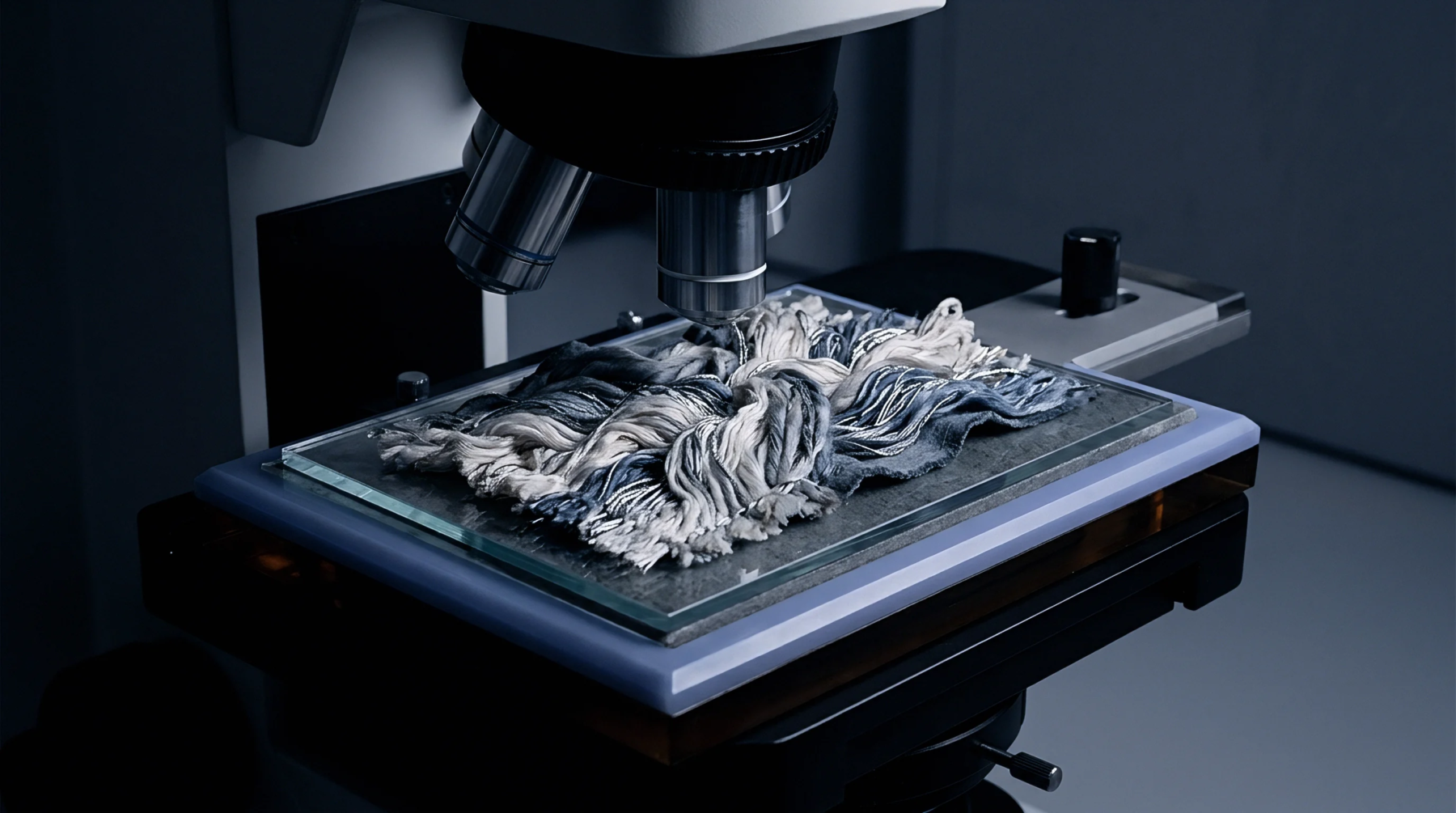
Measuring sub-micron step profiles requires advanced imaging platforms operating beyond the resolution limits of standard light microscopy. Technicians prepare cleaned fibre segments, mounting them on aluminum stubs and sputter-coating them with an ultrathin conductive layer of gold or platinum. Scanning electron microscopes tilt the specimen stage to bring the outer silhouette into profile, allowing the operator to record the perpendicular height from the shaft base to the extreme tip of the scale margin.
Multiple individual scales must be measured along twenty to thirty different fibres to establish a reliable mean value for a single sample lot. Atomic force microscopy can also measure these heights by dragging a fine mechanical stylus across the surface plane to map three-dimensional step topography directly.
Species Discrimination
Dimensional differences in scale step height separate fine sheep wool from high-value cashmere under regulatory verification protocols. Pure cashmere down consistently exhibits scale heights below 0.4 micrometres, typically measuring between 0.2 and 0.35 micrometres along the entire shaft length. Merino sheep wool of comparable fineness produces higher scale steps, consistently measuring above 0.5 micrometres and frequently reaching 0.8 to 1.2 micrometres.
Yak hair typically exhibits step values overlapping cashmere, but its scales possess different longitudinal patterns and edge shapes. This small vertical dimension remains the most legally defensible physical parameter for resolving adulteration claims where wool fibres have been mechanically or chemically selected to mimic down fineness.
Commercial Enforcement
Luxury apparel brands use certified scale height data to validate high-value invoices and satisfy regional import labeling laws. Mill claims of pure down content are routinely audited by retail buyers commissioning electron microscope reports before clearing mass shipments from overseas factories. If testing reveals a significant proportion of fibres displaying scale steps exceeding 0.55 micrometres, the shipment is classified as containing fine wool, prompting immediate customs stops or commercial penalties.
Chemical descaling treatments can artificially depress wool scale height, requiring microscopists to pair height measurements with surface condition notes reporting stripped cell margins or synthetic resin build-ups. Verified scale height values protect mills against paying cashmere prices for disguised wool stock.