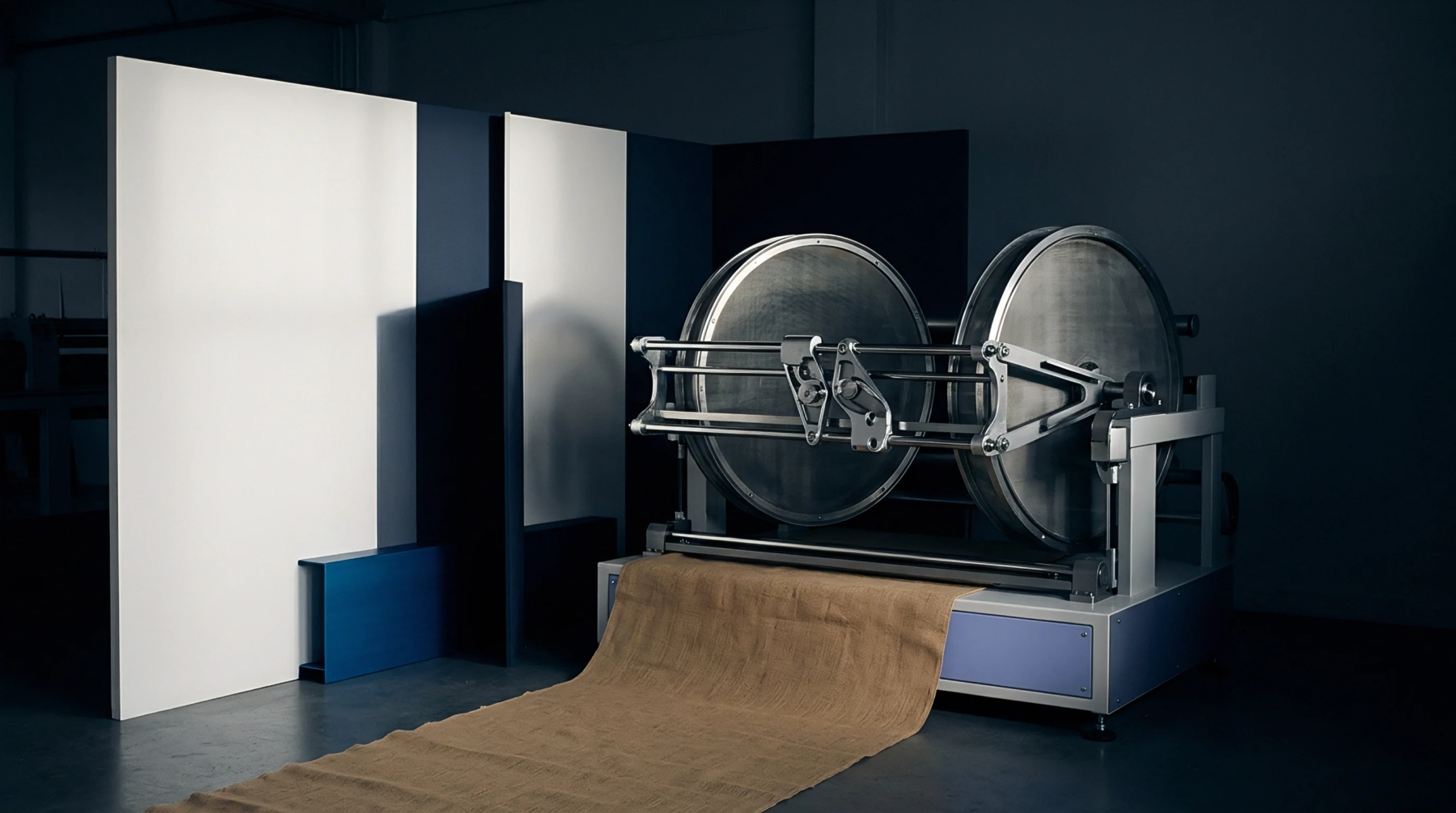
Weft Distortion
Curvilinear distortion of the weft yarns across the width of a woven fabric indicates uneven tension during mechanical processing or finishing. Selvage bowing occurs when the center of the fabric advances or lags behind the edges as it passes through the tenter frame or scouring range. This structural defect can lead to serious alignment issues during the garment cutting and sewing stages.
It represents a critical quality checkpoint that must be measured and corrected before the fabric is rolled and packed for shipment.
Process Cause
Uneven mechanical pressure across the squeeze rollers or thermal non-uniformity in the dryer are the primary causes of this issue. If the center of the fabric is dried faster or pulled harder than the edges, a curved bow shape develops. This tension imbalance must be corrected using specialized equipment.
Inspection Standard
Quality assurance teams measure the depth of the arc across the fabric width and express the defect as a percentage of the total width. Industry standards define maximum acceptable limits for bowing, typically ranging from two to three percent. Batches that exceed these limits face rejection or must undergo reprocessing.
Correction Method
Automatic weft straighteners use optical sensors to detect the curvature and adjust roller speeds to straighten the weft lines. These systems apply localized tension to bring the distorted yarns back into a straight, perpendicular orientation. Ensuring correct alignment prevents twist and distortion in finished garments.