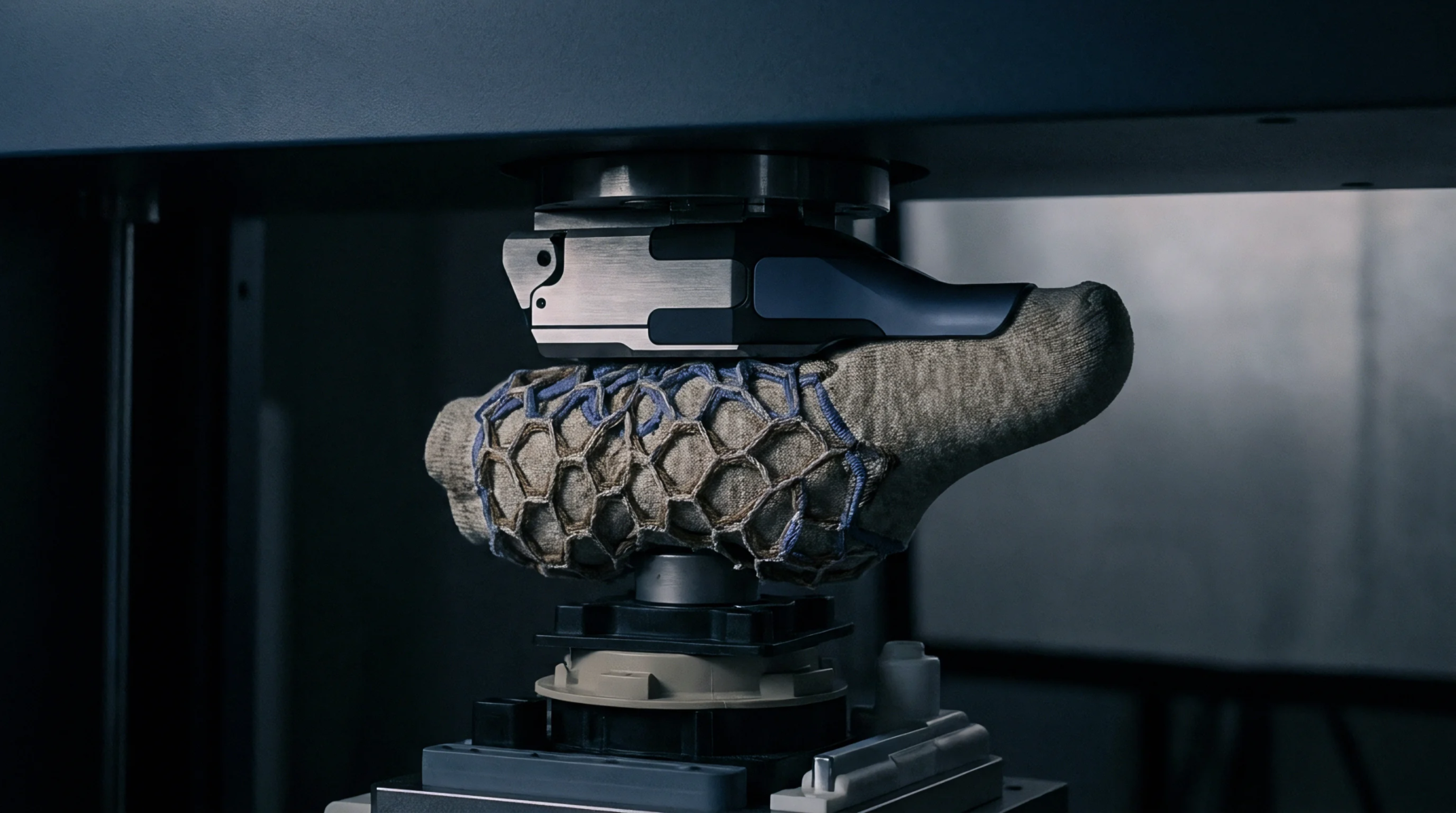
Physical Constraint
Dimensional contraction occurs when synthetic polymer fibres experience heat above their glass transition temperature. Thermal entropic retraction describes this spontaneous reduction in length as stretched molecular chains return to a disordered state. Manufacturers quantify this effect during heat setting processes to ensure finished garment stability.
Molecular Mechanism
Polymer chains within synthetic fibres maintain an elongated configuration due to mechanical drawing during production. Exposure to elevated temperatures grants these chains the mobility to undergo conformational changes toward higher entropy. A random coiled state occupies less linear space than an extended chain, which drives the physical shortening of the material.
This phenomenon requires constant monitoring in high temperature dyeing operations.
Processing Impact
Technical fabric production monitors these shifts to predict how textiles behave during laundering or industrial drying. Excessive shrinkage indicates that residual internal stresses remain within the fibre structure from earlier drawing stages. Adjusting the tenter frame tension and temperature settings regulates this outcome before the fabric leaves the finishing plant.
Quality Benchmark
Laboratory technicians measure this trait by subjecting fibre samples to standard oven conditions for a set duration. Calculated differences in length before and after exposure provide the retraction coefficient used for grading synthetic yarn quality. This value defines the limits of acceptable deformation in technical apparel.