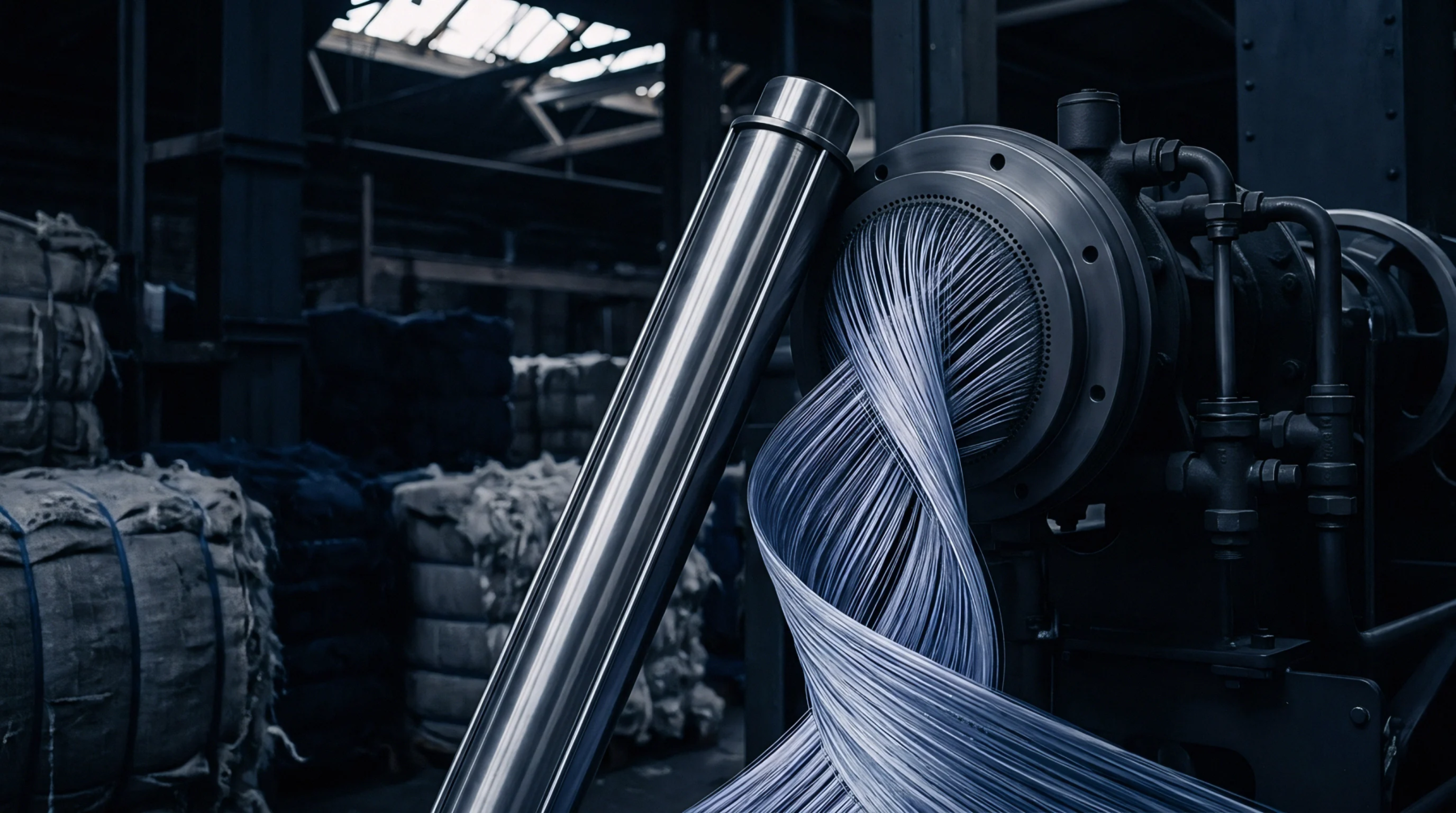
Material Failure
Polymer degradation occurs when heat accumulation exceeds the capacity of synthetic fibres to dissipate energy during high speed textile processing. This thermomechanical collapse reduces the molecular weight of the substrate as polymer chains break under the combined force of friction and elevated ambient temperatures. Such degradation alters the physical performance of the finished fabric by creating localized weak spots that fail during mechanical stress tests.
Processing Limit
Production engineers measure the onset of this transition by monitoring the temperature of synthetic filaments at the point of contact with machine components like godets or needles. The phenomenon accelerates once the internal temperature approaches the glass transition point of the specific thermoplastic material. High friction levels generated by aggressive tensioning speed up this process significantly.
Structural Result
Permanent deformation of the yarn geometry arises from the localized melting or softening of internal fibre sections. This change leaves the material susceptible to premature breakage during weaving or knitting operations. Manufacturers identify these flaws through microscopic inspection of broken ends which show characteristic smooth fracture surfaces rather than the jagged edges typical of simple tensile failure.
Quality Benchmark
Laboratory verification of this effect relies on subjecting filament samples to cyclic heating and loading cycles that simulate factory conditions. Accurate assessment of the damage threshold provides the basis for setting maximum operating speeds on industrial looms. Adherence to these thermal constraints ensures the physical integrity of the output remains within acceptable production tolerances.