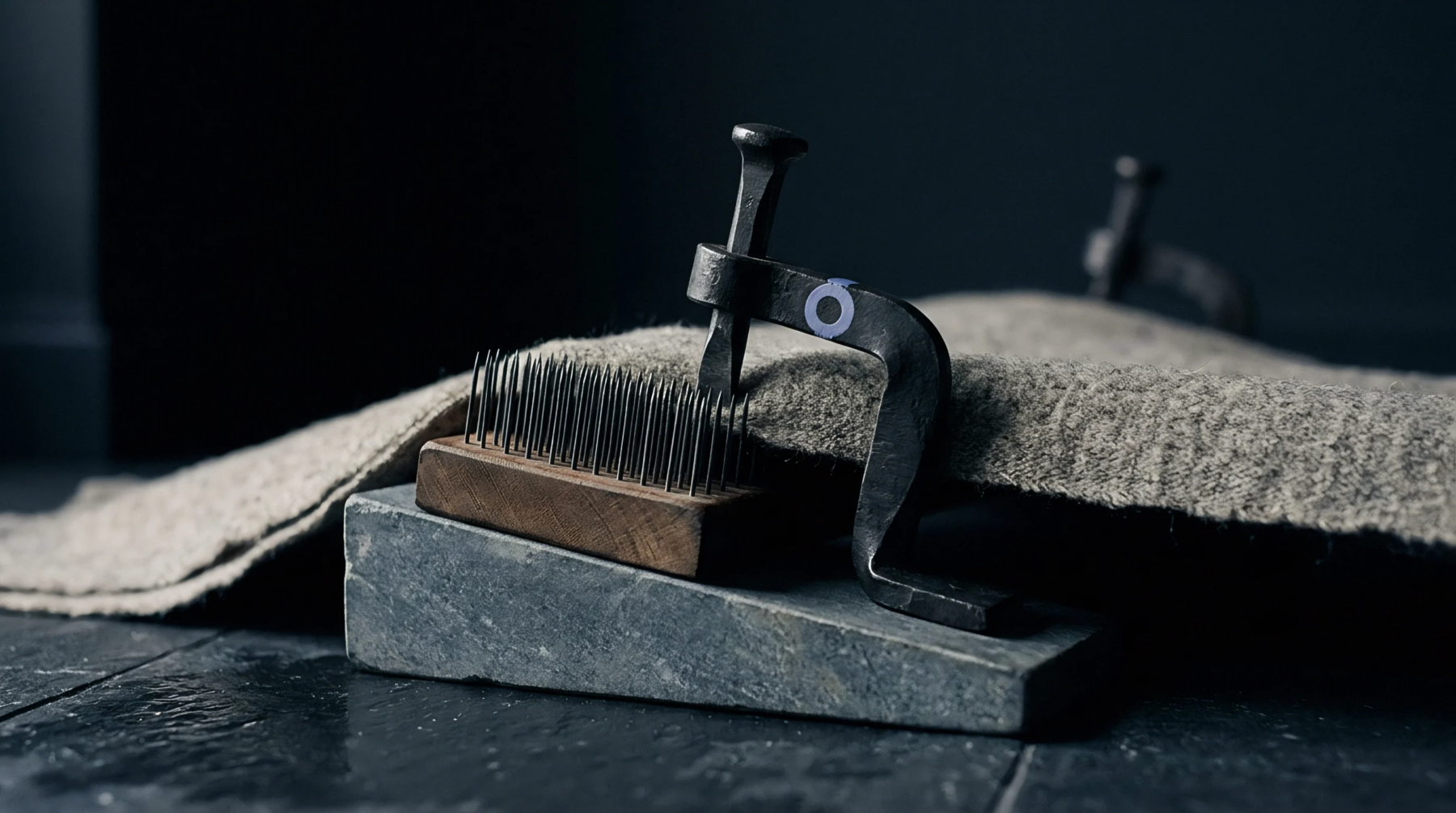
Manufacturing Classification
Short-staple combing protocols prepare long-fibre wool by aligning hair follicles parallel to the longitudinal axis before drafting. Worsted yarn displays a smooth surface because this mechanical orientation removes short fibres and retains only the longest segments for spinning. Manufacturers use this construction to ensure consistent tensile strength and high lustre in professional suiting fabric.
Production Verification
Lab technicians measure the quality of worsted yarn through air-flow fineness testing and microscopic image analysis. These methods identify the presence of protruding ends that deviate from the smooth profile required for premium textiles. A failure to clear these short fibres during the gilling process results in a textured hand feel instead of the crisp finish expected from high-twist wool products.
Processing Requirement
High-twist settings define the physical structure of worsted yarn throughout the spinning process. Mills apply these rotations to compact the aligned fibres into a dense cylindrical cross-section. This tension prevents the fibre migration that causes surface pilling during garment wear.
Material Performance
Uniform diameter contributes to the dimensional stability of finished goods produced from worsted yarn. Greater regularity reduces the risk of torque or skew in woven lengths during the subsequent finishing phases. Consistent thickness across every spool allows automated cutting machines to achieve precise tolerances for complex apparel patterns.