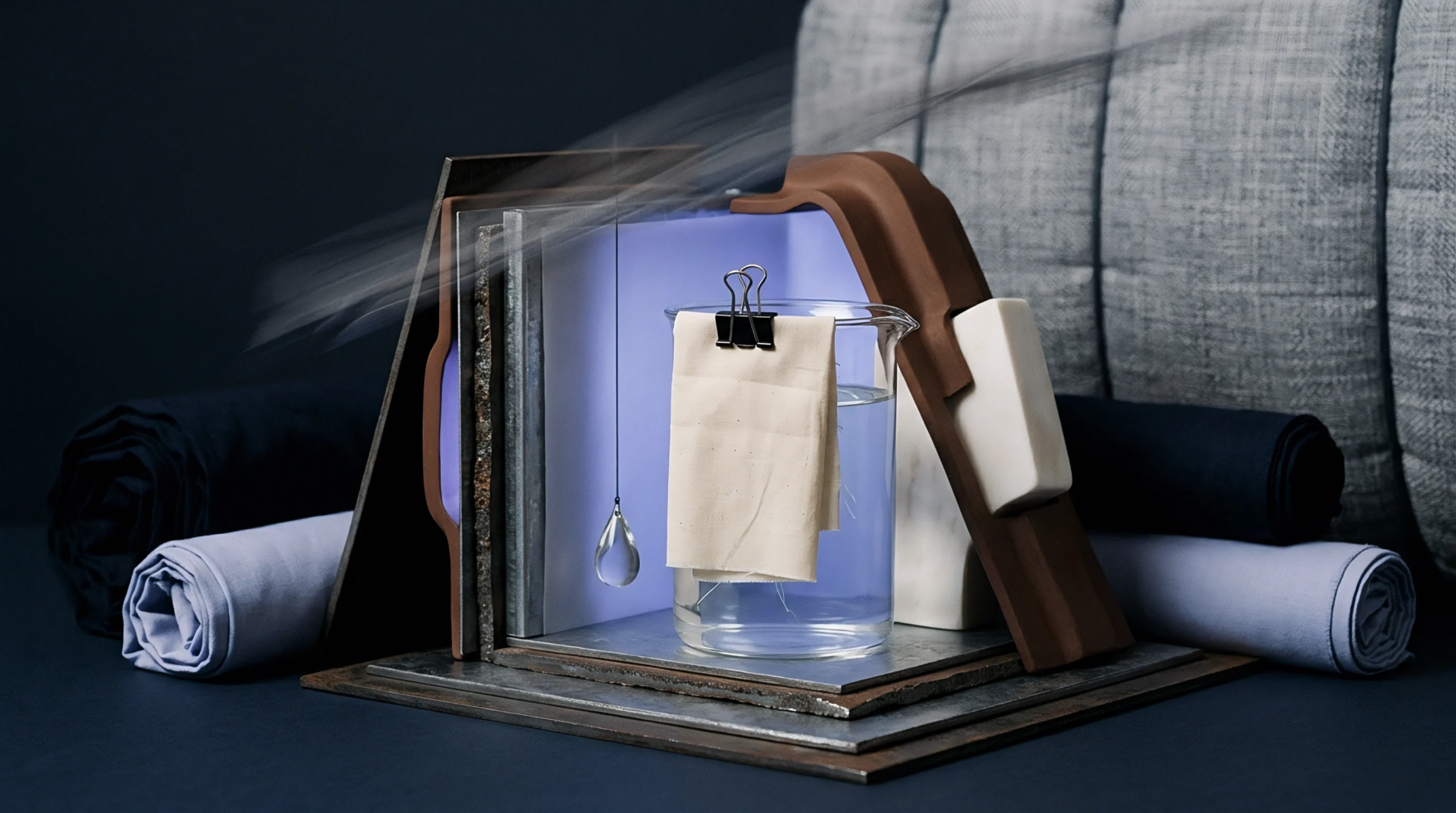
Solubility Procedure
Chemical tests identify specific types of man made cellulosic fibres by observing their dissolution behavior in specialized alkaline solutions. The zincate method allows analysts to distinguish standard viscose from other varieties such as modal through controlled chemical reactions. It relies on the differing solubility levels of cellulose structures in sodium zincate.
Diagnostic Step
Technicians observe the speed and completeness of the fibre breakdown at room temperature or in slight heat. When labs apply the zincate method, they use specific concentrations to ensure the reliability of the qualitative result. This test helps verify fiber blend claims that simple visual inspection cannot resolve.
Documentation provides the specific mass loss values required for regulatory reporting.
Operational Limit
Results depend strictly on keeping the chemical concentrations at the levels specified in the laboratory manual. Using the zincate method requires careful washing of the remaining residue to ensure no excess solution alters the final weight. While effective for regenerated cellulose, it does not dissolve synthetic polymers like polyester or nylon.
Laboratory workers carry out the process inside filtered hoods to maintain clear observation while managing fumes.
Scientific Claim
Correct classification of man made fibers maintains the integrity of high end textile trade. Effective application of the zincate method ensures that labeling requirements consistently meet international commercial standards.