Documenting Cotton Fibre Origin for Preferential Tariff Declarations
Documenting cotton origin for tariff preferences requires linking gin bale numbers to spinning mill mass balance logs alongside stable isotope testing evidence.


Lint
Preferential tariff regimes dictate how cross-border trade agreements apply duty reductions to cotton goods based on origin. Under most regional deals, imported cotton textiles qualify for preferential duty rates only when they satisfy specific origin criteria set out in the governing text. Customs agencies split origin rules into two basic categories: goods obtained entirely within a single preference territory, and goods produced using non-originating materials that undergo substantial transformation within the preference zone.

Substantial Transformation Criteria
Determining country of origin relies on clear evidence of chemical or mechanical conversion. For raw cotton, wholly obtained status requires proof that seed cotton was harvested from plants grown inside the preference territory. When raw cotton comes from a non-party country, processing inside the preference zone must meet specific tariff shift rules to earn preference.
Most trade agreements enforce a fiber-forward, yarn-forward, or fabric-forward origin rule for textile articles classified under Chapters 52 through 62 of the Harmonized System.
Origin qualification breaks down when raw fiber identity vanishes inside unsegregated spinning mill hoppers.
The yarn-forward rule is the most restrictive origin baseline in trade agreements. Under a yarn-forward requirement, every manufacturing stage from yarn spinning onward must take place within the designated preference territory. Raw uncarded cotton fiber under HS heading 5201 may be imported from third countries without disqualifying the finished fabric, because spinning shifts the tariff line.
Converting raw fiber into spun cotton yarn under HS 5205 is the critical origin-conferring step; if spinning occurs outside the preference zone, the yarn remains non-originating, rendering all subsequent fabric and finished garments ineligible for tariff preferences.
Single-transformation rules permit far greater sourcing flexibility. Found in select bilateral trade agreements, these provisions allow fabric formation or garment assembly within the preference territory to confer origin, regardless of where the yarn was spun or the fiber grown. Importers must examine agreement language directly to determine whether raw fiber origin affects final tariff classification.
| Trade Agreement Zone | Applicable Tariff Line | Origin Rule Criterion | Substantial Transformation Threshold | Required Raw Fiber Proof |
|---|---|---|---|---|
| USMCA (North America) | HS 5208 – 5212 (Woven Fabric) | Yarn-Forward Rule | Spinning, weaving, and finishing within zone | Third-country fiber permitted; spinning proof mandatory |
| EU-Vietnam FTA | HS 6203 (Men’s Garments) | Fabric-Forward Rule | Weaving and garment assembly within zone | Yarn may originate in non-member states under specific quotas |
| CPTPP (Trans-Pacific) | HS 5205 (Cotton Yarn) | Heading Shift (HS 5201 to 5205) | Carding, combing, and spinning within zone | Raw seed cotton origin documentation required for WO claims |
| AGOA (United States / Africa) | HS 6109 (Cotton T-Shirts) | Third-Country Fabric Rule | Garment cut and sew assembly in eligible country | Fiber and yarn origin exempt under designated beneficiary status |
Documenting wholly obtained status for raw cotton demands primary evidence from agricultural producers. When an importer claims zero-duty preferential access based on 100 percent domestic or preference-zone fiber content, customs agencies mandate documentation verifying farm parcel location, seed cotton harvest records, and ginning lot transfers. Misdeclaring wholly obtained status on cotton harvested in non-eligible territories results in retroactive tariff recovery, forfeiture of preferential status across all affected shipments, and administrative penalties up to four times the duty unpaid.


Assay
Laboratory testing of raw cotton relies on isotopic signature analysis and elemental profiling rather than visual classing. While high-volume instrument grading measures physical parameters such as staple length, micronaire, strength, and trash content, physical grading cannot identify geographic harvest origin. Customs enforcement agencies turn to quantitative analytical testing to confirm whether imported cotton matches declared geographic origins or comes from restricted production regions.

Isotopic and Elemental Analysis
Mass spectrometry quantifies atomic ratios within plant cellulose to establish geographic origin. Stable Isotope Ratio Mass Spectrometry (SIRMS) measures the relative abundance of stable isotopes of oxygen (delta 18O), carbon (delta 13C), hydrogen (delta 2H), and nitrogen (delta 15N) incorporated into cotton fiber during plant growth. Oxygen and hydrogen isotope ratios mirror the isotopic composition of precipitation and irrigation water drawn up by the plant, which varies predictably with latitude, elevation, distance from sea, and ambient temperature.
Inductively Coupled Plasma Mass Spectrometry (ICP-MS) complements isotopic testing by analyzing trace element concentrations. Plants absorb trace minerals including strontium, rubidium, barium, and rare earth elements directly from local soils. The unique chemical profile of these inorganic elements acts as a geological fingerprint, allowing analytical laboratories to map an unknown cotton sample against reference databases of authentic origin samples.
Oxygen isotope delta values shift by up to 1.8 per mil between rain-fed crops and drip-irrigated fields within the same county.
DNA testing targets plant chloroplast genes. Forensic DNA profiling uses quantitative polymerase chain reaction (qPCR) and target-sequence genotyping to differentiate between cotton species, notably Gossypium hirsutum (upland cotton) and Gossypium barbadense (extra-long staple or Pima cotton). Advanced botanical DNA assays can distinguish regional cultivars, although high-temperature chemical bleaching and dyeing during textile processing break down genomic sequences, limiting DNA testing primarily to raw fibers, gin waste, and unbleached greige yarns.
- Soil Isotope Drift ~ Seasonal rainfall variations alter oxygen isotope ratios in plant cellulose across consecutive harvests, shifting reference baselines.
- Chemical Scouring Interference ~ High-temperature alkaline boiling removes trace mineral deposits from raw fiber surfaces, distorting elemental profiles during testing.
- DNA Thermal Degradation ~ Dyeing processes exceeding 120 degrees Celsius fragment synthetic genetic markers beyond polymerase chain reaction detection limits.
- Isotopic Homogenization ~ Mixing fibers from three geographic regions inside carding machines creates an averaged isotopic signature that matches no reference database entry.
| Test Method Standard | Target Measured Parameter | Analytical Equipment | Stated Tolerance / Precision | Sample State Required |
|---|---|---|---|---|
| ISO 1833-1 / SIRMS Profile | Stable Isotope Ratios (delta 18O, delta 13C) | Isotope Ratio Mass Spectrometer | 0.2 per mil for delta 18O; 0.1 per mil for delta 13C | Raw lint, greige yarn, or un-finished fabric |
| ASTM D8083 / ICP-MS Trace | Trace Mineral Concentrations (Sr, Rb, Ba) | Inductively Coupled Plasma Mass Spectrometer | Detection limit 0.01 parts per million | Scoured lint or desized cotton fabric |
| qPCR Botanical Marker Assay | Chloroplast Genotype Sequence | Real-Time PCR Thermal Cycler | Qualitative 0.1 percent species mixture threshold | Unbleached raw fiber or virgin greige yarn |
Analytical test results provide probabilistic matching rather than absolute proof. Isotopic and elemental profiles depend on reference database comprehensiveness. If an authentic database lacks soil and water baseline samples for a specific growing region or crop year, verification algorithms may generate false-negative or inconclusive results.
Whether reference isotope databases can keep pace with shifting irrigation practices and annual climate fluctuations remains an unresolved technical challenge for enforcement laboratories worldwide.
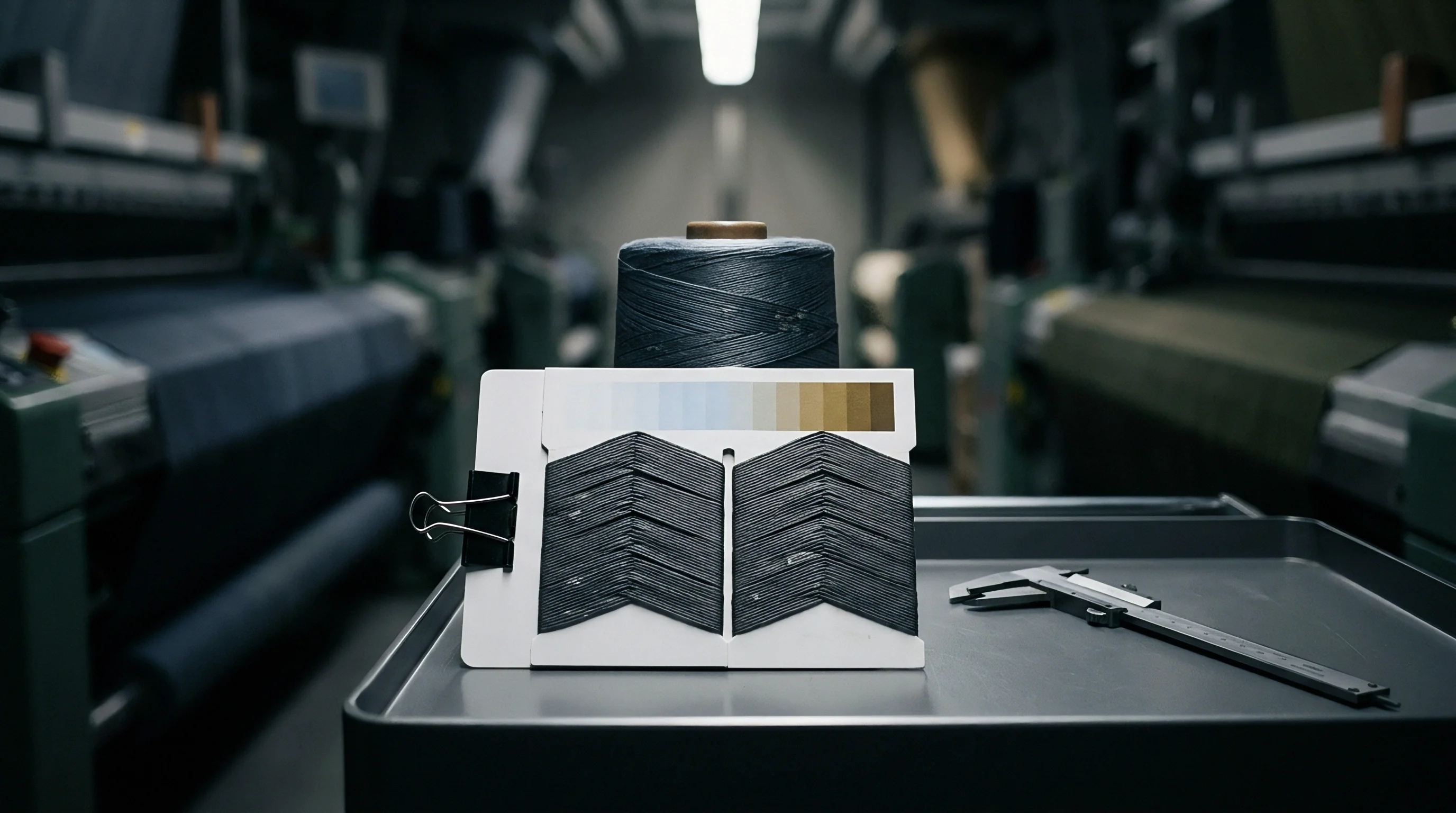

Chain
Material tracking begins at the ginning facility, where raw seed cotton transforms into numbered universal density bales. Tracking fiber custody through multi-stage textile processing requires continuous data linking across separate manufacturing facilities. When seed cotton arrives at a gin, the ginner weighs the load, removes seeds and trash, and presses cleaned lint into standardized bales weighing approximately 227 kilograms.
Bale tags establish initial custody: each bale receives a unique permanent barcode label containing the gin code, warehouse registration, and sequential bale number.

Which Processing Steps Shift Tariff Classification?
Customs authorities examine specific manufacturing operations to establish whether an intermediate article underwent sufficient industrial change. The conversion of raw fiber into spun yarn alters tariff classification from HS 5201 to HS 5205. To prove preferential origin across this processing threshold, spinning mills must maintain continuous mass balance accounting from raw fiber intake straight through to finished cloth.
- Ginning facilities attach unique permanent bale numbers linked to farm origin certificates upon pressing raw fibers.
- Spinning mills register incoming bale numbers into warehouse management systems before feeding material into blowroom opening lines.
- Cards and draw frames record output sliver weight against specific bale lot input schedules to track mass balance during processing.
- Ring spinning frames assign lot numbers to yarn bobbins, generating production logs that map directly back to blowroom batch codes.
- Weaving mills register yarn cone lot numbers against fabric roll identifiers printed on selvedge tags during cloth inspection.
Mass balance accounting prevents inventory substitution. During yarn spinning, opening hoppers blend fibers from multiple bales to achieve uniform fiber length and strength distribution. The total weight of raw fiber entering the opening line must equal the weight of spun yarn produced plus recorded manufacturing waste.
Spinning mills experience an average tare and waste loss between 4 percent and 7 percent during carding and combing. If factory records show yarn production exceeding raw fiber input adjusted for waste, customs auditors flag the discrepancy as potential substitution with unverified third-country fiber.
Purchase specifications calling for physical segregation require mills to clear blowroom hoppers and purge carding flats before loading qualified fiber lots.
Physical segregation protocols prevent cross-contamination during production runs. Spinning mills processing both qualifying preferential cotton and non-qualifying third-country cotton must execute physical purge routines between processing runs. Machinery cleaning logs, laydown schedules, and hopper clearance records serve as primary audit evidence proving that non-originating fibers were not commingled into preferential yarn batches.
Missing batch documentation is often attributed to raw fiber lots blended across regions to meet yarn strength specifications rather than to obscure fiber origin.


Records
Documentary compliance relies on an unbroken evidentiary trail linking agricultural production directly to the commercial invoice. Customs officials reviewing preferential tariff declarations request complete documentation dossiers spanning the entire supply network. Relying solely on a standardized Certificate of Origin (COO) issued by a foreign chamber of commerce is insufficient during a formal origin audit.
Importers must hold underlying secondary records validating every transaction step.

Mass Balance Reconciliation
Spinning mills reconcile incoming raw cotton weights against outward yarn dispatches to verify origin integrity. Reconciliation ledgers compare total raw material inputs against output volumes across processing stages. The mass balance ledger accounts for manufacturing yield losses at ginning, carding, combing, spinning, and weaving.
Paperwork gaps invalidate preferential claims.
| Processing Stage | Stage Input Description | Stage Input Weight (kg) | Standard Waste / Loss (%) | Stage Output Weight (kg) | Primary Audit Verification Record |
|---|---|---|---|---|---|
| Ginning | Harvested Seed Cotton | 28,500 | 63.0% (Seed & Trash) | 10,545 (Lint) | Ginner Weight Tickets & Farm Certificates |
| Blowroom & Carding | Universal Density Bales | 10,545 | 4.5% (Droppings & Fly) | 10,070 (Sliver) | Opening Laydown Sheet & Bale Tag Scan Log |
| Combing (High-Count) | Carded Sliver | 10,070 | 12.0% (Noils) | 8,862 (Combed Sliver) | Comber Production Sheet & Waste Weight Log |
| Ring Spinning | Combed Sliver | 8,862 | 2.0% (Pneumafil & Ends) | 8,685 (Yarn) | Spinning Frame Allocation & Cone Doff Log |
| Weaving Preparation | Spun Yarn Cones | 8,685 | 1.5% (Warping Waste) | 8,555 (Woven Fabric) | Loom Production Record & Fabric Roll Tag |
Building a compliant document packet requires gathering origin-specific artifacts before releasing shipments from arrival ports. Importers must assemble a structured audit dossier containing verifiable records for each conversion stage.
- Ginner Certificate of Processing ~ Documentation identifying farm harvest location, seed cotton mass, and resultant universal density bale identification numbers.
- Spinning Mill Production Log ~ Operational records proving specific bale numbers entered the blowroom and produced corresponding yarn lot identification codes.
- Commercial Invoice Sequence ~ Sales documents reflecting item descriptions, net fiber weights, and country of origin declarations at every point of transfer.
- Bill of Lading Mapping ~ Shipping documentation matching net container weights against factory production schedules and customs clearance manifests.
A break in the paper trail between the gin press and the spinning hopper invalidates preferential claims regardless of physical testing results.
Customs authorities inspect physical factory logs during verification visits. Contractual purchase specifications must mandate supplier co-operation with international customs verifications, obligating upstream vendors to provide unredacted production books, fiber test reports, and transport bills upon request. Standard origin warranty clauses written into raw cotton purchase agreements shift financial liability for rejected preferential tariff claims directly to the yarn manufacturer if production documentation fails customs verification.


Exposure
Financial liability stemming from customs audits extends beyond simple duty recovery to systemic supply chain disruption. Customs authorities inspect historical shipments retroactively when an importer fails to validate a preferential origin declaration. Reclassifying preferential zero-duty entries under standard Most-Favored-Nation (MFN) rates creates immediate monetary liabilities comprising back duties, statutory interest charges, and administrative fines.

Financial Quantification of Non-Compliance
Calculating monetary exposure requires assessing total tariff differentials across open entry windows, with importers bearing primary customs liability. Consider a worked scenario involving an import volume of 50,000 kilograms of woven cotton fabric (classified under HS 5208.32) entered under a zero-percent preferential tariff rate. The standard MFN duty rate for this classification equals 12 percent ad valorem.
The commercial invoice value stands at $8.50 per kilogram, yielding a total customs entry value of $425,000.
Under a compliant preferential declaration, duty liability equals zero dollars. If a customs audit disqualifies the preferential claim due to missing bale tracking documentation at the spinning stage, customs assesses the standard 12 percent MFN rate. The baseline duty recovery liability equals $51,000.
Statutory late-payment interest accrues from the date of initial entry release; assuming an audit resolution timeframe of 24 months at a statutory interest rate of 6 percent per annum, accrued interest adds $6,120 to the principal assessment.
Administrative penalties escalate the financial impact further. Under standard customs regulations governing negligent misdeclaration, penalties range from two to four times the duty unpaid. Applying a moderate penalty factor of two times the duty differential adds $102,000 in statutory fines.
Total financial exposure for a single misdeclared container lot reaches $159,120 against an initial product shipment value of $425,000, representing a 37.4 percent financial penalty on gross goods value.
- Retroactive Audit Windows ~ Customs agencies maintain authority to re-examine preferential origin claims up to five years after entry release.
- Joint Liability Mechanisms ~ Importers of record bear immediate financial responsibility for unpaid duties even when relying on foreign supplier certificates.
- Supply Chain Seizure ~ Unverified origin documentation triggers immediate withhold release orders at arrival ports, blocking goods from commercial distribution.
- Duty Rate Spikes ~ Disqualification of preferential status elevates import charges from zero to standard Most-Favored-Nation rates instantly.
Unverified origin certificates trigger immediate audit escalation. When customs auditors discover systematic documentation failures in one entry, enforcement agencies expand audit scopes to encompass all import declarations submitted by the importer over the preceding three to five years. Audit defense demands complete traceability.
A documented paper trail matching physical bale numbers to finished fabric rolls protects an importer during a customs audit far better than an unverified certificate of origin issued after shipment release.