Analytical Verification Methods for Positional Chemical Deposition across Broadcloth Web Widths
Cross-web chemical deposition variations on wide broadcloth cause localized non-compliance; five-point spatial verification prevents customs detentions.
Swath
Dyeing and finishing pad rolls deflection under hydraulic load distorts the liquid volume delivered across wide continuous woven fabrics. In broadcloth production running at widths between 180 centimeters and 320 centimeters, the physical nip pressure applied at the roll center differs significantly from the pressure exerted at the bearings. Unless a bowl carries a calculated crown profile or a variable-swimming roll compensates dynamically for shaft bending, wet pickup varies systematically across the roll face.
Liquid chemical application through foulard padding, rotor spraying, or foam coating deposits functional agents in proportion to the localized mass of liquor retained by the moving textile web before entering the drying zone.
Thermal migration during initial drying exaggerates cross-web chemical imbalance. When wet broadcloth enters the stenter frame, hot air nozzles directed at the upper and lower fabric surfaces drive moisture evaporation. Air velocity differentials between the center nozzles and the selvedge tracks force mobile, un-fixed finish chemicals to migrate toward zones of highest thermal flux.
Hydrophilic repellents, organophosphorus flame retardants, and cross-linking resin auxiliaries move along capillary channels toward the rapidly drying outer margins. Fluid pressure drops near the edges. This convective transport creates an unintended lateral concentration gradient, resulting in excess active chemical near the selvedges and depleted active chemical across the central portion of the broadcloth.
Uneven nip pressure skews chemical pickup. High-speed continuous finishing lines exacerbate fluid dynamic variations across wide broadcloth webs. Liquid viscosity, surface tension, and roll speed govern fluid boundary layer thickness within the nip zone.
At web speeds exceeding 40 meters per minute, fluid hydrodynamic forces push the rolls apart at the center, creating a crescent-shaped clearance profile across the bowl length. This mechanical displacement causes higher wet pickup at the web center relative to the edges, directly opposing the edge-heavy distribution driven by thermal drying migration. The final spatial distribution of functional chemicals across the broadcloth web width represents the net vector sum of these competing mechanical and thermal phenomena.
| Broadcloth Width (cm) | Application Method | Center Pickup (% owf) | Selvedge Pickup (% owf) | Thermal Drift Vector |
|---|---|---|---|---|
| 180 | Standard Foulard Pad | 68.5 | 64.2 | Inward to center zone |
| 240 | Deflection-Compensated Pad | 71.0 | 70.4 | Outward to selvedges |
| 320 | Rotor Spray System | 63.2 | 68.7 | Outward to selvedges |
| 320 | Deflection-Compensated Pad | 72.8 | 65.1 | Minimal lateral drift |
Spray application architectures introduce distinct lateral distribution patterns across broadcloth webs. Rotor spray manifolds utilize spinning discs mounted on a traverse bridge above the fabric path to atomize finishing liquors into fine droplets. Overlap regions between adjacent spray patterns generate localized peaks in chemical add-on, while outer nozzles near the broadcloth selvedges lose atomized liquor to ambient exhaust currents.
Tenter clip shadows reduce edge heating. The resulting deposition profile exhibits periodic lateral undulations corresponding to rotor spacing, superimposed on an overall broad-width taper. Characterizing these positional micro-variations requires analytical measurement routines capable of evaluating small-area chemical concentration across the entire continuous width.
Finishing mills frequently attribute cross-web performance failures to raw broadcloth weight variations rather than applicator mechanical deflection or stenter thermal imbalance.
Zoning
Standardized chemical testing frameworks rely on composite swatches cut randomly across a shipment roll, blending fabric from different positions into a single analytical sample. ISO 3071 for pH determination and EN ISO 14362-1 for azo dye extraction permit specimen consolidation to achieve the sample mass specified by the testing protocol. This laboratory blending masks extreme localized chemical concentrations.
A broadcloth roll exhibiting legal compliance on a composite specimen can contain selvedge regions that violate restricted substance limits alongside center regions that fall below functional performance thresholds.
A composite specimen dilutes localized chemical spikes below laboratory detection thresholds while obscuring non-compliant selvedge zones.
Mapping spatial chemical variation across broadcloth requires a structured multi-point sampling grid laid out perpendicular to the machine direction. The Edge-to-Center-to-Edge framework establishes five distinct sampling positions designated as Left Selvedge, Left Mid-Body, Center, Right Mid-Body, and Right Selvedge. Left and right selvedge samples are isolated at a distance exactly 10 percent inward from the physical fabric edges to clear un-coated selvedge pin holes.
Mid-body specimens originate at 25 percent and 75 percent of total broadcloth width, while the center specimen captures the exact midpoint of the web.
Evaluating chemical uniformity across broadcloth web widths requires systematic isolation of discrete spatial specimens across defined structural zones.
- Composite Swatch Blending averages high local concentrations with under-treated fabric mass, producing compliant test scores for non-uniform rolls.
- Edge Margin Exclusion fails to capture thermal migration accumulation zones occurring within five centimeters of the broadcloth pin line.
- Weft-Direction Drift Ignorance overlooks mechanical applicator deflection that systematically starves or floods the web core relative to margins.
Drying rates vary along the tenter. Sampling geometry must account for structural weave density changes across the broadcloth width. Thread count per centimeter often rises near broadcloth selvedges due to reed plan design and lateral tension during drying.
A square centimeter cut from a dense selvedge contains greater yarn mass than an identical area cut from the center, skewing mass-fraction chemical calculations expressed in milligrams of analyte per kilogram of textile. Analytical sample preparation procedures must normalize extraction data against dry fabric weight rather than spatial area to isolate true chemical deposition variance from structural weave compaction.
Individual specimens cut from the five-point spatial grid undergo separate analytical extractions without pooling fabric mass across positions.
Probe
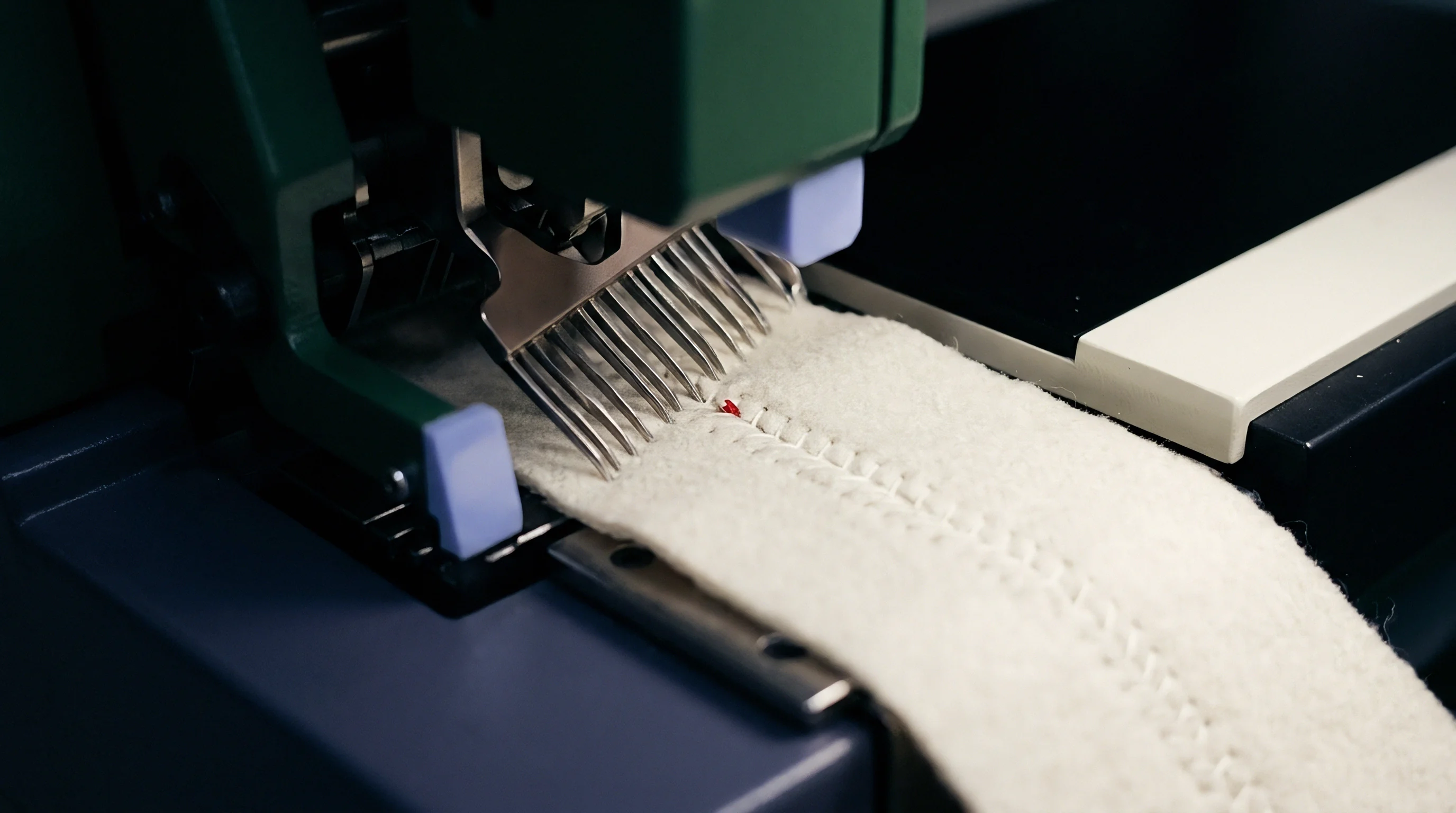
Energy-Dispersive X-Ray Fluorescence spectroscopy provides a non-destructive method for mapping inorganic element distribution across broadcloth web widths. XRF instruments measure characteristic secondary X-rays emitted from target atoms under high-energy photon excitation. For broadcloth treated with organotin catalysts, antimony flame retardants, or titanium dioxide dulling agents, XRF quantifies elemental concentration directly on intact fabric swatches.
Fluorine counts drop at the selvedge. Scanning broadcloth swatches across the five-point spatial grid generates a rapid profile of heavy metal and halogen distribution with spatial resolution under five millimeters.
Could Edge-to-Center Chemical Drift Invalidate Composite Laboratory Reports?
Substances regulated at parts-per-million levels, such as perfluoroalkyl carboxylic acids or organotin compounds, require destruction or solvent extraction of the textile matrix followed by chromatography. High-Performance Liquid Chromatography with Tandem Mass Spectrometry quantifies ionic fluorinated surfactants extracted from discrete broadcloth web swatches. Methanol extraction isolates the active chemistry.
Gas Chromatography-Mass Spectrometry evaluates volatile organic compounds and residual monomer cross-linkers across the broadcloth spatial profile. Comparing localized chromatographic quantification against composite specimen averages reveals whether chemical concentration spikes violate regulatory thresholds at specific web coordinates.
Regulatory enforcement actions target the highest localized chemical concentration found within a broadcloth shipment rather than the lot average.
| Target Chemical Class | Analytical Instrument | Limit of Detection | Sample Mass (g) | Extraction Solvent |
|---|---|---|---|---|
| Perfluoroalkyl Substances (PFAS) | LC-MS/MS (Triple Quad) | 0.01 mg/kg | 1.0 | Methanol (Ultrasonic, 60°C) |
| Organotin Compounds | GC-MS (Derivatized) | 0.02 mg/kg | 2.0 | Ethanol/Hexane (1:1) |
| Heavy Metal Mordants (Sb, As, Cd) | ICP-OES / EDXRF | 0.10 mg/kg | 0.5 | Nitric Acid (Microwave Digestion) |
| Formaldehyde (Free/Releasable) | UV-Vis Spectrophotometry | 2.0 mg/kg | 2.5 | Deionized Water (40°C, 60 min) |
Attenuated Total Reflectance Fourier-Transform Infrared spectroscopy evaluates surface chemical composition without dissolving the underlying broadcloth fiber substrate. ATR-FTIR directs an infrared beam through a high-refractive-index crystal pressed against the broadcloth surface, generating an evanescent wave that penetrates one to two micrometers into the chemical finish layer. Calibration curves require linear matrix matching.
Analyzing absorbance ratios of characteristic functional group bands, such as the carbonyl stretch in acrylic binders or the carbon-fluorine stretch in water repellents, calculates relative surface concentration across the web width. This optical technique distinguishes between surface-deposited finish and liquor that penetrated into the yarn core.
What analytical baseline remains valid when surface ATR-FTIR signals indicate high chemical concentration but bulk solvent extraction yields compliant low mass-fraction figures?

Metric
Mathematical modeling of positional deposition relies on calculating the coefficient of spatial variation across broadcloth width data sets. Assessing a 240-centimeter broadcloth web treated with C6 fluorinated water repellent illustrates the divergence between localized and composite chemical metrics. Five specimens cut across the width yield target analyte concentrations of 0.018 milligrams per kilogram at Left Selvedge, 0.022 milligrams per kilogram at Left Mid-Body, 0.038 milligrams per kilogram at Center, 0.024 milligrams per kilogram at Right Mid-Body, and 0.017 milligrams per kilogram at Right Selvedge.
The arithmetic mean across these five spatial positions equals 0.0238 milligrams per kilogram, placing the overall roll average below the regulatory limit of 0.025 milligrams per kilogram.
Calculating local concentration reveals significant non-compliance at the broadcloth web center despite the compliant mean figure. The center sample concentration of 0.038 milligrams per kilogram exceeds the maximum allowable limit by 52 percent. Composite sampling protocols that blend equal mass portions from all five positions yield a measured laboratory result of 0.024 milligrams per kilogram.
Local spikes breach restricted substance limits. The composite test report certifies the broadcloth lot as fully compliant, but any regulatory authority taking a single check-sample from the broadcloth center will register a formal violation and impound the shipment.
- Extract 100 square millimeter swatches from five defined cross-web positions using a calibrated rotary cutting die.
- Submerge each specimen in 10 milliliters of warm methanol inside closed PTFE vessels to prevent volatile solvent loss.
- Agitate swatches in an ultrasonic bath at 60 degrees Celsius for 60 minutes to complete analyte extraction.
- Filter extracts through 0.2 micrometer membrane filters directly into LC-MS/MS autosampler vials for quantitative injection.
- Plot measured chemical concentration in milligrams per kilogram against physical web coordinates to construct the lateral deposition profile.
Solvent volume dictates extraction efficiency. Quantifying cross-web variance requires calculating spatial standard deviation normalized against mean deposition. The spatial variance calculation incorporates positional weighting coefficients to account for fabric area represented by each sampling zone.
High web-width variation coefficients indicate severe application non-uniformity driven by mechanical roll deflection or unequal tenter air velocity.
Standard commercial purchase agreements specifying lot-average compliance fail to protect buyers against customs detentions triggered by single-point testing.
Under ISO 17025 laboratory accreditation rules, test reports must explicitly state whether compliance statements apply to the tested sample as received or to the broader production batch from which specimens were drawn.

Tolerance
Certifier scope limits create commercial exposure when scope certificates fail to match lot-level chemical uniformity. OEKO-TEX Standard 100 Class I imposes strict limit values on chemical residues in infant textiles, including an absolute cap on extractable perfluorinated carboxylic acids. A mill holding a valid Scope Certificate proves only that its facility possesses capability and audit systems.
Transaction Certificates link specific broadcloth shipments to certified production lines, but standard certification testing relies on mill-submitted composite samples. When a brand compliance audit samples broadcloth at the center of a 320-centimeter roll and identifies non-compliant residual monomer concentrations, the mill’s broad Scope Certificate provides zero defense against product recall liability.
| Regulatory Scheme | Target Analyte | Threshold Limit | Enforcement Sampling Basis | Legal Exposure |
|---|---|---|---|---|
| REACH Annex XVII Entry 72 | Formaldehyde | 75.0 mg/kg | Single point specimen | Market withdrawal & destruction |
| OEKO-TEX Standard 100 Class I | PFOA / PFCA Compounds | 0.025 mg/kg | Composite or localized sample | Certification revocation |
| GOTS Version 7.0 | Organotin Compounds | 0.05 mg/kg | Single point specimen | Transaction certificate voiding |
| US CPSIA Section 108 | Regulated Phthalates | 1000 mg/kg | Single point specimen | Border detention & civil fines |
REACH Annex XVII regulations enforce chemical limits based on any single spot test conducted by market surveillance authorities. Customs inspectors hold non-compliant containers. European enforcement agencies sampling imported broadcloth do not reconstitute composite averages.
Sampling a single square centimeter of fabric that exceeds the 75 milligrams per kilogram formaldehyde threshold specified in REACH Entry 72 triggers immediate Safety Gate notification and sales bans across all member states. Importers relying on mill-supplied composite test documentation bear full legal and financial responsibility for non-compliant broadcloth imports.
Technical compliance documentation must incorporate spatial verification parameters to guarantee broadcloth batch integrity across full web widths.
- Spatial Verification Addendum specifies mandatory five-point cross-web extraction testing for all broadcloth shipments exceeding 200 centimeters width.
- Cross-Web Conformity Dossier aggregates analytical test data across left, center, and right web zones to substantiate uniform chemical deposition.
- Lot-Specific Extraction Certificate anchors transaction documentation to actual analytical testing performed on physical rolls cut from specified production lots.
The gap between certified type approvals and actual shipped roll conformity expands dramatically as broadcloth web width increases. A mill running wide-format broadcloth equipment at maximum speed frequently pushes pad roll deflection beyond mechanical tolerance limits. Recalibration resets the liquid profile.
When buyer purchase orders omit explicit cross-web chemical uniformity clauses, liability for non-compliant selvedge zones transfers entirely to the importer of record upon customs clearance.
Failing to mandate five-point spatial verification testing on wide-width broadcloth orders results in complete forfeiture of supplier indemnification rights when customs authorities impound shipments for localized chemical non-compliance.
Remedy
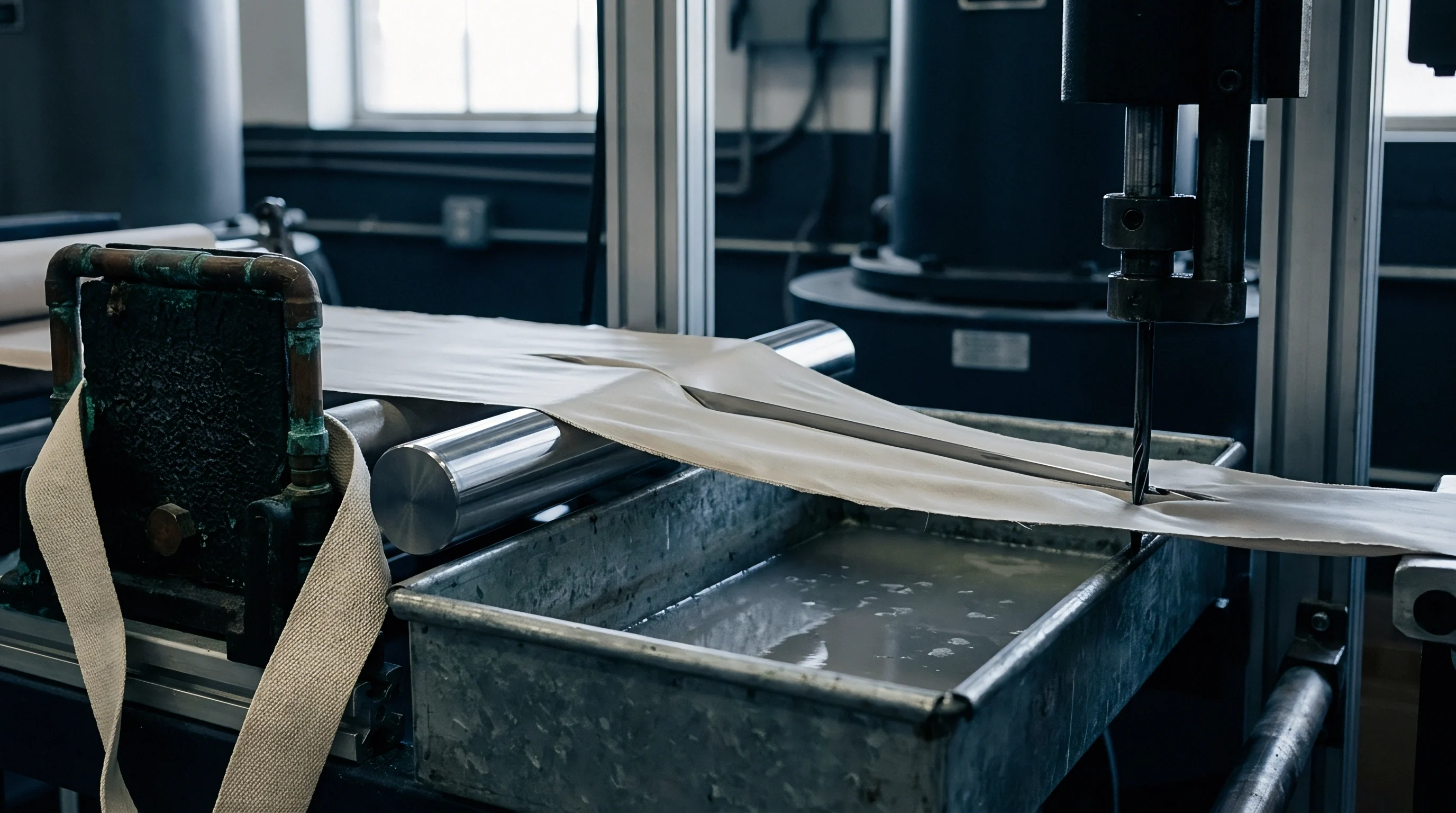
Integrating online spectroscopic instrumentation directly onto the broadcloth finishing line prevents spatial deposition failures during production. Near-infrared moisture meters installed immediately downstream of the foulard pad measure liquid absorption continuously across the moving web width. Array sensors positioned at 20-centimeter intervals traverse the broadcloth track, transmitting real-time wet pickup profiles to the machine control system.
Automatic deflection-compensated rolls adjust hydraulic pressure dynamically in response to detected center-to-edge pickup variations, maintaining liquid add-on within a plus-or-minus two percent tolerance band.
Stenter thermal control requires routine calibration to eliminate convective chemical migration during drying. Balancing air supply fan speeds between upper and lower nozzle banks prevents vertical chemical migration, while adjusting edge-zone damper plates counteracts high evaporation rates near tenter clips. Installing online temperature sensors across the stenter width verifies uniform fabric temperature profiles, ensuring functional resin cross-linking proceeds at identical rates across the web.
Regular maintenance schedules must include mechanical alignment checks on padder bowls, grinding of worn roll crowns, and thorough flushing of spray nozzle manifolds.
Commercial contracts governing broadcloth procurement must specify analytical verification methods and cost allocations for spatial testing. Purchase order terms should require mills to supply five-point cross-web test reports issued by ISO 17025 accredited laboratories for every continuous dyeing or finishing batch. Standardizing sampling routines, establishing clear spatial variance limits, and binding supplier payment terms to localized chemical compliance eliminates the regulatory risk inherent in wide-format broadcloth sourcing operations.