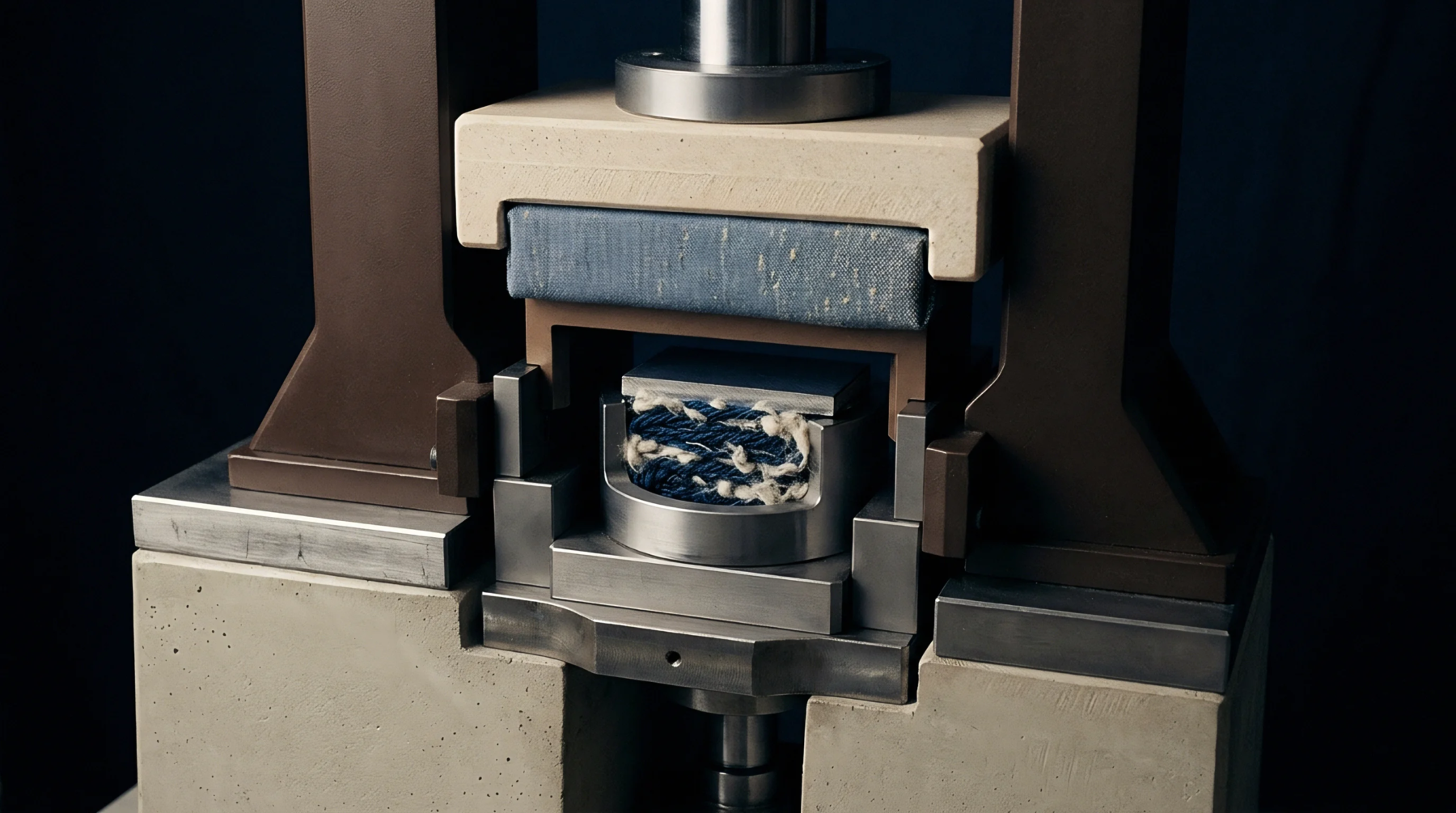
Hydration State
A thermodynamic condition describes the point at which a textile material neither gains nor loses water weight to its surroundings. The ambient equilibrium moisture content establishes a baseline for commercial weighing and physical testing. It represents the natural balance reached between the internal vapour pressure of the fibre and the partial pressure of water in the local air.
Environmental Variable
Relative humidity and temperature determine the specific level of water retention within a bale or fabric roll. While synthetic fibres reach an ambient equilibrium moisture content quickly due to low internal volume, natural polymers like cotton or wool require longer exposure to stabilize. Airflow around the material affects the speed of this transition without changing the final percentage.
Commercial Impact
Accurate weight determination at the point of sale depends on identifying the mass of the dry fibre plus the water it holds from the air. Discrepancies occur when ambient equilibrium moisture content varies between the loading port and the receiving warehouse. The variance forces the use of standardized testing atmospheres (typically 20 degrees Celsius and 65 percent relative humidity) to verify that a shipment contains the invoiced amount of actual material.
Laboratory Testing
Samples undergo pre-conditioning in a dry environment to ensure they approach the final state from a consistent direction. Most fibres exhibit hysteresis, meaning the moisture level reached by drying a wet sample is higher than that reached by wetting a dry one. Stability matters.
Technicians record the mass until successive weighings show no change greater than 0.1 percent over a specific time interval. The resulting data signals that the sample is ready for tensile or thickness tests.