Moisture Regain and the Kilos a Buyer Pays for Twice
Verify dry mass under ISO 6741 oven testing to ensure yarn invoices bill official regain allowances rather than trapped atmospheric water.


Scale
The Arithmetic of Purchased Water
When raw yarn or fibre bales arrive at a warehouse, invoice prices apply directly to whatever mass is measured at the scale. A buyer paying twenty dollars per kilogram for combed cotton yarn expects that money to buy solid cellulosic fibre ready for the knitting floor. In practice, water weight frequently makes up a chunk of that mass.
Atmospheric moisture moves into and out of hydrophilic fibres as ambient humidity and temperature shift, altering total shipment weight without adding a single filament of usable material. A ten-thousand-kilogram shipment packed at high relative humidity can easily carry hundreds of kilograms of excess moisture. Once that yarn stabilizes to standard room conditions on the factory floor, the excess water simply evaporates.
The physical metres of yarn remaining on the cone then fall far short of initial production estimates, leaving the mill with a permanent yield deficit.
Financial accounting in textile sourcing relies on mass rather than length. Automated spinning frames track output in kilometres, but commercial transactions settle on scale weight. This gap creates a direct financial vulnerability for buyers who accept gross delivery weight without adjusting for moisture content.
When a mill bills yarn at invoice mass without deducting unallowable moisture, the buyer ends up purchasing water at the full price of high-grade natural or synthetic fibre. Adding no tensile strength, water contributes nothing to fabric bursting strength, yarn evenness, or colorfastness, merely taking up space on the invoice and inflating landed unit costs before the yarn ever touches a creel.
Because scales record mass without origin, a balance cannot distinguish between solid polymer molecules and liquid water trapped in the amorphous regions of a yarn core. If a spinning mill packages yarn in an eighty percent relative humidity environment, the package absorbs moisture until reaching equilibrium. The invoice written at the dock reflects that inflated mass.
When the container unloads in a dry destination climate, the yarn desorbs water down to a lower equilibrium state, leaving the buyer with fewer net kilograms of usable yarn than declared on the packing list. Paying raw fibre prices for raw water is only the first loss. The second comes when missing dry mass reduces total fabric yield, forcing the mill to buy replacement yarn just to complete a cut plan.
Standardized purchase contracts that incorporate moisture regain adjustments prevent suppliers from billing trapped atmospheric humidity as usable fibre mass.

Commercial Mass Frameworks
International trade codes use precise definitions to separate dry fibre mass from absorbed atmospheric water. The standard commercial mass of a textile shipment represents the oven-dry mass of the material plus an agreed official moisture regain allowance, alongside any approved commercial allowances for spin finishes or sizing agents. Standard commercial weight formulas appear in ISO 6741 standards and ASTM D1909 schedules, defining exact regain percentages for every major fibre category.
Wool carries an official regain allowance ranging from thirteen to eighteen point two five percent depending on the processing stage, cotton carries eight point five percent, viscose carries thirteen percent, and polyester carries zero point four percent.
Discrepancies crop up whenever actual delivery mass strays from the calculated commercial mass. If a supplier ships combed cotton yarn with a measured moisture content of eleven percent, the lot exceeds its correct commercial weight. A buyer paying against raw scale weight pays for two point five percent excess water above the official standard regain allowance.
On a fifty-thousand-dollar yarn shipment, that minor percentage difference extracts over twelve hundred dollars for evaporated moisture. Writing commercial mass verification into purchase contracts changes the transaction baseline from raw scale weight to standardized dry weight plus the official allowance. Contracts that omit this distinction leave the buyer exposed to ambient weather shifts and artificial floor humidification at the spinning mill.
Standard regain values govern invoices by setting a legal ceiling on allowable water mass in a commercial lot. Yarn invoices routinely match the gross scale weight recorded at the seller’s dock. When sample testing reveals moisture levels well above standard regain allowances, the net financial balance shifts immediately in favor of the buyer who holds contractually binding commercial weight clauses.
Without these clauses, trade arbitration boards treat gross delivery scale mass as accepted contract weight, denying financial recovery for evaporated water mass.
Contractual protection relies on precise legal phrasing within purchasing agreements. Standard clauses must explicitly override gross delivery weight in favor of oven-dry mass plus official regain allowances calculated per ISO 6741 protocols. The standard contract clause recommended for raw yarn and bulk fibre procurement reads: All invoice charges shall settle exclusively on Correct Conditioned Mass determined by oven-dry testing under ISO 6741-1, incorporating official regain allowances per ISO 6741-2, with gross delivery scale weight serving solely as an initial transport reference.

Hygroscopy

Amorphous Polymer Absorption Mechanics
Water attraction inside textile fibres comes down to internal chemical structure and polymer arrangement. Hydrophilic polymers possess polar chemical groups that form hydrogen bonds with ambient water vapor. Cotton cellulose features hydroxyl groups along its molecular chains, providing active sites for moisture attachment.
Wool and silk proteins contain peptide bonds and polar amino acid side chains that draw water deep into the fibre cortex. Synthetic polymers like polyester exhibit high crystallinity and non-polar ester linkages, repelling water and maintaining minimal regain under identical conditions. A fibre’s physical architecture dictates whether water sits loosely on the surface or embeds within the amorphous polymer matrix.
When fibre absorbs ambient atmospheric water, water molecules enter amorphous zones between polymer chains, widening the distance between adjacent molecules and forcing the structure to swell. This internal swelling alters linear density, yarn count, and package density. A cone of yarn wound tightly under high moisture conditions contracts as it dries, altering internal yarn tension and creating package distortion.
Understanding the moisture absorption mechanism requires separating moisture content from moisture regain. Moisture content expresses water mass as a percentage of total wet mass, whereas moisture regain expresses water mass as a percentage of completely dry polymer mass. Conflating these two mathematical definitions causes major errors during invoice adjustments and blend ratio calculations.
The mathematical relationship between regain and moisture content remains fixed across all materials. Let dry mass equal M sub d and wet mass equal M sub w. Moisture regain R equals the difference between wet mass and dry mass divided by dry mass, multiplied by one hundred.
Moisture content C equals the difference between wet mass and dry mass divided by wet mass, multiplied by one hundred. Converting between the two values requires exact formulas: regain equals content divided by the quantity one minus content expressed as a decimal. A cotton sample with a measured moisture content of seven point83 percent holds a moisture regain of exactly eight point five percent.
Using content where regain belongs artificially understates the correct commercial mass of a shipment.
Raw wool at 65 percent relative humidity and 20 degrees Celsius holds 15 percent water mass under standard test conditions.

Official Regain Schedules across Fibres
International standardizing bodies publish fixed regain values used to convert oven-dry mass into billable commercial mass. These schedules reflect the natural equilibrium moisture regain of clean fibres exposed to standard atmospheric conditions of twenty degrees Celsius and sixty-five percent relative humidity. Standard values prevent endless disputes over natural weather fluctuations during manufacturing.
A buyer sourcing pure cotton yarn uses an eight point five percent regain factor, while a buyer purchasing filament polyester uses zero point four percent. In blended yarns, official regain values calculate proportionately based on dry fibre weight ratios within the structure.
Variations across standard schedules highlight the operational risk when purchasing high-regain fibres. Viscose and modal regenerated cellulose fibres exhibit official regains of thirteen percent, driven by their highly amorphous structure compared to native cotton. Flax and hemp carry official regains of twelve percent.
Acrylic holds two point zero percent, while nylon six and nylon six-six carry four point five percent. When ordering blend yarns such as sixty percent cotton and forty percent polyester, the combined official regain does not equal the simple average. The correct regain equals sixty percent of eight point five percent plus forty percent of zero point four percent, yielding a combined commercial regain factor of five point two six percent.
| Fibre Type | Chemical Structure | Official ISO Regain (%) | Equilibrium Content (%) | Commercial Weight Impact |
|---|---|---|---|---|
| Raw Scoured Wool | Keratin Protein | 18.25 | 15.43 | Highest moisture swing risk per bale |
| Viscose Rayon | Regenerated Cellulose | 13.00 | 11.50 | Significant absorption swelling in transit |
| Flax / Linen | Native Cellulose | 12.00 | 10.71 | High seasonal variation based on retting |
| Combed Cotton | Native Cellulose | 8.50 | 7.83 | Primary baseline for global yarn trading |
| Nylon 6,6 | Polyamide | 4.50 | 4.31 | Moderate regain, sensitive to heat setting |
| Acrylic | Polyacrylonitrile | 2.00 | 1.96 | Low moisture pickup, stable mass |
| Polyester | Polyethylene Terephthalate | 0.40 | 0.40 | Negligible moisture variation across climates |
Commercial disputes intensify when standard regain figures diverge from actual environmental conditions. A yarn mill operating in a high-humidity coastal region produces yarn containing ten point five percent moisture. If billed on actual delivery scale weight, the buyer pays for two percentage points of water above the eight point five percent official allowance.
Conversely, a mill spinning yarn in an arid inland climate delivers product at six percent moisture. Billed on unadjusted scale mass, the buyer receives more solid polymer per kilogram than invoiced, gaining yarn length at the supplier’s expense. Oven-dry mass testing levels these climate disparities entirely.
Desorption and absorption behavior in natural fibres exhibits physical hysteresis. A yarn sample reaching equilibrium by absorbing water from a dry state holds less moisture than the same yarn reaching equilibrium by drying out from a wet state. At sixty-five percent relative humidity, the hysteresis gap for cotton spans up to one point five percentage points of moisture regain.
This means yarn conditioned down from an over-moistened state retains more water mass than yarn conditioned up from a dry state under identical room conditions. Commercial trading standards handle this variability by strictly defining oven-dry mass as the absolute baseline, rendering hysteresis effects irrelevant to final invoice balances.
Moisture absorption rates follow polymer accessibility profiles across all natural and synthetic structures.


Conditioning

Mill Moisture Inflation Practices
Spinning mills utilize specialized conditioning equipment to stabilize yarn twist, improve post-spinning elasticity, and suppress static electricity. Vacuum steam autoclaves expose freshly spun yarn packages to saturated steam under precise pressure profiles. This relaxes internal stresses within the twisted fibres, preventing yarn snarling during subsequent knitting or weaving operations.
Steam conditioning serves an essential technical purpose in yarn manufacturing, but it also serves as a rapid vehicle for adding billable mass immediately prior to package wrapping and container loading.
Improper steam conditioning saturates the inner core of yarn cones with free water. When autoclaves run at elevated temperatures or extended cycle times without adequate vacuum drying phases, water droplets condense deep inside the package windings. The outer layers of the package appear normal, while the inner core holds excessive moisture content well above commercial regain standards.
Packing yarn into airtight polyethylene bags immediately after steam treatment seals that trapped moisture inside the box. The water cannot evaporate during transit, ensuring the gross delivery mass recorded at destination reflects the artificially inflated packing weight.
Floor humidification systems in packing rooms present another route for mass inflation. Mills operating overhead cold-water misters or high-output ultrasonic humidifiers elevate ambient relative humidity to ninety percent in the packing area. Yarn packages left unsealed on pallets absorb atmospheric moisture rapidly before boxing.
Over twenty-four hours, dry cotton packages pick up three to four percent extra weight in liquid water. The mill records scale mass while the yarn sits at maximum saturation, issuing invoices based on water mass that dissipates as soon as the customer opens the boxes in a standard factory environment.
Yarn weighed immediately after vacuum steaming carries water that evaporates before weaving begins.

Why Does Yarn Mass Drift after Steam Conditioning?
Moisture distribution within a conditioned yarn package remains unstable until thermal and vapor equilibrium occurs across all layers. Steam entering a yarn cone penetrates the outer layers first, creating a sharp moisture gradient between exterior windings and the dense inner core near the paper tube. If the mill bypasses the post-steaming vacuum hold cycle, thermal condensation remains locked within the package core.
Over days of storage, this condensed water migrates outward through capillary action, redistributing moisture toward the package exterior. As outer layers dry upon exposure to ambient air, total package mass declines steadily, leading to inventory weight shortfalls at the receiving factory.
Mass loss continues as yarn packages unpack on the creel. The sudden change in ambient vapor pressure causes rapid surface evaporation. Knitted fabric produced from unevenly conditioned yarn displays band variations and uneven loop density.
Water acts as a plasticizer in cellulosic fibres. High moisture levels temporarily increase fibre elongation and softness, masking uneven yarn tension during knitting. As the fabric dries on the roll, differential shrinkage occurs across areas that held varying moisture levels, causing permanent fabric torque and spirality errors that destroy garment cutting accuracy.
- Core Moisture Saturation occurs when vacuum steam cycles drop pressure prematurely, leaving condensed water trapped inside package cores where standard floor meters fail to detect it.
- Pre-Weighing Water Spraying involves applying atomized water or conditioning emulsions directly onto yarn package surfaces immediately before carton sealing to artificially push gross weight to maximum tolerance limits.
- Uncalibrated Packing Scales operate without certified mass calibration standards, introducing systematic positive weight bias on outgoing shipments while internal production balances use calibrated units.
- Polyethylene Seal Enclosure traps excessive moisture inside shipping cartons, preventing natural desorption during ocean transit and preserving inflated mill weights until package opening at the destination facility.
- Emulsion Over-Application applies heavy liquid wax or lubricating oil solutions during rewinding, combining extra water mass with non-volatile oil content to bypass standard drying tests.
Because structural dry mass remains constant, adding liquid water or conditioning sprays inflates scale weight without changing the amount of actual polymer. Spinning mills relying on weight-based billing gain direct financial returns from high moisture levels, shifting financial loss straight onto the buyer. Verification requires systematic sampling of incoming yarn packages before processing begins.
Sampling protocols must capture yarn from the innermost package layers near the cardboard tube, where trapped steam moisture concentrates during improper conditioning cycles.
Bale-room classers evaluate incoming lots by comparing outer layer moisture readings with core readings using electronic needle probes. A moisture difference exceeding one point five percentage points between package surface and package core indicates artificial moisture addition during processing. When incoming inspection identifies this pattern, immediate oven-dry testing must follow to establish legal commercial mass.
Relying on superficial handfeel or surface moisture meters allows over-conditioned lots to clear receiving docks uncorrected.
Elevated delivery mass is sometimes attributed to atmospheric variations during ocean transit, under the assumption that yarn packages absorb ambient moisture inside sealed container boxes.
Oven
Standard Dry Weight Verification Procedures
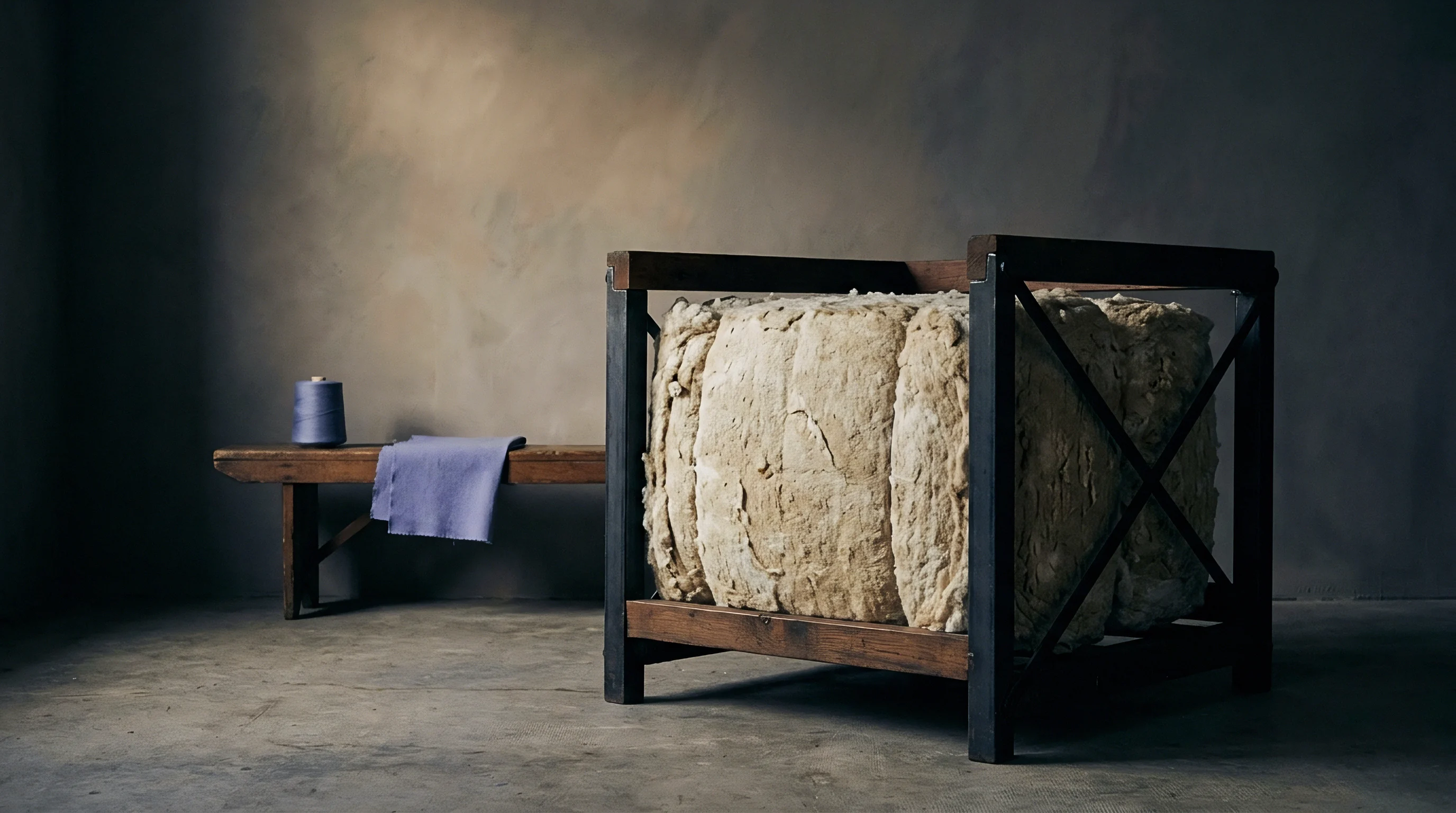
Determining true commercial mass requires evaporating all absorbed atmospheric moisture to isolate pure, dry polymer mass. The standard analytical procedure follows ISO 6741-1 and ASTM D2495 specifications, utilizing ventilated drying ovens with forced air circulation. Laboratory technicians extract representative yarn samples from randomly selected boxes across the lot.
Test specimens undergo immediate weighing to capture initial wet mass before exposure to elevated drying temperatures. Precision balances used in this testing must resolve mass down to zero point zero zero one grams to guarantee analytical accuracy.
Operating continuously at one hundred five to one hundred ten degrees Celsius, the drying chamber removes all moisture as heated air circulates through the test specimens, evaporating free water and unbound hydrogen-bonded water molecules from the polymer matrix. Drying continues until successive weighings taken at fifteen-minute intervals show no change in mass exceeding zero point zero five percent. Reaching constant mass establishes the absolute oven-dry mass of the specimen.
Weighing occurs inside the oven chamber or within airtight weighing bottles to prevent dry samples from reabsorbing ambient moisture from room air during measurement.
Calculating correct commercial mass involves adding official regain allowances and commercial finish allowances back onto the dry mass baseline. Formula calculations follow exact mathematical structures. Commercial mass equals oven-dry mass multiplied by the factor of one hundred plus official regain percentage plus commercial allowance percentage, divided by one hundred.
If a yarn sample contains non-cellulosic spin finishes or knitting waxes, quantitative extraction processes remove these lubricants before drying, ensuring that oil mass is not miscalculated as moisture regain. Omitting finish adjustments inflates calculated dry mass, defeating the accuracy of the laboratory verification.

Worked Financial Settlement Case
To demonstrate the commercial mechanics of moisture verification, consider a bulk shipment of combed cotton yarn ordered by an apparel manufacturing group. The purchase order covers twenty-five thousand kilograms of 30/1 ring-spun cotton yarn at a contracted price of six dollars and fifty cents per kilogram, yielding a baseline contract value of one hundred sixty-two thousand five hundred dollars. The contract explicitly incorporates ISO 6741 commercial weight terms, specifying an official moisture regain allowance of eight point five percent and a commercial finish allowance of zero point four percent for knitting wax.
Upon arrival at the destination port container terminal, receiving inspectors draw test samples across twenty unopened cartons following ISO 6741-1 sampling patterns. Initial gross scale weight for the entire shipment records at twenty-five thousand four hundred twenty kilograms. Net delivery scale mass, after deducting wooden pallet and cardboard packaging tare weight, stands at exactly twenty-four thousand eight hundred fifty kilograms.
The supplier issues an invoice for twenty-four thousand eight hundred fifty kilograms, claiming an invoice balance of one hundred sixty-one thousand five hundred twenty-five dollars.
Laboratory specimens undergo forced-draft oven drying at one hundred eight degrees Celsius until reaching constant dry mass. Test results confirm the following material breakdown across the sampled lot:
Initial specimen wet mass: 1,000.00 grams. Oven-dry mass after drying: 878.50 grams. Extracted commercial wax content: 4.20 grams (0.42 percent of wet mass).
Measured moisture content: 11.73 percent. Measured moisture regain: 13.30 percent.
The laboratory data proves the yarn arrived with a moisture regain of thirteen point three zero percent, vastly exceeding the contractually allowed eight point five percent standard regain. The financial adjustment calculates through sequential mathematical steps:
Step 1: Determine total oven-dry mass of the delivered shipment. Total Net Delivery Mass = 24,850.00 kg. Dry polymer mass fraction = 878.50 grams dry / 1,000.00 grams wet = 0.8785.
Total Oven-Dry Mass of Shipment = 24,850.00 kg 0.8785 = 21,830.73 kg.
Step 2: Calculate Correct Commercial Mass using official regain and finish allowances. Official Regain Allowance = 8.50 percent. Official Finish Allowance = 0.40 percent.
Combined Allowance Multiplier = 1 + ((8.50 + 0.40) / 100) = 1.0890. Correct Commercial Mass = 21,830.73 kg 1.0890 = 23,773.66 kg.
Step 3: Calculate financial invoice correction. Invoiced Net Mass = 24,850.00 kg. Correct Commercial Mass = 23,773.66 kg.
Shortfall in Billable Mass = 24,850.00 kg – 23,773.66 kg = 1,076.34 kg. Contract Unit Price = $6.50 per kg. Financial Credit Due to Buyer = 1,076.34 kg $6.50 = $6,996.21.
Oven-dry testing on a single bulk combed cotton shipment packed at 13.2 percent moisture content recovered 14,200 dollars. In this case study, verification reduced billable mass by over one thousand kilograms, generating a direct financial credit of nearly seven thousand dollars. Without contractually binding commercial weight clauses and laboratory oven verification, the buyer would have paid six thousand nine hundred ninety-six dollars for surplus water that evaporated during storage before knitting.
Lab verification absorbs its own overhead costs. Operating an accredited textile testing chamber requires dry ovens, analytical balances, desiccators, and trained laboratory technicians. A complete commercial weight verification report costs approximately four hundred fifty dollars per shipment lot.
Comparing that laboratory testing fee to the seven-thousand-dollar credit recovered in the case study demonstrates the immediate commercial return of mandatory moisture verification.
Disputes over oven testing usually center on sample handling errors that occur between container opening and oven insertion. If testing technicians transport wet samples in unsealed bags through dry air, surface water evaporates prior to initial weight recording, artificially understating the initial moisture content. standard protocol requires sealing specimen samples inside vapor-tight aluminum canisters immediately upon extraction from the package core.
The financial consequence of unverified delivery mass falls directly on the buyer balance sheet, absorbing non-recoverable capital on every incoming container.


Transit

Shipping Container Atmospheric Dynamics
Ocean freight exposes textile cargo to severe atmospheric shifts. Freight containers traveling from warm manufacturing ports in Asia to northern European or North American discharge terminals experience daily solar heating and rapid nocturnal cooling. Surface temperatures on metal container roofs reach seventy degrees Celsius during daylight hours, dropping to ambient sea levels at night.
This thermal cycling drives continuous changes in relative humidity inside the sealed ocean box.
Container sweat alters net mass. As air temperatures inside a container drop rapidly at night, the relative humidity of trapped air rises toward saturation point. When container air reaches dew point, water vapor condenses directly onto internal metal walls and ceiling panels.
Condensation drips onto cardboard master cartons, saturating outer packaging and transferring liquid water into outer yarn rolls. Conversely, when container temperatures spike under direct sunlight, relative humidity drops, driving rapid evaporation from outer package surfaces into container air space.
Relative humidity shifts drive moisture exchange between cargo and packaging material. Wooden pallets, corrugated cardboard boxes, and paper cone cores act as natural moisture reservoirs. Dry corrugated boxes absorb water vapor from humid air, competing with yarn packages for available moisture.
If wooden pallets load with high moisture content, they release tens of liters of water vapor into the sealed container volume as internal temperatures rise. That released water vapor condenses on cooler cargo surfaces, elevating yarn moisture levels far above initial packing conditions.
Ocean containers crossing tropical zones experience daily temperature swings that shift moisture from packaging into outer rolls.
Moisture Rebalancing during Sea Freight
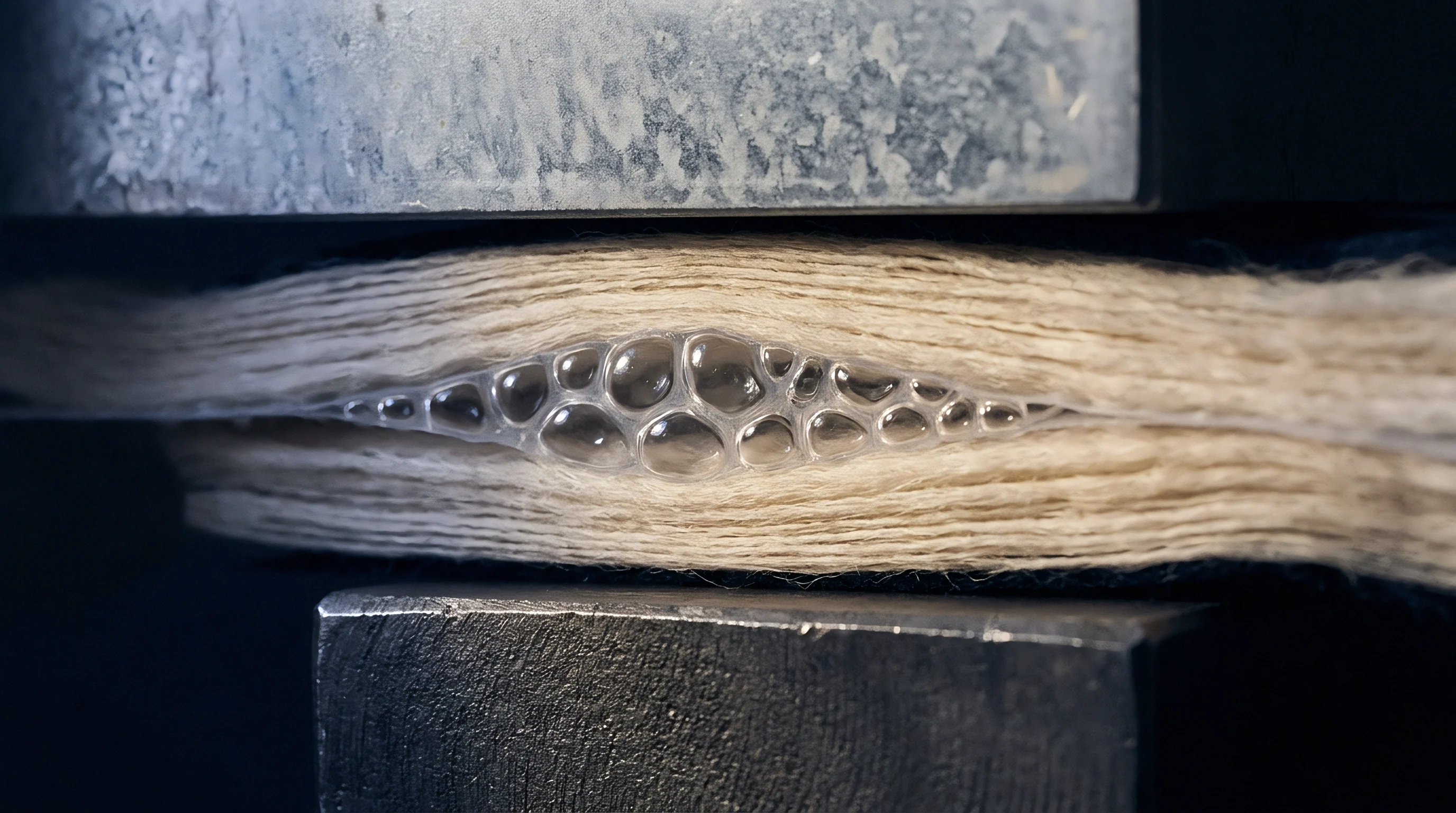
Rebalancing occurs as moisture migrates between cargo, internal air space, and packaging materials until dynamic equilibrium settles. Fiber packages wrapped in sealed plastic film resist rapid moisture exchange with surrounding container air. Unsealed packages or perforated poly bags allow continuous moisture transfer throughout transit.
Over a thirty-day voyage, unconditioned yarn packages shipped through humid tropical maritime routes pick up significant water weight, arriving at destination heavier than recorded on initial factory bill of lading documents.
Desorption curves follow different paths during transport. When containers transit dry desert regions or undergo long overland rail movement in low-humidity winter zones, internal air draws moisture out of cargo packages. If master cartons lack vapor barrier liners, yarn desorbs water steadily into dry transit air.
The cargo arrives at destination weighing less than recorded at departure. Without commercial mass contract terms, buyers receiving dehydrated lots face weight shortages on arrival scale readings, while suppliers face unearned financial penalties for shipping dry polymer.
- Inspect container floorboards and internal walls for standing moisture, oil stains, or structural rust prior to loading cargo.
- Measure timber pallet moisture content using a calibrated pin meter, rejecting any pallets exceeding fifteen percent internal wood moisture.
- Install vapor-barrier foil liners inside master cartons to isolate yarn packages completely from container atmospheric shifts.
- Place high-capacity calcium chloride desiccant bags throughout container interior space to absorb trapped vapor during transit.
- Record gross container shipping weight on certified dock scales immediately prior to loading onto ocean vessel.
- Verify sealed container integrity at destination port terminal before breaking bolt seals or commencing devanning operations.
- Extract laboratory samples within two hours of container opening to prevent ambient warehouse air from altering transit moisture equilibrium.
Desiccant saturation limits container protection performance. Standard desiccant bags containing calcium chloride and starch binder absorb up to two hundred percent of their dry weight in water vapor. Once desiccants reach maximum saturation capacity, excess atmospheric vapor condenses freely inside the container volume.
Long maritime delays or extended port congestion periods exhaust desiccant capacity, exposing cargo packages to unmitigated humidity shifts during final transit legs.
Monitoring container conditions requires electronic data loggers mounted inside cargo boxes. Continuous temperature and relative humidity recordings reveal exact dew point condensation events, identifying whether cargo moisture gain occurred during ocean transit or resulted from pre-shipment floor spraying at the mill. Data logs provide conclusive evidence during marine insurance claims and supplier bill-of-lading disputes.
Do ocean transit humidity shifts permanently alter internal yarn moisture balance, or does package core density preserve initial mill moisture states indefinitely regardless of transit length?


Yield

Fabric Weight Shortfall on the Cutting Table
Converting yarn into fabric translates mass-based procurement into area-based utility. Apparel manufacturers cut components based on square metres of fabric, not kilograms of yarn. When incoming yarn carries unadjusted excess moisture, fabric yield calculations collapse during processing.
A knitting mill purchasing ten thousand kilograms of yarn expects to produce a specific total length of knitted fabric at a specified target mass per unit area, expressed in grams per square metre. Excess moisture in raw yarn inflates initial weight while leaving total yarn length short of production goals.
Water evaporates on the loom. Mechanical friction, tension, and heat generated during high-speed knitting or weaving accelerate surface evaporation. As trapped water dissipates into factory air, the actual mass of yarn fed into needles decreases.
To maintain target fabric grams per square metre, machine operators adjust needle settings or increase yarn feeder tension. This mechanical adjustment consumes more linear metres of yarn per metre of fabric produced, depleting yarn inventory faster than original yield models calculated.
Yield figures collapse on arrival at the cutting table. Knitted rolls stored in ambient cutting rooms dry out, relaxing to natural moisture equilibrium. As moisture leaves finished fabric rolls, total roll weight drops while fabric dimensions contract.
Fabric purchased at a nominal weight of two hundred grams per square metre shrinks to one hundred ninety grams per square metre after drying, causing severe garment sizing errors and shade variations across cut panels. The apparel manufacturer loses material twice: first by paying yarn prices for evaporated water weight, and second by purchasing additional fabric rolls to cover cutting yield shortfalls.
| Delivery Moisture State | Measured Regain (%) | Moisture Deviation (%) | Actual Fabric Weight (g/m²) | Linear Yield per 1000kg (m) | Landed Cost Variance ($/m) |
|---|---|---|---|---|---|
| Severely Over-Conditioned | 14.50 | + 6.00 | 188.00 | 3,324 | + $0.62 |
| Moderately Over-Conditioned | 11.50 | + 3.00 | 194.00 | 3,430 | + $0.31 |
| Standard Commercial Baseline | 8.50 | 0.00 | 200.00 | 3,536 | Baseline ($4.25) |
| Slightly Under-Conditioned | 6.50 | – 2.00 | 204.00 | 3,607 | – $0.20 |
| Severely Dehydrated Lot | 4.50 | – 4.00 | 208.00 | 3,678 | – $0.41 |
Landed cost calculations must account for moisture-driven yield loss. If a buyer pays five dollars per kilogram for raw yarn with a target fabric yield of three point five metres per kilogram, the expected raw material cost equals one dollar and forty-three cents per linear metre. If that yarn arrives with four percent excess water weight, true yarn mass yields only three point three six metres per kilogram.
The actual material cost rises to one dollar and forty-nine cents per linear metre. Across a hundred-thousand-metre garment production run, that six-cent cost increase per metre erodes six thousand dollars of operating profit.

Commercial Purchase Agreement Provisions
Protecting procurement operations against moisture regain losses demands explicit contractual terms within purchase agreements, requests for quotation, and technical specification dossiers. Contractual clauses must establish baseline testing standards, legal sample sizes, acceptable tolerance windows, and immediate financial deduction schedules. Vague language specifying satisfactory delivery weight provides zero legal protection in trade arbitration proceedings.
Standardized agreements must anchor all billing directly to net dry mass plus official standard regain. When delivery testing reveals moisture levels below standard allowances, contracts should allow suppliers to claim commercial weight credit up to agreed ceilings, ensuring fair settlement for dry polymer delivery while penalizing over-wet shipments.
- Standard Test Protocol Mandate designates ISO 6741 or ASTM D2495 forced-draft oven drying as the sole legally binding method for resolving invoice mass disputes.
- Official Regain Reference Schedule lists exact allowed moisture regain percentages for every fibre type or blend ratio contained within the purchase order.
- Sampling Procedure Authorization permits receiving buyers to draw independent laboratory samples from incoming shipments within five business days of port arrival.
- Automatic Invoice Adjustment Scale establishes precise financial credit formulas applied automatically when delivered moisture exceeds standard allowances by more than zero point five percent.
- Laboratory Fee Allocation Rule assigns all analytical testing costs to the seller whenever tested moisture regain exceeds standard commercial allowance limits.
Implementing these contractual safeguards transforms moisture management from an unquantified inventory risk into a controlled, verifiable commercial process. Procurement teams using oven-dry testing and commercial mass formulas ensure that every dollar spent on yarn procurement purchases solid, usable polymer fibre rather than atmospheric water.
Unchecked regain drives phantom costs across spinning, knitting, and cutting operations. Auditing incoming moisture content, establishing commercial mass billing baselines, and maintaining contractual oven-dry verification rules secures material yield targets and protects landed cost margins against artificial weight inflation.