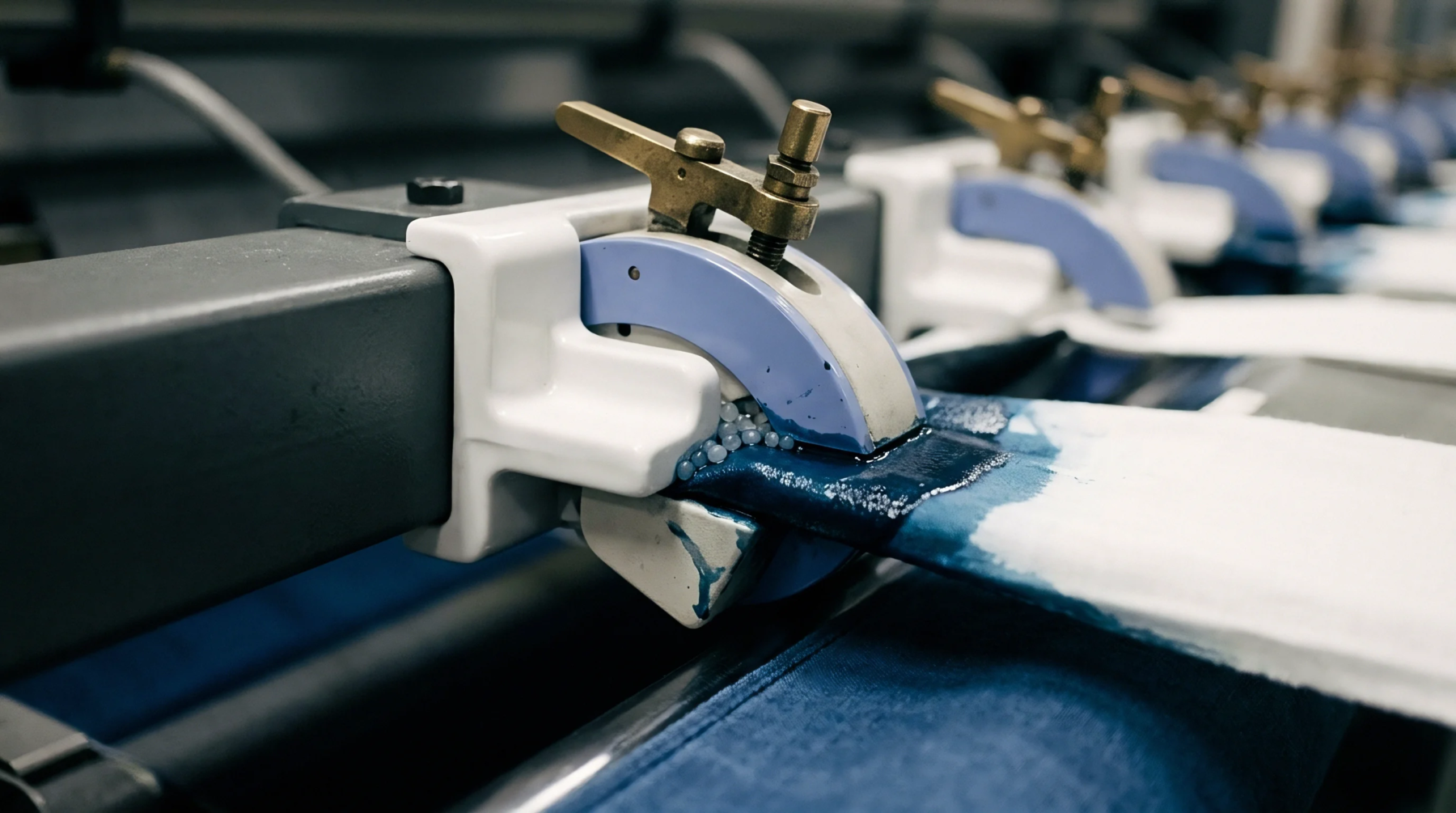
Hydrolyzed Reactive Dye Extraction Kinetics during High Cover Factor Fabric Washing
Dense fabric wash-off requires electrolyte removal below 1 g/L before 95°C soaping to extract residual hydrolyzed dye without fastness failures.
Polymer compounds added to textile washing baths prevent released soil particles from settling back onto cleaned fabric surfaces during wet processing operations. An anti-redeposition agent is a specialized auxiliary used in industrial laundering and wet textile preparation to maintain the brightness of white goods and the clarity of printed fabrics. These polymers function by altering the surface properties of both the fibers and the suspended soil, creating a barrier that is effective under specific bath temperatures and chemical concentrations.
When the wash bath contains high concentrations of hardness ions, the effectiveness of the polymeric barrier can be compromised if the correct dosage is not maintained. The agent stops acting once the wash bath is completely discharged and rinsed, leaving a thin protective residue on the textile.
Polymeric molecules are introduced into the washing liquor to interact with dislodged soil particles through adsorption. This anti-redeposition agent increases the negative surface charge of both the soil and the textile fibers, which generates a strong electrostatic repulsion between them. In the step-by-step mechanism, the polymer dissolves in the aqueous medium and then aligns itself with the hydrophobic regions of soil particles.
Next, the hydrophilic segments of the polymer extend outward into the water, creating a steric hindrance that physically blocks the soil from coming into contact with the fabric. If this step fails, the soil particles will coalesce and deposit back onto the fibers, causing a permanent graying that cannot be easily reversed in subsequent processing stages. This dispersing mechanism is highly dependent on the molecular weight of the polymer and the pH of the wash bath.
Fibrous substrates exhibit different affinity levels for these polymer chains based on their chemical composition. Synthetic fibers like polyester and polyamide benefit from nonionic block copolymers, whereas cotton and other cellulosic fibers show a higher affinity for anionic carboxymethyl cellulose. These chemical structures align with the target fibers to form a stable protective layer that survives the mechanical agitation of the washing machine.
This continuous layer prevents the redeposition of oily soils and particulate matter on the fabric. If the affinity between the polymer and the fiber is too low, the protective layer will be incomplete, leaving exposed areas where soil can attach. This selective affinity determines which polymer must be chosen for specific fiber blends in industrial processing.
Laboratory evaluations measure the graying prevention capacity of laundry formulations by comparing the reflectance of a control fabric before and after washing in a soiled bath. These tests use spectrophotometers to measure the tristimulus values of the fabric, which allows the calculation of a redeposition index. Standard test methods like those from the American Association of Textile Chemists and Colorists specify the exact fabric types, soil mixtures, and wash temperatures to use.
The result of this measurement is used by quality control teams to verify that the wash formulation meets the required standards. If the reflectance loss is below the designated threshold, the formulation is approved for bulk manufacturing and commercial distribution.
Dense fabric wash-off requires electrolyte removal below 1 g/L before 95°C soaping to extract residual hydrolyzed dye without fastness failures.
Expertise is a utility, not a secret. sentiention™ publishes its working knowledge as open reference: intelligence layer covering the materials it sources, the markets it enters, and the reference that serves both.