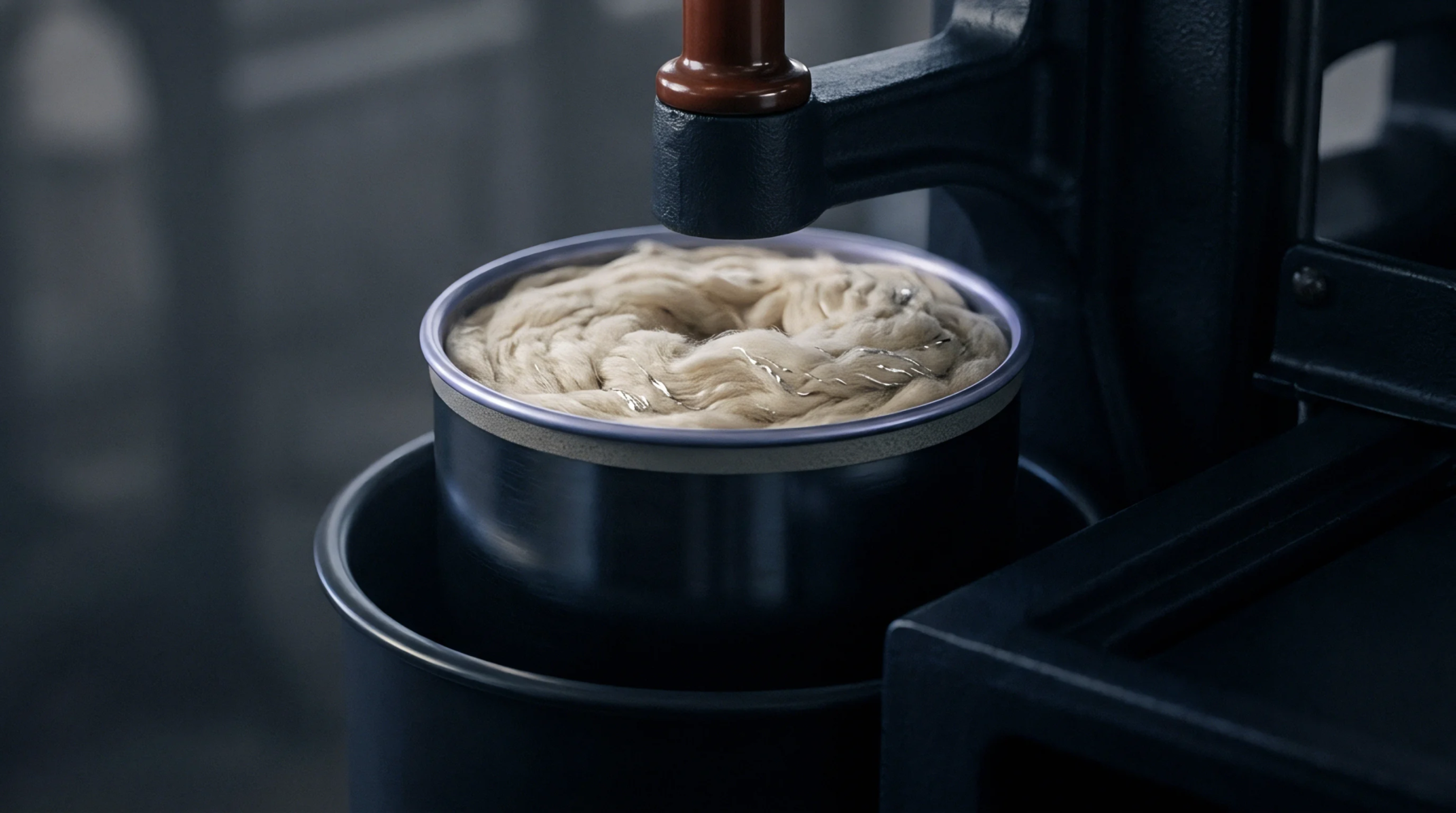
Meter Function
Electronic instrument used for non-destructive measurement of water content in bulk textile materials. A capacitive moisture meter operates by detecting changes in the dielectric constant of a substrate when placed within an electric field. This device allows for rapid screening of bales or fabric rolls without piercing the surface of the goods.
Measurements remain valid provided the material density remains constant throughout the batch.
Operating Principle
Dielectric sensing provides the physical basis for this technology. The capacitive moisture meter calculates moisture based on the high dielectric constant of water compared to dry fibres. As the water content increases, the total capacitance of the sensor circuit rises accordingly.
This relationship allows the internal processor to output a percentage value based on pre-calibrated material curves.
Process Application
On-site verification at the factory warehouse often relies on these handheld units for quick intake audits. While a capacitive moisture meter offers speed, accuracy depends heavily on the contact pressure applied by the operator. Air gaps between the sensor and the fabric surface lead to false low readings.
Mill staff use these tools to identify wet spots before bales enter the opening room.
Limitation
Bulk density affects the signal penetration and result reliability. Variation in packing tightness changes the air-to-fibre ratio, which can skew the capacitive moisture meter reading if not adjusted via a density correction factor. Surface moisture might dominate the reading, masking a dry core in thick packages.
Correct calibration against oven-dry methods ensures the instrument remains a valid tool for commercial moisture management.