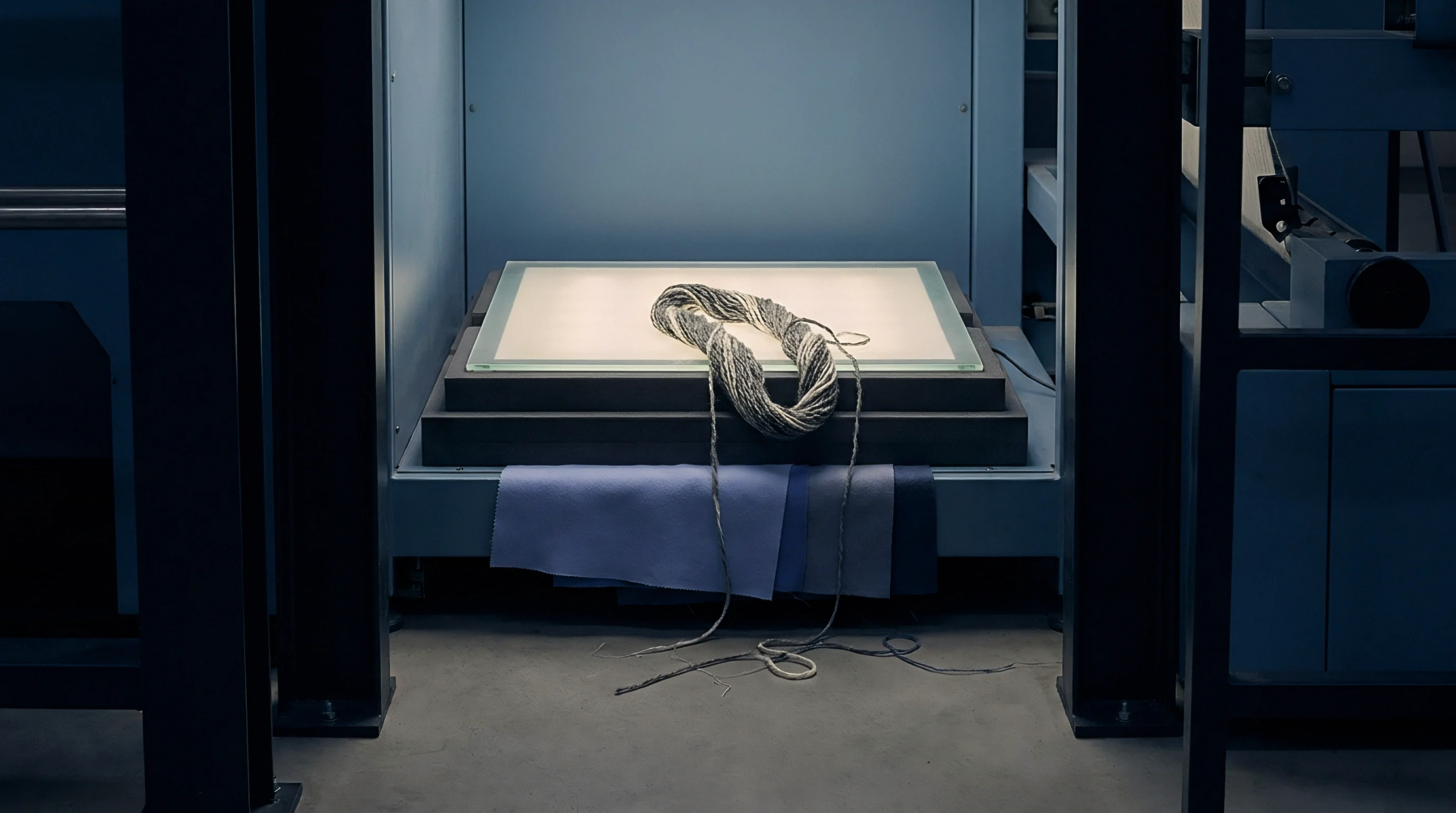
Shade Quota
Proportioning specific dye formulas to predetermined units of greige goods prevents dyehouse bottlenecks and inventory imbalances during bulk processing. Colorway allocation acts as a quantitative instruction sheet issued to the dye kitchen before immersion begins, specifying exact quantities of reactive or disperse dyestuffs required for each batch. Operations apply this mechanism at the wet processing stage, verifying adherence through spectrophotometer readings against approved master standards under controlled daylight lamps in the mill laboratory.
Boundary limits restrict this practice strictly to multi-variant dye lots, stopping once the fabric enters continuous washing ranges.
Batch Variance
Managing dye lot consistency requires tracking chemical reactivity across different cylinder rotations during high temperature pressure dyeing. Colorway allocation determines how raw material inventories distribute among varying production orders, preventing shade drifting caused by exhaustion rate differences in synthetic yarn blends. Technicians measure these shifts using delta E tolerances, rejecting rolls that exceed acceptable commercial thresholds during final inspection tables.
Equipment calibration schedules dictate how often machines undergo maintenance, ensuring chemical delivery pumps match the precise figures demanded by the initial formula sheet.
Inventory Balance
Coordinating dyehouse schedules with greige warehouse outputs eliminates excessive residual chemical stocks and unfinished rolls sitting idle on factory floors. Colorway allocation synchronizes dyeing programs with actual yarn availability, maintaining steady throughput speeds from sizing machines through tenter frames. Mills calculate chemical requirements based on dry weight measurements of incoming cellulose or protein fibers, adjusting auxiliary quantities according to natural moisture regain levels.
Storage conditions directly influence dyestuff stability, requiring strict temperature controls inside the mixing room to prevent premature hydrolysis before liquor transfer occurs.
Supply Threshold
Determining maximum production capacity per machine cycle prevents overloading dye vats and ensures uniform penetration across heavy woven structures. Colorway allocation sets strict ceilings on batch sizes, keeping liquor ratios within parameters required for level dyeing results. Inspectors verify these operational limits during pre-production trials, checking cross section penetration on yarn packages before authorizing full scale factory runs.
Production efficiency depends entirely on maintaining precise control over thermal profiles during the fixation cycle, establishing repeatable outcomes across commercial shipments.