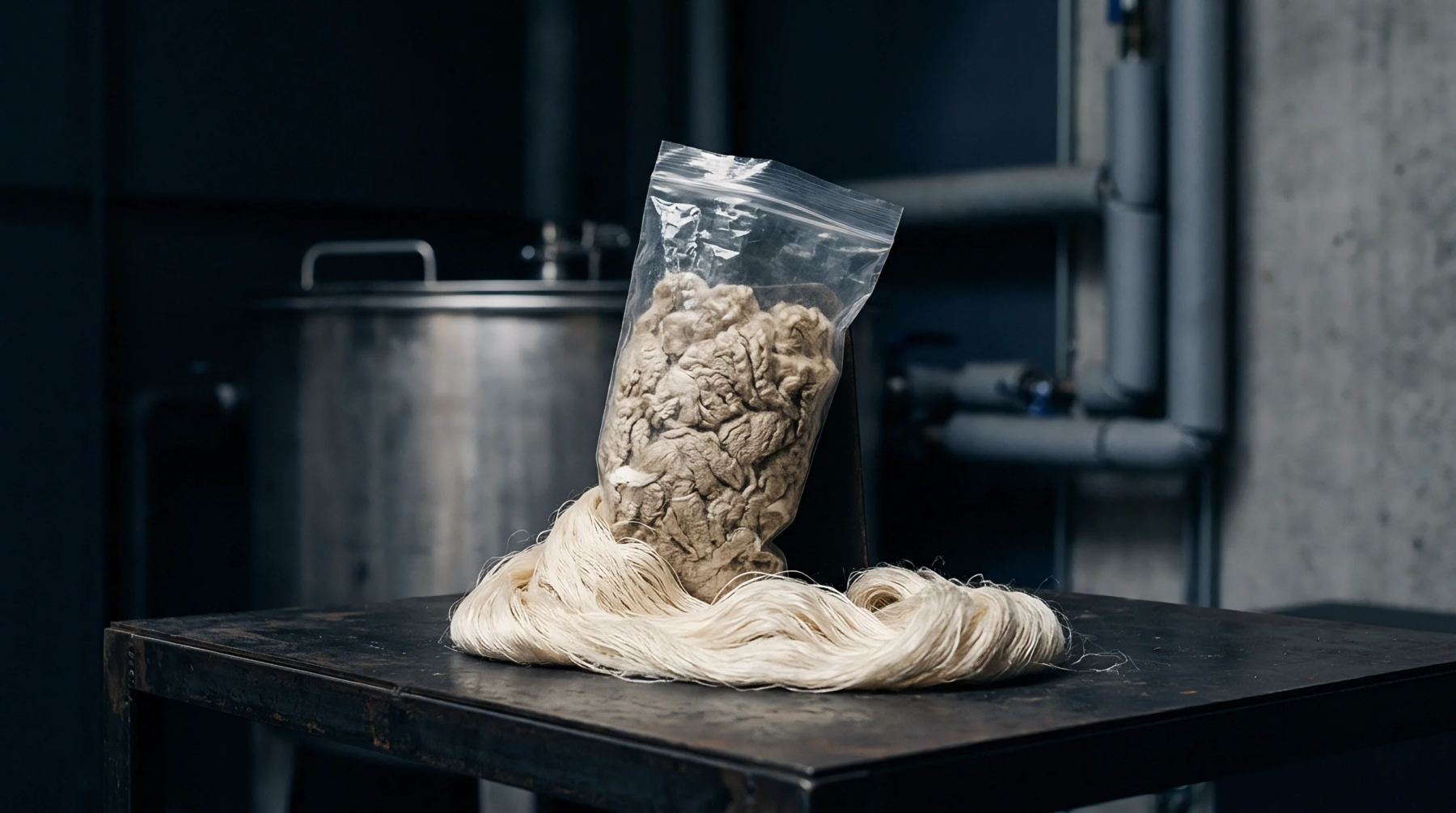
Transaction Standard
Contractual provisions in international textile trading establish binding invoicing rules for raw fiber and spun yarn shipments. Buyers and sellers agree to base financial settlements on moisture-corrected mass rather than variable gross weights recorded at origin ports. Under a commercial weight agreement, trading parties calculate final billed mass by combining oven-dry specimen weight with officially recognized moisture regain percentages.
Mass Calculation
Moisture content in raw bales fluctuates during ocean transit due to changing ambient relative humidity and marine storage conditions. Testing laboratories extract representative samples from sealed containers, determine oven-dry weight through controlled thermal desiccation, and clean away grease or non-fibrous matter. The commercial weight agreement incorporates standard regain figures, such as eight point five percent for cotton yarn, thirteen percent for viscose staple, or seventeen percent for scoured wool, directly into the financial settlement formula.
Net clean dry mass receives these standardized statutory additions alongside allowable processing oil percentages. Accounting departments multiply this calculated mass by the agreed unit price to establish final invoice values regardless of actual scale mass at delivery.
Dispute Protocol
Weight discrepancies frequently arise when destination ports report gross masses differing from shipment bill of lading figures. Independent testing facilities take settlement samples according to ISO 1833 guidelines to resolve tonnage disputes without re-weighing entire containers. The commercial weight agreement specifies that certified laboratory regain test results supersede scale weigh-ins conducted at delivery warehouses.
Financial adjustments apply automatically when audited clean content strays beyond agreed tolerance limits.
Contractual Limitation
Finished fabrics containing mechanical stretch yarns or specialized chemical coatings present calculation obstacles for standard regain formulas. Resin finishes and elastomeric cores alter moisture absorption dynamics, rendering statutory raw fiber regain allowances inaccurate. The commercial weight agreement loses legal applicability when blended goods contain unidentified synthetic microfibers or non-standard finishes exceeding two percent of total dry weight.
Specialized contract addenda must define custom regain parameters for technical textiles.