Reconciling Laboratory Dry Chemical Percentages with Landed Import Weight
Reconciling laboratory chemical composition with landed weight requires converting oven-dry chemical ratios into commercial mass using official moisture regains.


Mass
Quantitative chemical analysis of textile fibres establishes component ratios under complete desiccation, removing all moisture and non-fibrous additives. Testing laboratories execute quantitative separations by drying samples to constant weight at elevated temperatures, stripping foreign substances, and dissolving soluble components in targeted reagents. The resulting certificate returns percentages based strictly on oven-dry clean fibre weight.
In contrast, commercial trade, shipping documentation, and port-of-entry customs clearances operate entirely on commercial mass. This structural disconnect causes financial friction when mill invoices and customs entries are reconciled against laboratory test reports.

The Disconnect between Oven Dry Testing and Commercial Trade
Laboratory certificates report percentage values derived from solvent extraction and oven drying at one hundred five degrees Celsius. This clean dry basis strips every molecule of bound ambient water, spin finishes, knitting oils, and warp sizing agents. Purchasing contracts and international trade rules specify commercial mass, which adds standard moisture regain allowances and commercial non-fibrous allowances back onto the dry mass.
Converting an oven-dry chemical test result into a commercial trade weight requires adjusting each fibre component by its designated commercial moisture regain factor.
Fibre species display vastly different moisture absorption behaviors under standard atmospheric conditions. Hydrophobic synthetic polymers retain almost no regain moisture, whereas natural cellulosic and protein fibres absorb substantial atmospheric vapor. When an intimate mixture containing both hydrophobic and hydrophilic fibres undergoes quantitative chemical analysis, the unadjusted dry weight percentages understate the commercial weight fraction of the hydrophilic component.
| Fibre Species | ISO Commercial Regain (%) | ASTM Commercial Regain (%) | Commercial Allowance Range (%) |
|---|---|---|---|
| Wool (Combed Top) | 18.25 | 13.60 | 1.50 to 2.25 |
| Viscose Rayon | 13.00 | 11.00 | 0.50 to 1.00 |
| Cotton (Carded/Combed) | 8.50 | 7.00 | 0.50 to 1.50 |
| Polyamide (Nylon 6,6) | 6.25 | 4.50 | 0.25 to 0.75 |
| Polyester (PET Staple) | 1.50 | 0.40 | 0.00 to 0.50 |
| Acrylic | 2.00 | 1.50 | 0.00 to 0.25 |
Mathematical reconciliation bridges the laboratory certificate and the landed commercial bill. The conversion equation calculates commercial mass percentage by multiplying each dry percentage by one plus its official commercial regain allowance, then dividing by the sum of all adjusted component weights.
A mixture of fifty percent wool and fifty percent polyester by oven dry chemical weight yields fifty three point four percent wool and forty six point six percent polyester on a commercial weight basis.
Applying unadjusted oven-dry percentages directly to landed container net weights understates high-regain components and overpays for low-regain synthetics on every landed bill of entry.
Dissolution
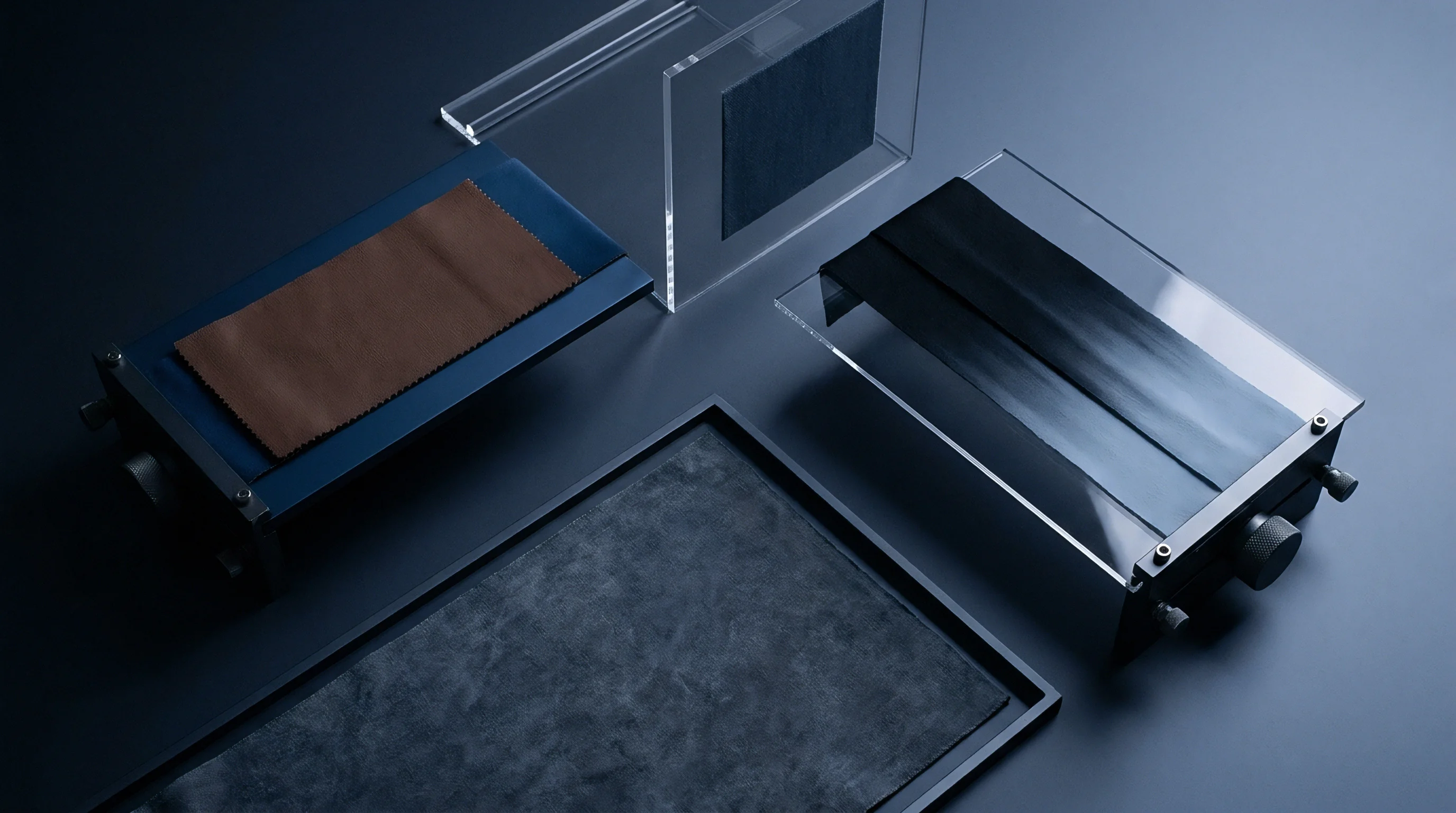
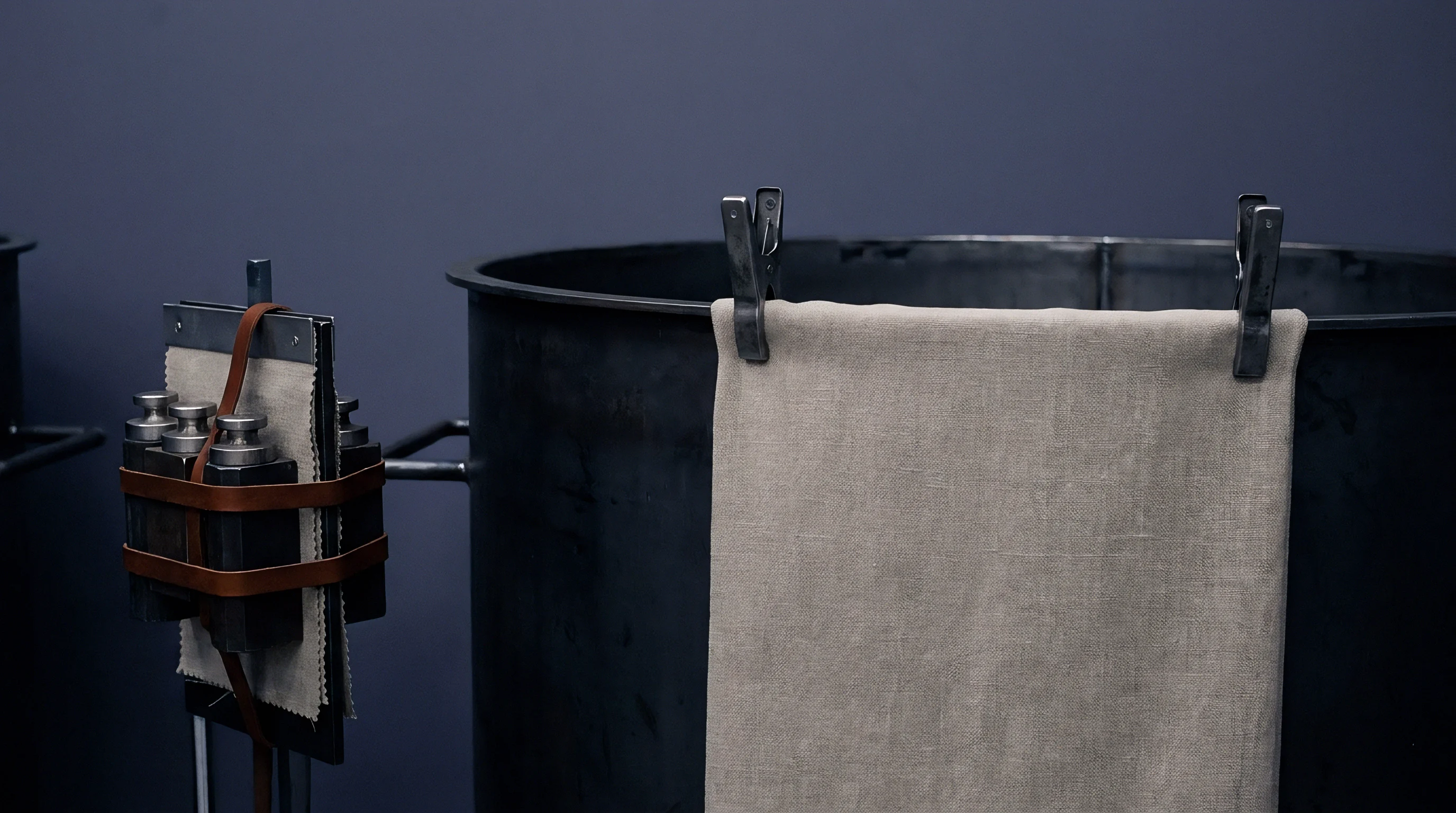
Reagent selectivity determines how cleanly one fibre species separates from an intimate mixture without eroding the companion structure. Laboratory protocols under ISO 1833 and AATCC 20A specify chemical reagents designed to dissolve specific polymer families while leaving other fibres intact. Solvents do not operate with total chemical indifference toward the un-dissolved residue.
Slight surface degradation or minor chemical leaching occurs on the insoluble fibre component during extraction.

Chemical Reagent Selectivity and Correction Factors
Acidic and organic solvents attack target polymers while leaving inert components behind, though partial degradation of the residue remains unavoidable. Analytical chemists apply a chemical correction factor, designated as the d-factor, to adjust for weight loss suffered by the insoluble fibre during exposure to the solvent. Standard test protocols publish empirical d-factors for specific reagent and fibre combinations based on multi-laboratory interlaboratory trials.
Calculating clean dry mass requires multiplying the final dry residue weight by the appropriate d-factor before determining percentage ratios. For instance, cold seventy-five percent sulfuric acid dissolves cellulosic fibres to isolate polyester residue. The residual polyester loses approximately one percent of its mass during chemical agitation and filtration, establishing a standard d-factor of one point zero one.
Omitting this correction factor artificially depresses the calculated content of the insoluble synthetic residue.
Chemical separation testing faces analytical failure modes that distort percentage output:
- Fibre swelling entrapment occurs when partially dissolved gels encapsulate un-dissolved filaments, preventing complete chemical filtration.
- Reagent concentration drift alters solvent aggressiveness, causing excessive degradation of the insoluble substrate during extraction cycles.
- Incomplete binder stripping leaves sizing resins and polyurethanes on the insoluble residue, artificially inflating the un-dissolved fraction.
- Thermal charring during desiccation degrades delicate animal fibres during post-extraction drying, producing erroneous weight losses.
Non-fibrous materials complicate chemical extraction calculations. Sizing agents, paraffin waxes, flame retardants, and cross-linking softeners add weight to raw yarn or finished piece goods. Laboratory test procedures mandate pre-extraction using petroleum ether or enzymatic desizing to remove non-polymeric additions prior to chemical dissolution.
Failure to strip these finishes leads to false weight loss attributions, assigning finish mass to the dissolved fibre species.
Contracts specifying ISO 1833 execution incorporate clause six point two, mandating that reported dry clean percentages include specific d-factor adjustments and pre-extraction non-fibrous corrections on all commercial certificates.


Moisture
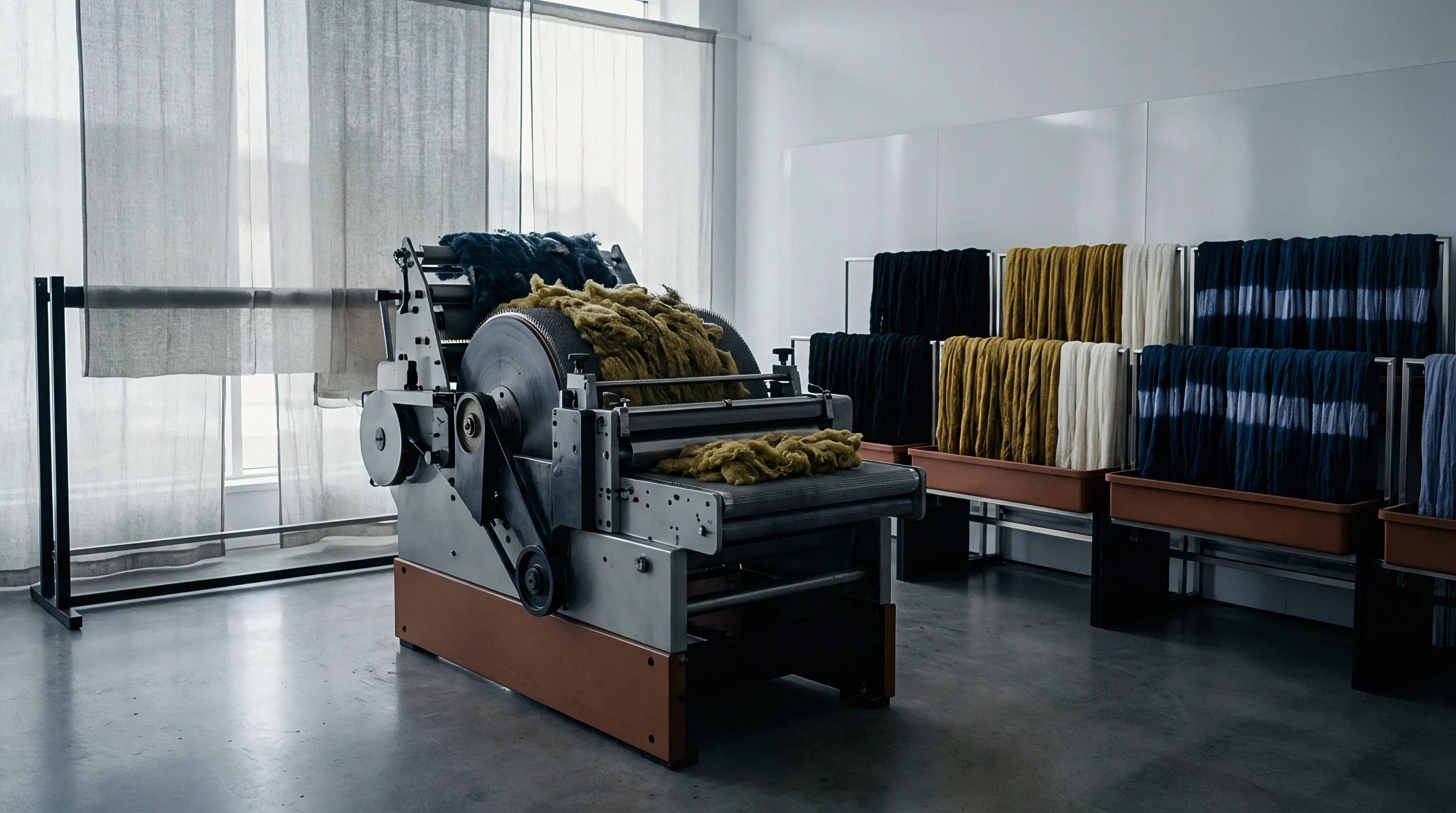
Ambient atmospheric humidity during container transit alters bulk shipment weight without changing the structural composition of the underlying yarn. Bales of raw fibre or rolls of woven goods gain or lose water weight depending on relative humidity levels inside shipping containers. A consignment loaded in high humidity loses measurable physical mass when discharged into a dry desert port, even though the total count of clean dry polymer molecules remains unchanged.
Environmental Absorption Dynamics during Ocean Freight
Containerized textile cargo expands and contracts in physical bulk as atmospheric humidity fluctuates across tropical ocean routes. Cotton piece goods shipped at ten percent actual moisture content dry down to six percent moisture content during prolonged warm ocean voyages. The scale weight at destination reflects this four percent physical weight loss.
Reconciling landed net weight requires determining whether the shipment lost physical polymer material or merely shed absorbed environmental water.
Contracts referencing ISO 6741 shift payment calculations from gross container scale weight to standardized commercial mass adjusted for official moisture regain.
Determining landed commercial weight involves drawing core samples upon container unsealing to measure actual moisture content using oven-drying techniques. The ratio between actual transit moisture content and official commercial regain dictates whether the landed invoice requires a financial credit or debit adjustment.
| Fibre Composition | Departure Moisture Content (%) | Landed Moisture Content (%) | Official ISO Regain (%) | Scale Net Weight (kg) | Reconciled Commercial Mass (kg) |
|---|---|---|---|---|---|
| 100% Combed Cotton | 10.20 | 6.10 | 8.50 | 19,180 | 19,613 |
| 100% Viscose Rayon | 14.50 | 9.80 | 13.00 | 18,960 | 19,513 |
| 65/35 PET/Cotton Mix | 5.80 | 3.20 | 3.95 | 19,480 | 19,621 |
| 100% PET Filament | 1.20 | 0.30 | 1.50 | 19,820 | 20,058 |
When scale weights drop below contract specifications, suppliers routinely assert that tropical marine heat desiccated the container contents below standard regain levels during transit.


Classification
Customs authorities require declared entry weights to reflect official commercial regain scales rather than unadjusted laboratory dry figures. National tariff schedules classify mixed textile goods based on the chief weight principle under Section XI Notes of the Harmonized System. Section XI Note 2 states that goods composed of two or more textile materials are classified as if consisting wholly of that one textile material which predominates by weight over any other single textile material.

Chief Weight Thresholds and Tariff Line Shifts
Section XI of the Harmonized System assigns duty rates based on the fibre component that dominates the overall blend weight. Precise percentage calculations become critical near fifty percent boundary lines. A intimate mixture containing fifty-point-five percent polyester and forty-nine-point-five percent cotton by dry chemical weight crosses tariff boundaries when converted to commercial mass.
Applying eight-point-five percent regain to cotton and one-point-five percent regain to polyester flips the weight dominance to the cotton component.
This shift alters tariff heading classification from synthetic woven construction under heading 5515 to cotton woven construction under heading 5211. Customs duty rates, trade preference quota eligibilities, and import restrictions depend directly on which side of the fifty percent line the reconciled commercial weight falls. Importers declaring entry based on dry laboratory certificates commit classification errors when commercial regain corrections reverse material dominance.

Is Laboratory Dry Weight Directly Applicable to Customs Declarations?
Import declarations calculated straight from oven-dried laboratory test sheets expose importers to structural misdeclaration penalties when border audits re-calculate composition under official commercial moisture allowances. Tariff compliance rules require converting laboratory dry test figures into commercial weight distributions before submitting formal customs declarations. Customs laboratories perform quantitative analyses and apply statutory regain adjustments before issuing definitive classification rulings.
Border authorities reject dry chemical percentages when evaluating chief weight eligibility on preferential trade agreements.


Tolerance
Statistical variance in quantitative chemical separation introduces a mandatory allowance band before a commercial lot is judged non-compliant. Standard test methods publish defined repeatability and reproducibility limits. ISO 1833 assigns a single-laboratory repeatability tolerance of approximately one percentage point and an inter-laboratory reproducibility tolerance of up to two percentage points depending on the solvent system and polymer combination.

Worked Commercial Mass Reconciliation Model
To demonstrate the operational sequence, consider a bulk import consignment of thirty thousand kilograms gross invoice weight, ordered as a nominally balanced fifty percent cotton and fifty percent polyester combed yarn. Laboratory testing returns an oven-dry chemical clean composition of forty-nine point zero percent cotton and fifty-one point zero percent polyester. The laboratory reports two percent non-fibrous extractable sizing agents removed during pre-extraction.
The calculation sequence converts dry chemical percentages into landed commercial mass to verify financial settlement figures:
- Establish dry clean mass fractions by subtracting the two percent non-fibrous extractives from total clean dry weight, establishing a baseline of forty-nine parts dry cotton to fifty-one parts dry polyester.
- Apply solvent d-factor correction using one point zero one for the residual polyester, yielding an adjusted dry synthetic ratio of fifty-one point five one parts against forty-nine parts cotton.
- Calculate commercial mass factors by multiplying the dry cotton value by one point zero eight five (eight point five percent official ISO regain) and the dry polyester value by one point zero one five (one point five percent official ISO regain).
- Determine final commercial percentages resulting in fifty point zero eight percent cotton and forty-nine point ninety-two percent polyester by commercial mass.
- Reconcile total billable weight by multiplying the landed net scale mass by the actual moisture correction factor to establish true commercial pay weight.
Executing this step-by-step conversion proves that the consignment actually contains a dominant commercial fraction of cotton, reversing the initial laboratory report’s dry synthetic dominance.
Commercial qualification checks protect purchasing budgets when validating import reports:
- Verify pre-extraction records to confirm non-fibrous sizes and finishes were fully stripped before chemical dissolution.
- Confirm regional regain standards because European ISO agreements and American ASTM specs assign differing regain percentages to identical fibres.
- Audit laboratory accreditation scopes ensuring the testing house holds certified competency for specific reagent test schemes.
- Cross-check container sampling logs validating that physical samples were drawn across multiple bale depths upon container unsealing.
A two percent dry weight drift across chief weight boundaries invalidates tariff entries when moisture allowances flip the dominant fibre species.
Whether customs auditors accept commercial mass conversions performed after entry lodgement remains an open legal question across several international trade jurisdictions.


Recourse
Contractual disputes over weight shortages and composition discrepancies require structured commercial mechanisms that isolate physical loss from atmospheric regain variations. When destination retests show lower net weight or conflicting blend ratios compared to origin loading certificates, purchasing agreements must define clear resolution steps. Discrepancies between origin test reports and destination retests frequently stem from mismatched testing methods, unadjusted d-factors, or shifting moisture conditions during transit.

Commercial Settlement Mechanisms for Composition Shifts
Purchase agreements establish clean arbitration pathways when retests at destination conflict with port-of-loading certificates. Reconciling landed invoices involves calculating whether scale weight deficits represent short-shipments of physical fibre or simple desiccation. If moisture testing confirms dry-down during transit, the commercial mass remains constant, and the buyer pays the full contracted invoice amount based on standardized weight.
Dispute resolution procedures follow a sequential technical verification protocol:
- Draw sealed counter-samples retained at the port of loading in the presence of an independent surveyor.
- Dispatch retained counter-samples to an agreed neutral accredited testing laboratory for quantitative separation under ISO 1833.
- Instruct the neutral laboratory to determine non-fibrous content, d-factor adjustments, and dry clean mass ratios.
- Apply statutory ISO 6741 regain percentages to convert dry clean ratios into commercial mass percentage distributions.
- Compare the neutral laboratory commercial mass percentages against invoice specifications using agreed commercial tolerance limits.
- Adjust the final landed purchase price using pro-rata financial deductions if the commercial mass fraction falls below contractual tolerance bands.
Invoiced mass calculated without moisture correction inflates landed unit costs whenever raw shipments arrive below official regain thresholds. Claims processing procedures mandate that formal notices of discrepancy must arrive at the supplier’s registered office within thirty business days of container discharge at the destination terminal. Retaining original core samples in sealed vapor-barrier bags provides the necessary physical evidence required to defend commercial weight claims during formal arbitration hearings.