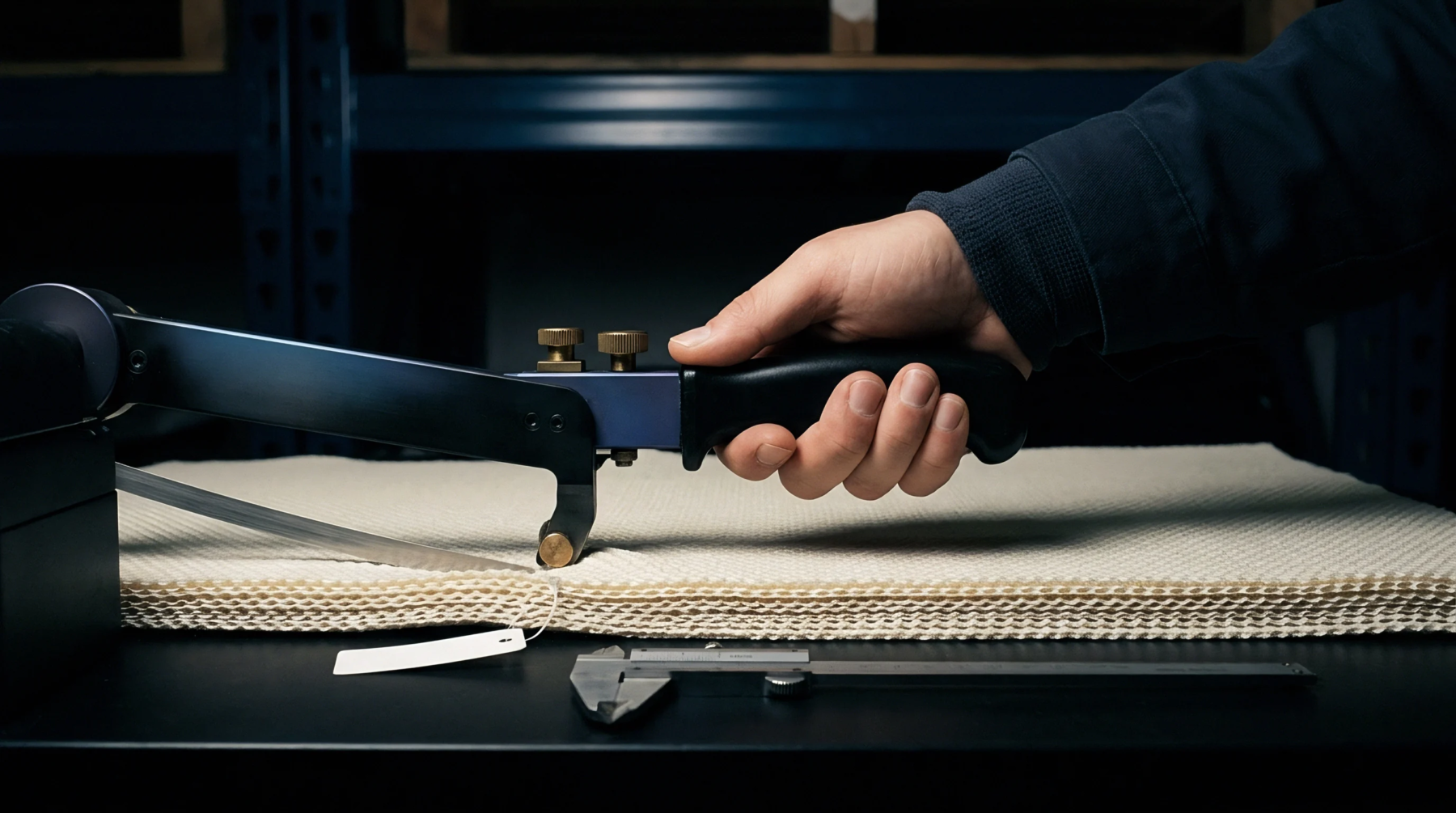
Swatch Sampling Position Deciding Whether a Batch Passes
Physical swatch position across fabric width and length determines chemical compliance, requiring three-point cross-web sampling to validate batch pass status.
Differential absorption within the padding and drying stage of fabric finishing creates a specific chemical gradient that exists across the width of the textile web. When a finish is applied in a pad mangle, a cross-web chemical gradient occurs if the pressure of the rollers is uneven or if the chemical concentration in the trough varies from one side to the other. This disparity results in a non-uniform distribution of softeners, resins or flame retardants across the fabric surface.
If the concentration on the left edge is significantly different from the right edge, the performance characteristics of the garment will vary depending on which part of the web the panel was cut from. The limit of this condition is reached when the variation exceeds the tolerance levels defined in the technical specification for the finish.
Mechanical factors in the finishing line are the primary drivers of uneven chemical uptake. A cross-web chemical gradient often arises from a deflection in the pad rollers, which causes the center of the fabric to receive less pressure than the edges. This effect, known as the swimming roll phenomenon, must be corrected by using rollers that can adjust their internal pressure to maintain a flat profile.
The mechanism of heat transfer in the stenter also plays a role, as uneven drying can cause chemicals to migrate towards the hotter areas of the fabric. Operators must monitor the nozzle pressure and the temperature profile across the width of the oven to prevent this migration. If the airflow is not balanced, the moisture evaporates at different rates, which pulls the dissolved chemicals along with the moving front of water.
Modern machines use automated control valves to regulate the flow of air and maintain a steady thermal environment across the entire web.
Detection of uneven chemical distribution requires testing samples from the left, center and right sections of the processed fabric. A cross-web chemical gradient is identified when the weight of the finish per square meter shows a measurable difference across these three points. Laboratories use extraction methods to strip the chemicals from the fabric and then weigh the residue or use spectroscopy to quantify the concentration.
This assessment is vital for technical textiles where the chemical finish provides a safety function, such as water resistance or fire retardation. If the gradient is too steep, the fabric may fail safety tests in certain regions while passing in others. This variation leads to high rejection rates during the quality control phase of production.
Maintenance of the application equipment is the most effective way to eliminate variation in chemical uptake across the web. To prevent a cross-web chemical gradient, the mill must regularly calibrate the pad mangle rollers and check for wear in the seals and bearings. Automated monitoring systems that use sensors to measure the moisture and chemical concentration in real-time allow the machine to make instant adjustments to the roller pressure.
These systems help the operator maintain a consistent application rate throughout the entire production run. Properly adjusted chemistry in the pad bath, including the use of wetting agents to promote even penetration, also reduces the likelihood of gradient formation. Consistency across the web ensures that every garment produced from the batch meets the same quality standard.
Physical swatch position across fabric width and length determines chemical compliance, requiring three-point cross-web sampling to validate batch pass status.
Expertise is a utility, not a secret. sentiention™ publishes its working knowledge as open reference: intelligence layer covering the materials it sources, the markets it enters, and the reference that serves both.