Mechanical Component
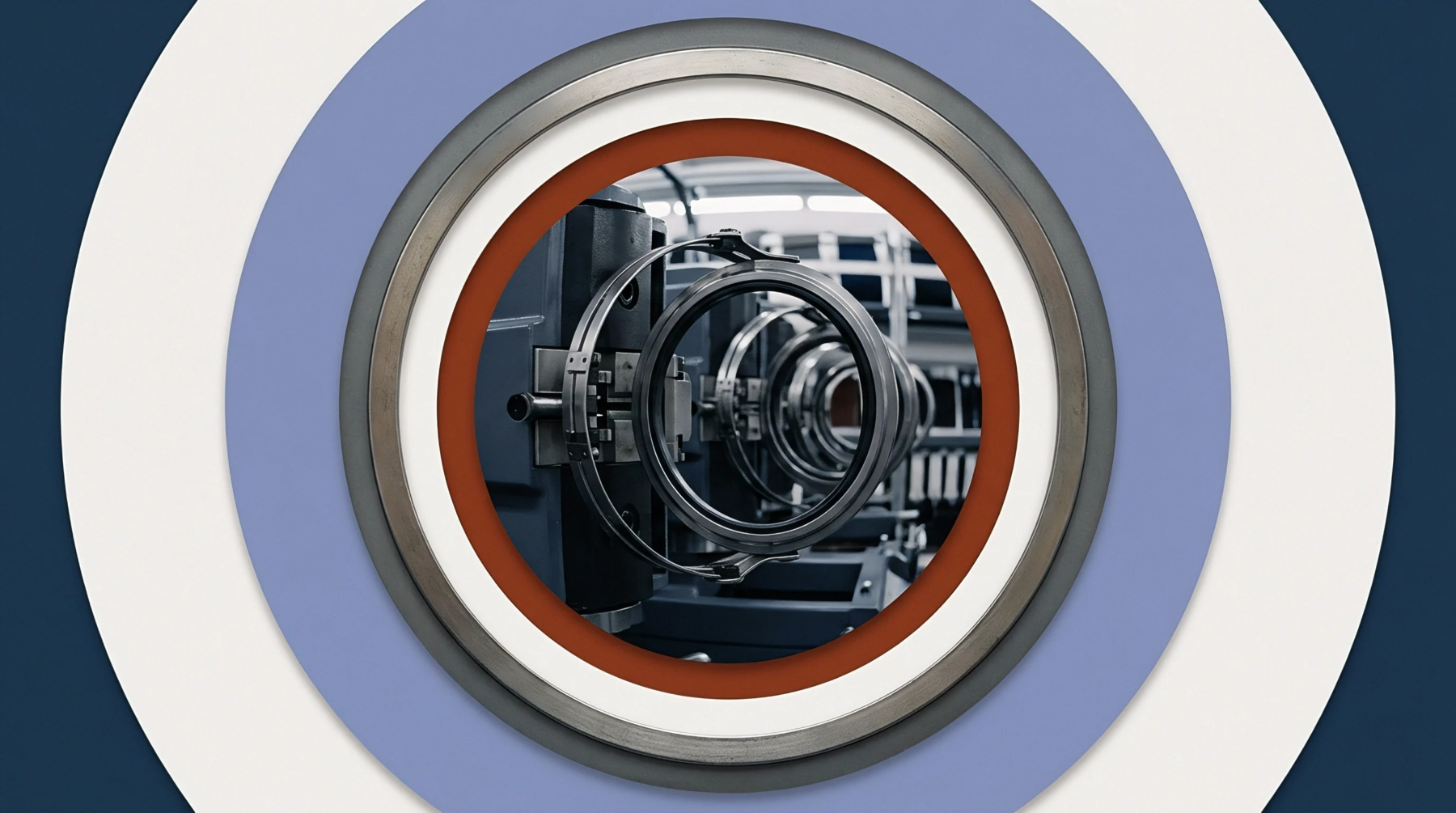
Industrial squeeze rollers used in textile continuous processing lines are engineered with a slightly thicker central diameter to ensure even pressure across the entire fabric width. A crown roll compensates for the natural bending that occurs when force is applied to the roll ends. This curved profile distributes the nip pressure uniformly, preventing uneven liquid extraction.
Deflection Correction
Standard steel rollers bend under the heavy loads required to express moisture from wide fabric webs. If a uniform cylinder is used, the pressure falls in the middle of the roll, leaving the center of the fabric wetter than the edges. The crown roll solves this by having a calculated convex curvature that becomes flat only when the full operating load is applied.
This deflection compensation is tailored to specific fabric widths and process speeds, which allows the roll to maintain a flat surface across its entire length during high-speed runs.
Mill Calibration
Production technicians measure the pressure footprint of the rolls by passing carbon paper or electronic sensor strips through the nip zone. An uneven footprint shows that the crown roll has been selected for the wrong operating load. If the center is too thick for the applied force, the edges will remain too wet.
This test must be run whenever the fabric weight or squeeze pressure changes substantially.
Dyeing Outcome
Uniform liquid extraction prevents the phenomenon of center-to-selvage shade variation during subsequent drying and thermofixation. When a crown roll performs correctly, the moisture across the fabric width is uniform, which stops dyes from migrating toward the faster-drying edges. This uniform moisture distribution leads to consistent color depth from edge to edge.