Agronomic Classification
Natural protein filament grown by domestic sheep breeds, specifically those selected from Merino bloodlines yielding mean diameters under 19.5 micrometres, forms the global staple for worsted spinning. Fine sheep wool exhibits a distinct combination of three-dimensional crimp, prominent cuticular scale margins, and bilateral cortical structure. The surface displays clear, tile-like scales with raised edges measuring roughly 0.5 to 1.2 micrometres in step height, spaced tightly along the shaft axis.
Medullated cores remain absent in high-grade fleeces, producing solid keratin shafts suited for soft, lightweight apparel yarns. The definition excludes coarse crossbred wools, carpet fleeces, and non-ovine animal hairs, bounding the classification strictly to high-fineness ovine hair.
Fibre Architecture
Natural fleece development produces an outer cuticle layer surrounding an internal cortex divided into orthocortical and paracortical segments. This bilateral cortical asymmetry produces natural crimp, providing mechanical resilience and bulk that synthetic fibres struggle to replicate. The overlapping cuticle cells point toward the fibre tip, creating a directional friction effect where movement against the scale grain generates higher resistance than movement with it.
This directional friction drives the felting mechanism when wet fabrics experience heat, agitation, and mechanical compression. The resulting interlocking of adjacent fibers enables the production of dense, wind-resistant fulled cloths, though it demands careful handling during domestic laundering to avoid shrinkage.
Commercial Identification
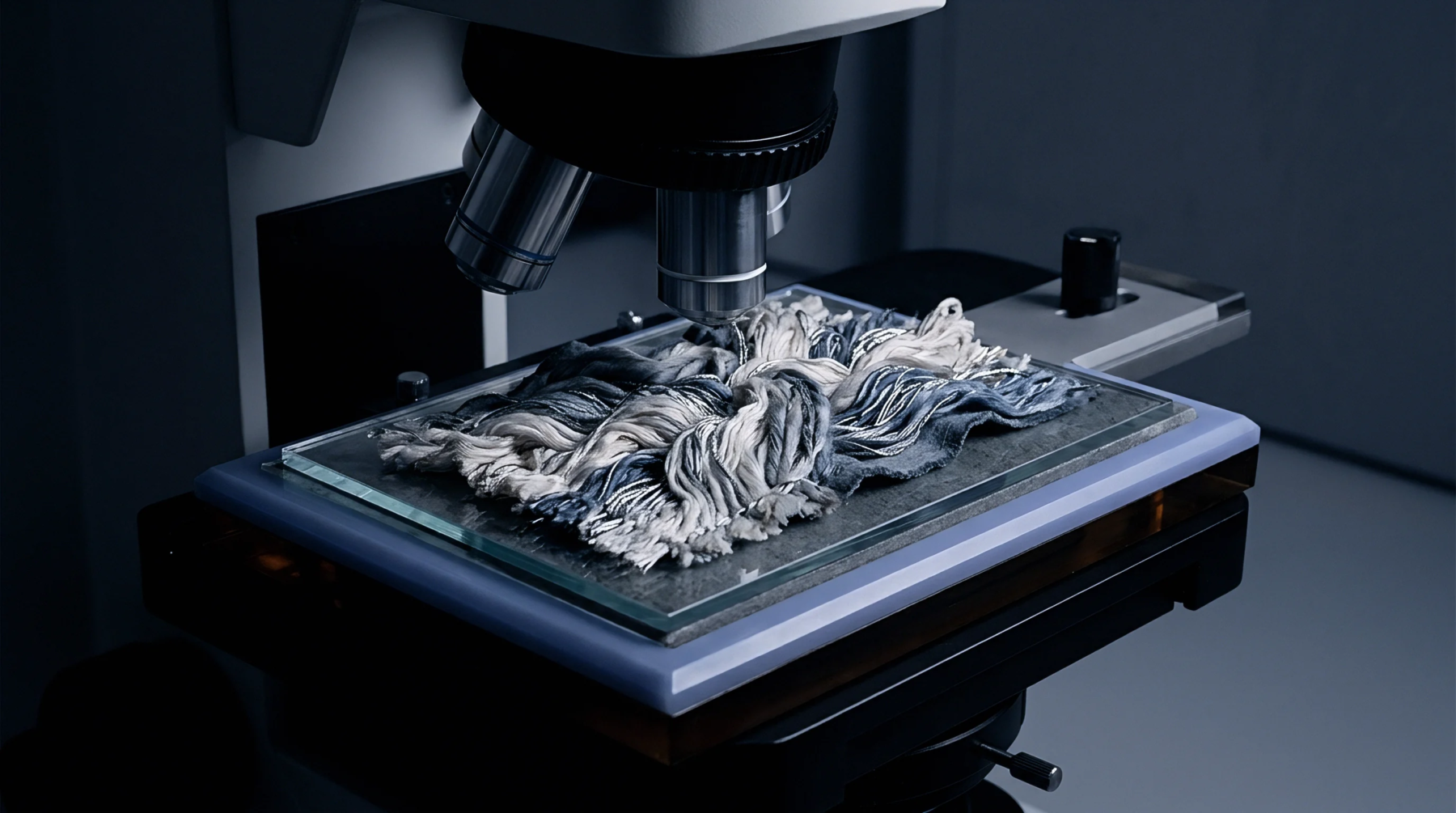
Differentiating fine merino wool from specialty down fibres like cashmere requires precise microscopic examination. Laboratories evaluate cuticular scale height, scale frequency, and cross-sectional circularity to confirm species origin. Fine sheep wool exhibits a scale frequency exceeding ten scales per 100 micrometres, whereas luxury caprine fibres typically display under seven scales along the same span.
The pronounced scale margins of ovine fibres produce visible shadow bands under longitudinal optical projection microscopy, contrasting with the smooth, uniform outlines of luxury down. Chemical solubility tests remain ineffective for differentiation because both materials consist of alpha-keratin chains cross-linked by identical cystine disulphide bonds, leaving microscopic profiling as the primary commercial verification tool.
Mill Utilization
Industrial worsted processing converts these fine fleeces into smooth, high-tenacity yarns for woven suits and knitwear. Raw wool undergoes intensive scouring in aqueous surfactant baths to strip out natural suint, dirt, and heavy lanolin wax. Carding and multi-stage combing align the fibres into top slivers while removing short, broken fragments known as noils.
Spinners establish minimum staple length and diameter requirements to prevent yarn breakage at high spindle velocities. Excessive diameter variance within a lot increases surface hairiness and lowers fabric tensile strength, prompting quality control teams to test every incoming lot for mean fineness and curvature before releasing tops to spinning frames.