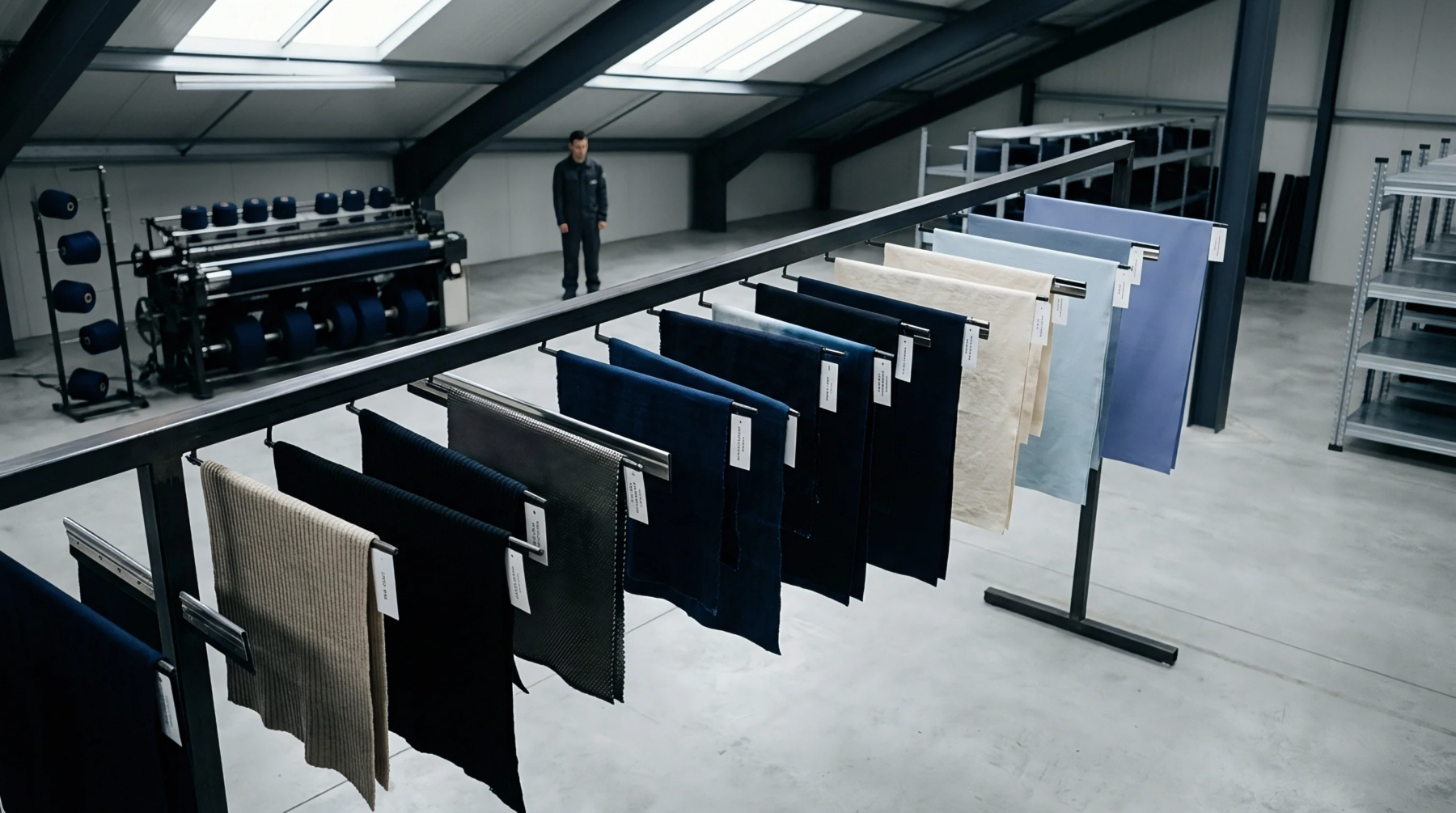
Fabric Weight Tolerance Written as a Range the Mill Holds
Fabric weight tolerance written as a mill range holds commercial validity only when tested under ISO 139 standard atmosphere using ISO 3801 methods.
The metric measurement of mass per unit area identifies the weight of a textile material. The g/m² unit, or grams per square meter, is the universal standard for specifying fabric weight in the global textile industry. It provides a consistent way to compare different materials regardless of their width or fiber content.
This value is determined by weighing a precise area of fabric, usually a one hundred square centimeter circle, and then calculating the equivalent weight for a full square meter. It is a fundamental property that affects the cost, drape and end use of the fabric. Buyers use this figure to verify that the material meets the requirements for a specific garment style.
It is measured at several points across the width of the fabric to ensure uniformity.
Production planning and cost estimation depend heavily on the weight of the fabric used in the order. The g/m² value allows the factory to calculate the total amount of yarn required for the weaving or knitting process. It also determines the number of garments that can be produced from a given weight of fabric.
Heavy fabrics generally cost more per meter because they contain more raw material and take longer to process. If the fabric is outside of the specified weight range, the final garment may not fit or perform as intended. Designers select the weight based on the desired warmth, durability and aesthetic of the product.
Accurate measurement of this property is necessary for maintaining the profitability of the manufacturing operation.
Verification of the fabric weight occurs in a controlled environment to ensure that the results are accurate and repeatable. The g/m² measurement requires a circular cutter and a digital scale that can measure small weights with high precision. Samples are conditioned in a laboratory with a standard temperature and humidity for at least twenty four hours before testing.
This is because fibers absorb moisture from the air, which can change the measured weight of the fabric. Technicians take multiple samples from different parts of the roll to get an average value. This process helps to identify any inconsistencies in the production of the fabric.
The results are recorded in a test report that is shared with the buyer for final approval.
Commercial contracts include a tolerance range for the weight of the fabric to account for natural variations in the manufacturing process. The g/m² must typically stay within five percent of the target value for the shipment to be accepted. If the fabric is too light, it may be rejected for being too thin or lacking sufficient strength.
If it is too heavy, the buyer may refuse to pay for the extra weight or the garments may be too bulky. These limits are set during the development stage and are verified during the final inspection. Consistent weight is a sign of a well controlled production process at the textile mill.
It ensures that every garment in a production run has the same feel and performance.
Fabric weight tolerance written as a mill range holds commercial validity only when tested under ISO 139 standard atmosphere using ISO 3801 methods.
Expertise is a utility, not a secret. sentiention™ publishes its working knowledge as open reference: intelligence layer covering the materials it sources, the markets it enters, and the reference that serves both.