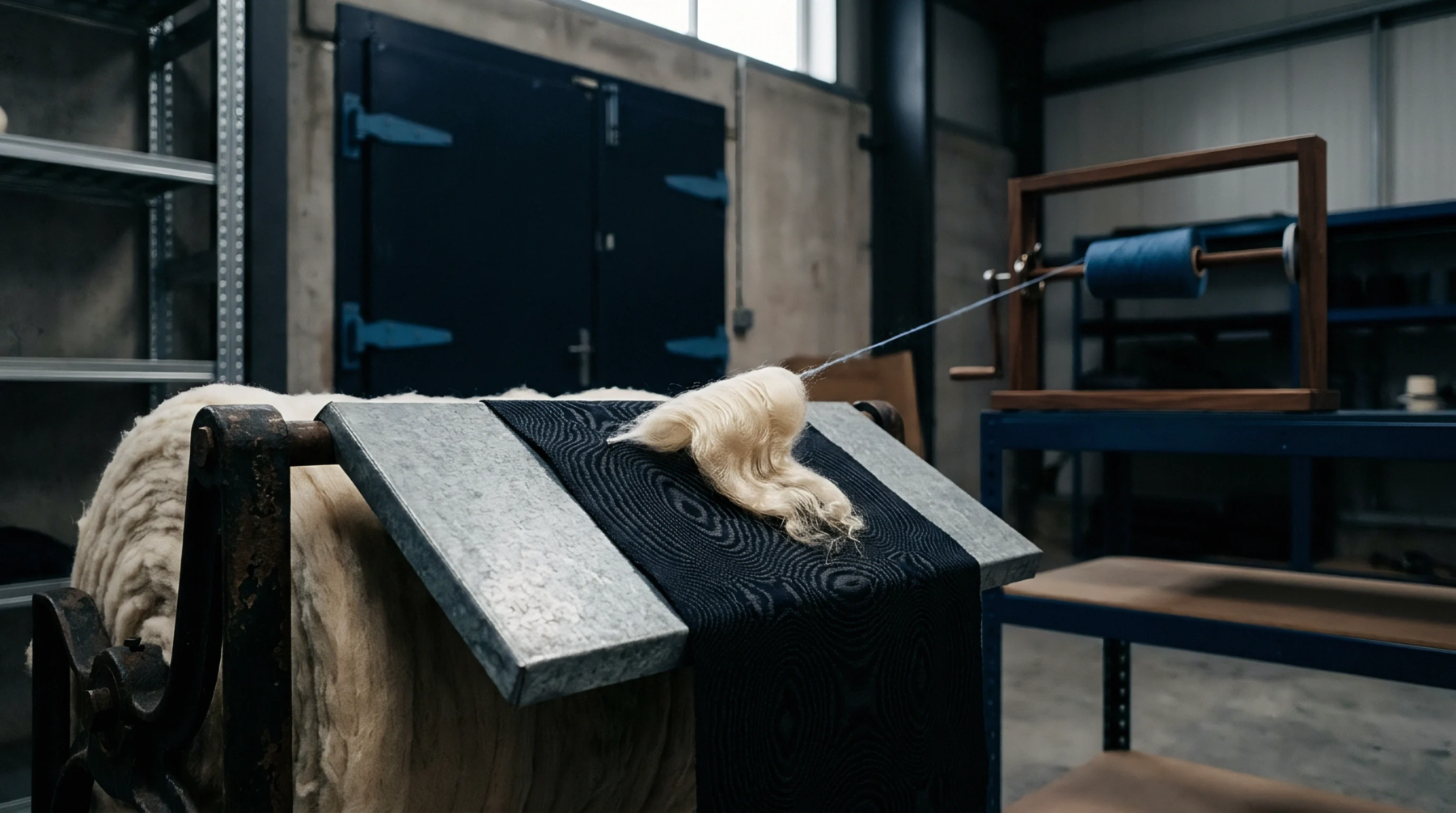
Raw Assessment
Raw wool yields a sorted inventory when grease fleece classing partitions bulk shorn outputs by fibre diameter and staple length. This practice categorizes bundles based on physical traits extracted directly from the animal without scouring agents. Technical graders inspect individual fleeces to identify superior sections while excluding contaminated or stained wool that alters processing outcomes.
Standard protocols govern how technicians handle the raw material during this initial mill intake phase.
Sorted Distribution
Specialized barns serve as the site where machines or human sorters perform this task under controlled lighting. Operators examine uniformity across the shoulder and side of the sheep to estimate performance before the material enters industrial cleaning. They remove vegetable matter and dry waste that adds weight but provides zero value to the finished textile yarn.
Precision at this checkpoint determines the final price paid to the farm and the suitability of the lot for high grade spinning lines.
Economic Influence
Market liquidity depends on the accuracy of these measurements because mills avoid buying unknown blends of variable quality. Buyers demand consistent batches to maintain production schedules and ensure that dyeing protocols remain stable across multiple runs. Discrepancies between the assessed grade and the actual lab result create friction between the primary producer and the downstream manufacturer.
Uniformity within the lot reduces internal mill waste and lowers the energy required for carding and combing.
Grading Protocol
Quantitative analysis of crimp frequency and tensile strength supplements visual assessments during this stage. Mechanical instruments now assist classers to define fibre limits beyond the capacity of human sight alone. Modern digital scales calculate total grease weight to determine clean wool yield as a percentage of the total weight presented.
Rigorous adherence to these international standards creates a predictable supply chain for raw textiles.